
Paranthropus robustus: a robust early hominin from southern Africa
Paranthropus robustus, an extinct robust australopith from southern Africa (about 2–1.2 Ma), is notable for its heavy-chewing skull, large postcanine teeth and debated placement in hominin classification.
Overview
Paranthropus robustus is an extinct hominin best known from fossil localities in southern Africa. Fossils assigned to this species date to roughly two to 1.2 million years ago and document a distinctive suite of cranial and dental adaptations commonly described as a "heavy-chewing" complex. These features indicate an evolutionary response to particular dietary and ecological conditions and illustrate the diversity of hominin forms that coexisted with early members of the genus Australopithecus and early Homo.
Image gallery
10 Images




Anatomy and adaptations
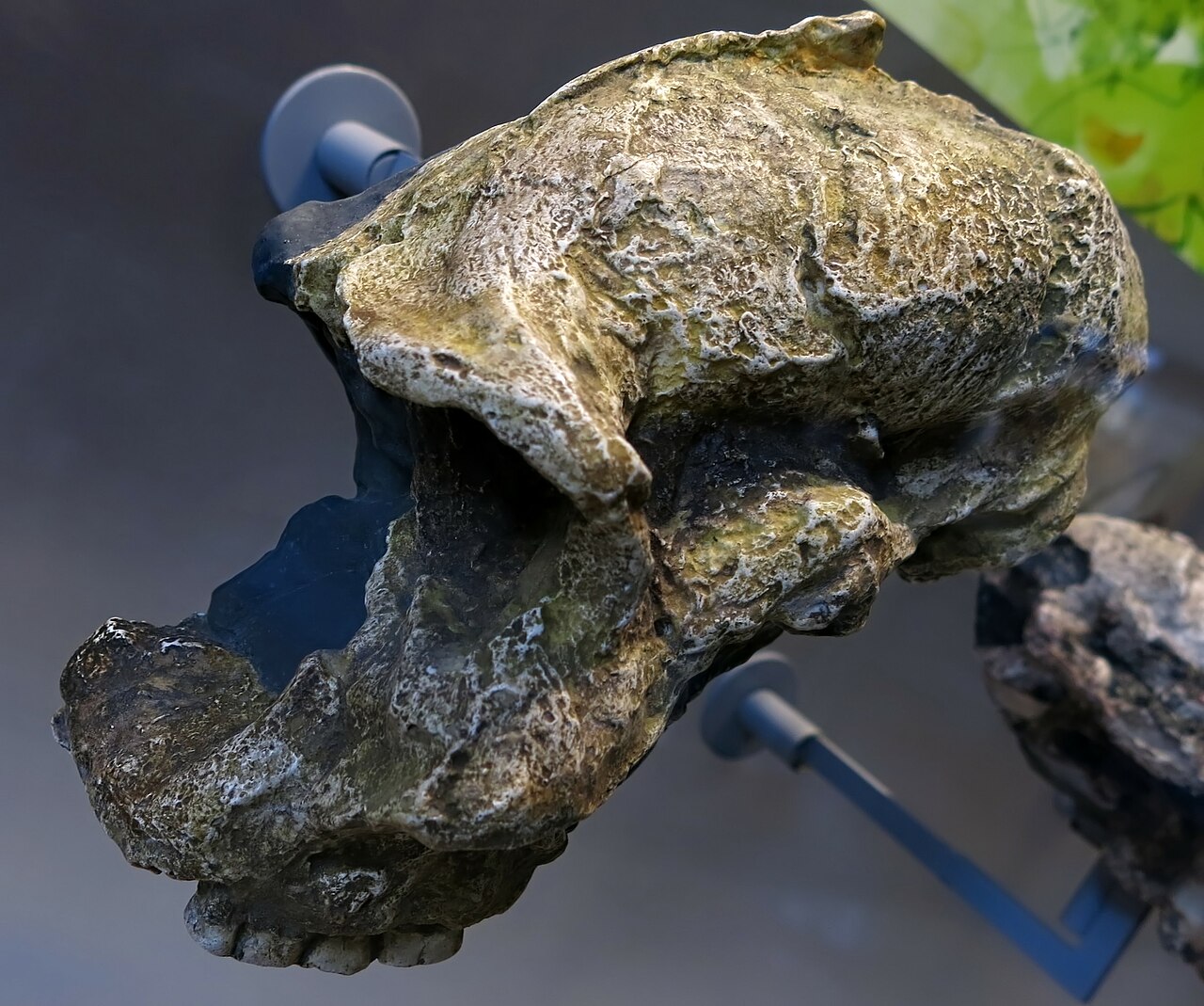
Paranthropus robustus combines a number of traits that distinguish it from more gracile australopiths and from early Homo. Cranial characteristics include a broad, dish-shaped face, flaring zygomatic arches that increase the space for chewing muscles, and in some specimens a sagittal crest indicative of well-developed temporalis muscles. The mandible is deep and robust and the postcanine teeth (premolars and molars) are large with thick enamel. These features together suggest increased bite force and an ability to process mechanically demanding foods.
- Large molars and premolars with thick enamel adapted to wear resistance
- Expanded cheekbones (zygomatic arches) to anchor powerful masticatory muscles
- Occasional sagittal crest in adult males reflecting muscle attachment
- Postcranial remains are less extreme and indicate a bipedal locomotor repertoire similar to other australopiths
Discovery and naming
The first material now attributed to P. robustus was recovered in southern African cave deposits and became widely known after 1938. The anatomist and field worker Robert Broom recognized the distinctive "robust" features and proposed the genus Paranthropus to accommodate these forms, arguing they differed markedly from the gracile australopiths then placed in Australopithecus. Broom's interpretation stimulated debate about how to classify robust early hominins and about their relationship to the lineage leading to modern humans.
Dating and geographic distribution
Fossils of P. robustus have been recovered primarily from South African cave sites and associated deposits. The species is generally dated to the early Pleistocene, with many authors suggesting an age range of about two to 1.2 million years ago. The stratigraphic and dating evidence comes from multiple excavations and laboratory studies at key localities.
Diet, ecology and behavior
Dental morphology and patterns of tooth wear, supported by isotopic and microwear analyses, imply a diet that included tough, fibrous plant materials and possibly hard objects such as seeds and nuts. The adaptations seen in the skull and teeth are commonly interpreted as specialization rather than generalist feeding. Direct evidence for tool manufacture by P. robustus is limited; stone tools occur in some of the same deposits, but their association with particular hominin species is uncertain and debated.
Taxonomy and scientific debate
Whether robust forms should be placed in a separate genus (Paranthropus) or retained within Australopithecus has been a persistent taxonomic question. Proponents of a separate genus emphasize functional and morphological differences, while others emphasize overall similarities and evolutionary continuity. Ongoing analyses of variation, sexual dimorphism, and growth patterns continue to inform this debate.
Significance and research directions
P. robustus is important for understanding the range of hominin adaptations to changing Pleistocene environments in Africa. Its anatomy illustrates a distinct evolutionary experiment in heavy chewing that did not lead directly to modern humans but shows how early hominins explored different ecological niches. Current research focuses on refining dates and paleoenvironmental reconstructions, clarifying diet through new analytical techniques, and resolving taxonomic relationships with other early hominins.
For historical summaries, site reports and taxonomic discussions see field and review literature and synthesized accounts that reference initial finds (1938), regional site overviews (southern African localities), research summaries (scholarly reviews), original descriptive work by Robert Broom, and broader comparative analyses of australopith and hominin diversity (Paranthropus debates, comparative studies).
Related articles
Author
AlegsaOnline.com Paranthropus robustus: a robust early hominin from southern Africa Leandro Alegsa
URL: https://en.alegsaonline.com/art/74574