
Paranthropus: the robust australopithecines of Africa
Extinct genus of robust australopithecines from eastern and southern Africa, noted for heavy chewing adaptations, distinctive cranial features, and a debated taxonomic relationship with Australopithecus and early Homo.
Paranthropus is an extinct genus of early hominins often called the robust australopithecines. Fossils attributed to this group lived in eastern and southern Africa during the Pliocene and early Pleistocene, roughly between about 2.7 and 1.2 million years ago. The genus is important for understanding hominin diversity because its members show extreme specializations in skull and tooth anatomy compared with contemporaneous species linked to the human lineage.
Image gallery
10 Images


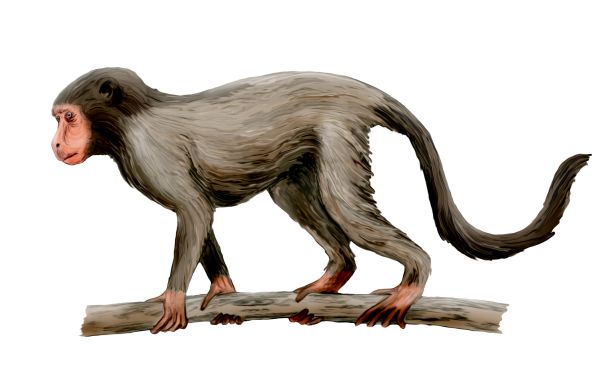


Key characteristics
Paranthropus species share a suite of features associated with heavy chewing: large, flat molars and premolars (post‑canine megadontia); thick enamel; wide zygomatic arches (cheekbones) to anchor big chewing muscles; and in some specimens a pronounced sagittal crest on the top of the skull. Brain size was small relative to later Homo, and body proportions retain many australopith-like aspects. These traits suggest strong dietary specialization rather than the generalized omnivory seen in Homo.
Major species and fossil record
- Paranthropus aethiopicus — an early form known from eastern Africa.
- Paranthropus boisei — widespread in eastern Africa and well represented at several fossil sites.
- Paranthropus robustus — found primarily in southern Africa.
Significant discoveries have come from sites in East and South Africa; for introductions and specimen lists see the Paranthropus genus page and resources on robust australopithecines.
Diet, behavior and environment
Studies of tooth wear patterns, enamel thickness and isotopes indicate a diet that included hard or abrasive items and possibly large amounts of grasses or sedges in some populations. These interpretations vary by species and site, and researchers emphasize a mix of preferred foods and fallback resources. Evidence for tool use by Paranthropus is limited and debated; most stone tools from the same time intervals are commonly attributed to early Homo.
Taxonomy and significance
Taxonomically the group is contested: some scientists place these fossils in a separate genus, Paranthropus, while others treat them as robust members of Australopithecus. Regardless of nomenclature, Paranthropus illustrates a distinct evolutionary experiment — a lineage that became highly specialized for powerful chewing and ultimately disappeared, offering a contrast to the more flexible adaptations that led to Homo.
Questions and answers
Q: What is Paranthropus?
A: Paranthropus is an extinct genus of robust australopithecines.
Q: Did Paranthropus descend from Australopithecus?
A: Yes, Paranthropus probably descended from the genus Australopithecus.
Q: Are there any living species of Paranthropus?
A: No, there are no living species of Paranthropus as it is an extinct genus.
Q: Were Paranthropus primates?
A: Yes, Paranthropus were primates as they belonged to the family Hominidae.
Q: What is the difference between Paranthropus and Australopithecus?
A: The main difference between Paranthropus and Australopithecus is that Paranthropus had a more robust skull and jaw structure, indicating a different diet and lifestyle.
Q: When did Paranthropus become extinct?
A: Paranthropus became extinct around 1 million years ago.
Q: What can we learn from the study of Paranthropus?
A: Studying Paranthropus can help us understand the evolution of early hominids and the history of human ancestors.
Related articles
Author
AlegsaOnline.com Paranthropus: the robust australopithecines of Africa Leandro Alegsa
URL: https://en.alegsaonline.com/art/74575
Sources
- doi.org : 10.1016/j.jhevol.2003.11.004