
Birds-of-paradise (Paradisaeidae): appearance, behaviour, and conservation
Birds-of-paradise are a family of songbirds native to Australasia, famed for the males' elaborate plumage and courtship displays; ecology, distribution, diet, and conservation status vary by species.
Overview
Birds-of-paradise are a distinctive family of passerine songbirds (Paradisaeidae) renowned for the often spectacular plumage and display behaviours of adult males. Found mainly in parts of Australasia, they illustrate dramatic examples of sexual selection and evolutionary specialization. Although some species are modest in appearance, many have evolved elongated feathers, vibrant colours, and complex movements used in courtship.
Image gallery
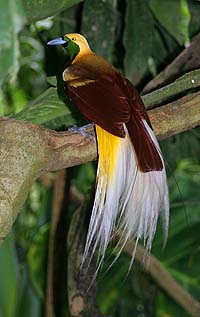
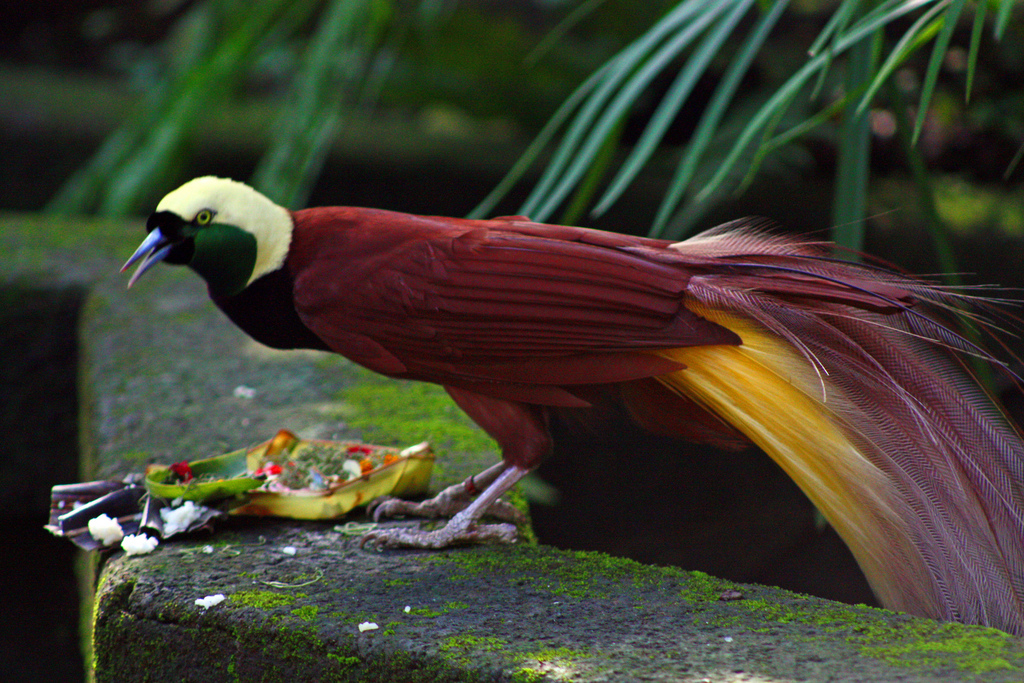
7 Images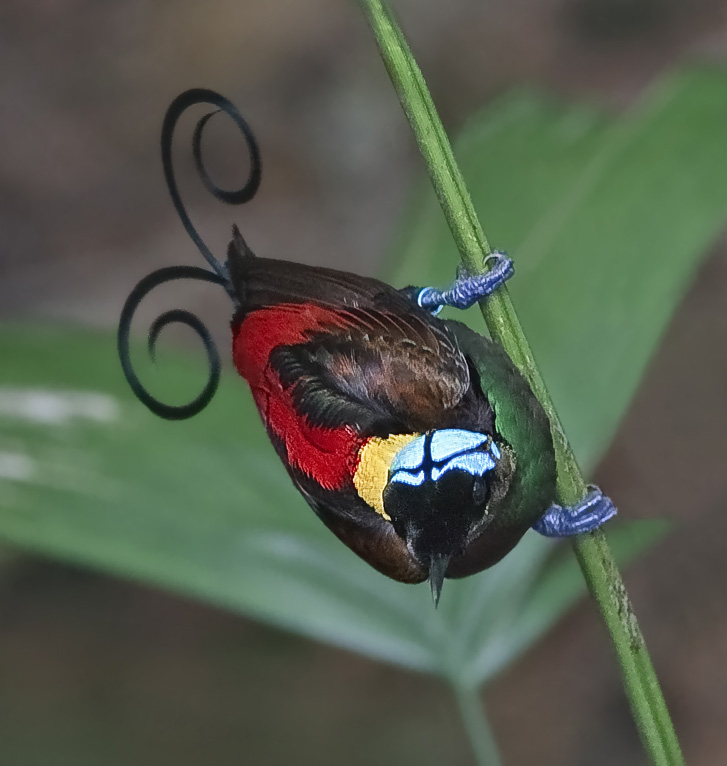


Characteristics and notable examples
Members of this family vary widely in size and shape but share a generally similar body plan: robust bodies, strong legs and feet for perching, and bills that range from stout to elongated depending on diet. Sizes span from the tiny king bird-of-paradise to much larger species; familiar examples include the greater bird-of-paradise and the curl-crested manucode. In many species males bear extravagant ornamentation—plumes, filaments, glossed feathers or tail extensions—while females are plainer.
- Plumage and dimorphism: About two-thirds of species show pronounced sexual dimorphism, with males and females differing markedly in colour and feather structure.
- Vocal and visual displays: Songs and calls accompany visual courtship elements; in some taxa specialised feather forms produce mechanical sounds as part of the display.
- Diet: Mostly frugivorous, though some groups such as riflebirds and sicklebills take more insects and other arthropods.
Behaviour, mating and reproduction
Breeding systems vary across the family. In species where males are polygynous, males often perform elaborate solo displays on cleared perches or leks to attract multiple females. Monogamous species tend to show less extreme ornamentation and shared parental duties. Female choice drives much of the diversity: qualities such as feather colour, courtship choreography, nest construction and song all influence mate selection. These dynamics are a widely cited example of sexual selection operating in nature.
Distribution and habitat
Birds-of-paradise occur primarily in humid tropical and subtropical zones. Their native range includes eastern Indonesia, the Maluku islands, Papua New Guinea, the Torres Strait Islands and parts of eastern Australia. They inhabit lowland and montane rainforests, swampy forest patches and sometimes moss forest or cloud forest at higher elevations. Nest sites are typically built from soft local materials—leaf fibers, moss, and plant stems—placed in forks or sheltered branches.
Conservation and human interactions
Many bird-of-paradise species have cultural importance for indigenous peoples; their feathers were historically prized for ornamentation and ceremonial dress. Overhunting for plumes and extensive habitat loss have reduced populations in places. Today, the leading threat across the range is habitat destruction, especially deforestation associated with logging and land conversion. Several species are listed with elevated conservation concern; others remain relatively stable where forest remains intact and protected.
Distinctive facts and research interest
Researchers study birds-of-paradise for insights into sexual selection, speciation and the evolution of complex behaviours. The family also provides examples of remarkable morphological adaptation—feathers modified into acoustic or visual devices—and differing life histories from small, agile canopy specialists to larger, more sedentary forms such as the black sicklebill. For general identification, museum collections and field guides often reference the type species Paradisaea apoda and highlight regional variation reflected in taxa such as the greater bird-of-paradise and the curl-crested manucode. Conservation efforts combine protected areas, sustainable land-use practices, and local community engagement to maintain populations and the habitats they require.
Questions and answers
Q: What family do birds of paradise belong to?
A: Birds of paradise belong to the family Paradisaeidae.
Q: Where do they live?
A: They live in eastern Indonesia, Maluku, Papua New Guinea, Torres Strait Islands, and eastern Australia.
Q: What materials are used to build their nests?
A: They build their nests from soft materials such as leaves, ferns, and vine monsters.
Q: How does sexual selection work for birds of paradise?
A: Females choose males who they instinctively see are fine specimens of their species based on the colours of the plumage, the construction of the nest, the song and the mating dance.
Q: Are birds of paradise monogamous or polygamous?
A: Some species are monogamous while others are polygamous. If they are monogamous then males look much like females whereas if they are polygamous then males are much flashier than females. In both cases it is the female who makes the choice of partner.
Q: What is causing a reduction in some species populations?
A: Hunting for plumes and habitat destruction have reduced some species to endangered status with habitat destruction due to deforestation now being seen as a main threat.
Q: How big can birds of paradise be?
A: Birds of paradise range in size from 3 grams (1.8 oz) and 15 cm (6 in) for king bird-of-paradise up to 110 cm (43 in) for black sicklebill and 430 grams (15.2 oz) for curl-crested manucode.
Related articles
Author
AlegsaOnline.com Birds-of-paradise (Paradisaeidae): appearance, behaviour, and conservation Leandro Alegsa
URL: https://en.alegsaonline.com/art/11707
Sources
- biomedcentral.com : biomedcentral.com/1471-2148/9/235