
Palace of Placentia
A former English royal palace in Greenwich on the River Thames, birthplace of Elizabeth I, later demolished and replaced by the Queen's House and the Royal Hospital for Seamen.
Overview
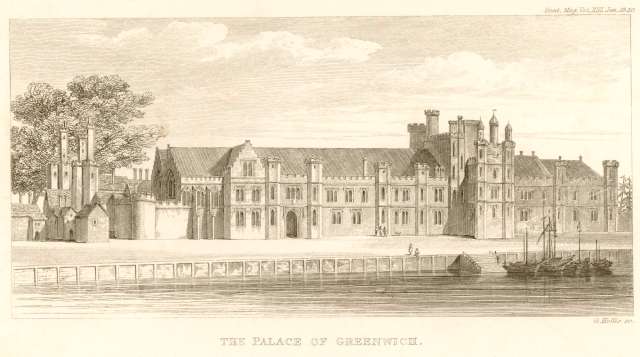
The Palace of Placentia was an important English royal palace located at Greenwich on the banks of the River Thames, downstream from London. Originally founded in the 15th century by Humphrey, Duke of Gloucester, it became a favoured residence for Tudor monarchs and a centre of court life beside the river.
Image gallery
4 Images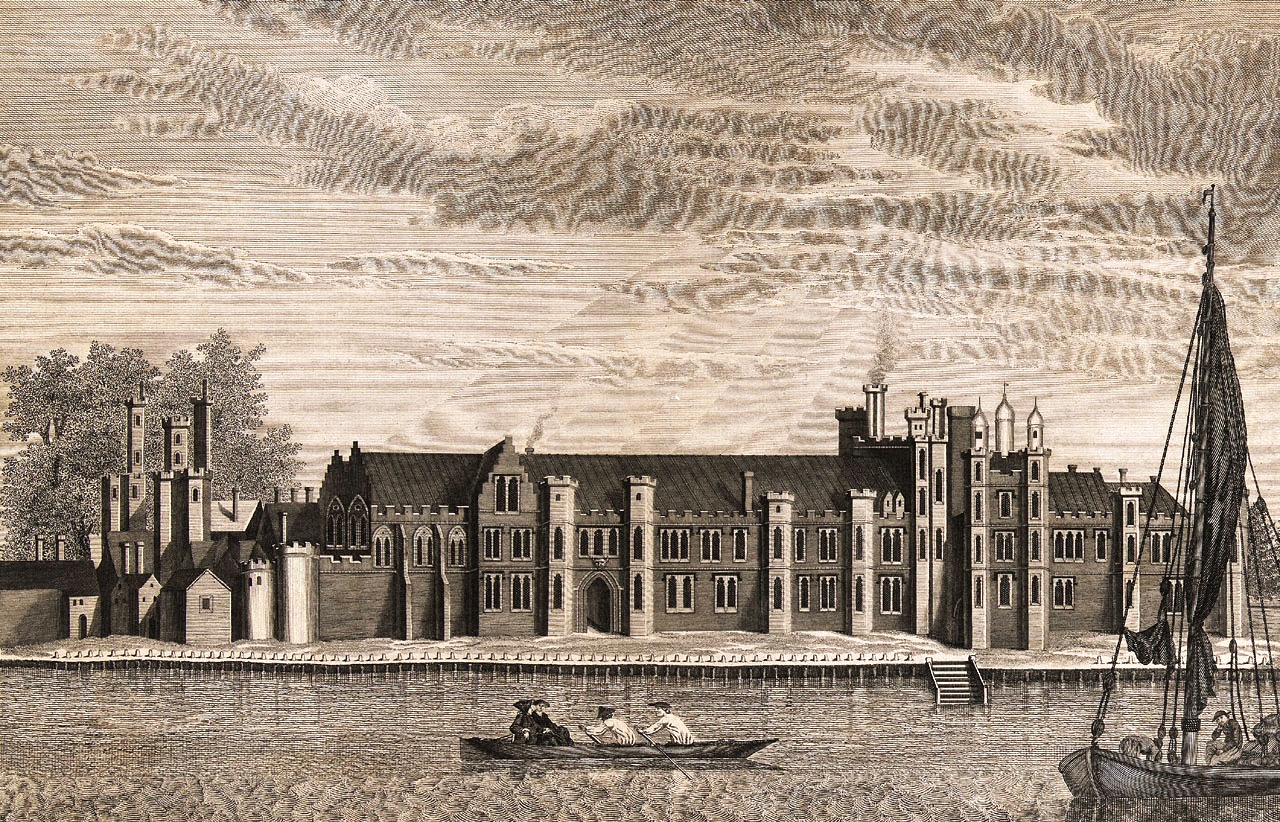


Design and royal use
During the late medieval and Tudor periods the palace was enlarged and remodelled into a complex of halls, private chambers and courts. Its riverside position provided ceremonial access by barge and offered gardens and terraces looking over the Thames. The palace served both official state functions and private domestic life; members of the royal family used it as a principal London residence for a time.
One of the palace's best-known historical associations is as the birthplace of Elizabeth I in 1533. Under Henry VII and Henry VIII the site acquired many of the characteristics now associated with Tudor palaces: brick-built ranges, courtyards and richly furnished apartments, though few detailed architectural plans survive.
Decline, demolition and later development
Following the 17th century the original structures fell into disrepair and were demolished. Parts of the palace site were redeveloped in the early 17th century with the construction of the Queen's House by Inigo Jones, and later the greater part of the royal riverside complex gave way to the buildings of the Royal Hospital for Seamen designed by Sir Christopher Wren and his collaborators. These later projects reshaped Greenwich and preserved the location's prominence even after the palace itself had gone.
Legacy and significance
The Palace of Placentia is remembered for its role in Tudor politics and dynastic history and for influencing the urban development of Greenwich. Archaeological investigations and foundation traces have been found beneath the later buildings on the site, linking modern landmarks to the medieval and Tudor past. The site remains a focus for visitors interested in the monarchy, maritime history and early modern architecture.
Notable facts
- The palace began as a nobleman's residence and became a royal household under the Tudors.
- Its riverside location made it important for ceremonial travel and communication by water.
- Although demolished, its site hosts some of Greenwich's most important historic buildings.
- Coordinates: 51°28′56″N 0°00′24″W.
Related articles
Author
AlegsaOnline.com Palace of Placentia Leandro Alegsa
URL: https://en.alegsaonline.com/art/74102