
Pandya dynasty
Ancient Tamil ruling dynasty of southern India, one of the three classical Tamil kingdoms; noted for maritime trade, pearl fisheries, patronage of Tamil literature and long association with Korkai and Madurai.
Overview
The Pandya dynasty was an ancient Tamil ruling house in South India, counted among the three classical Tamil kingdoms alongside the Chola and the Chera. The Pandyas are remembered for a long and intermittently documented political presence that stretched from early historic periods into the late medieval era. Their traditional early port and economic base was Korkai, later shifting inland to the city of Madurai, which became the dynasty's principal seat and a major cultural center.
Image gallery
10 Images




History and political development
References to Pandya rulers appear in classical Tamil literature, and later epigraphic records show a sequence of ruling lineages and changing fortunes. The dynasty experienced several phases: an early historic maritime and coastal power; competition and frequent warfare with neighboring polities; medieval revivals that reasserted Pandya influence in southern peninsular politics; and eventual eclipse by rising powers in the later medieval period. Throughout these changes the Pandyas remained a recognizable political identity in the region.
Economy, administration and symbols
Pandyas derived wealth from agriculture, fisheries—especially pearls—and extensive coastal trade linking the Tamil coast with other parts of the Indian Ocean world. Korkai was a noted ancient entrepôt for maritime commerce. Administrative practices are known through inscriptions and coin finds: rulers issued coinage and used emblems such as the pair of fishes as dynastic symbols, which appear on seals and coins recovered by archaeologists.
Culture, religion and patronage
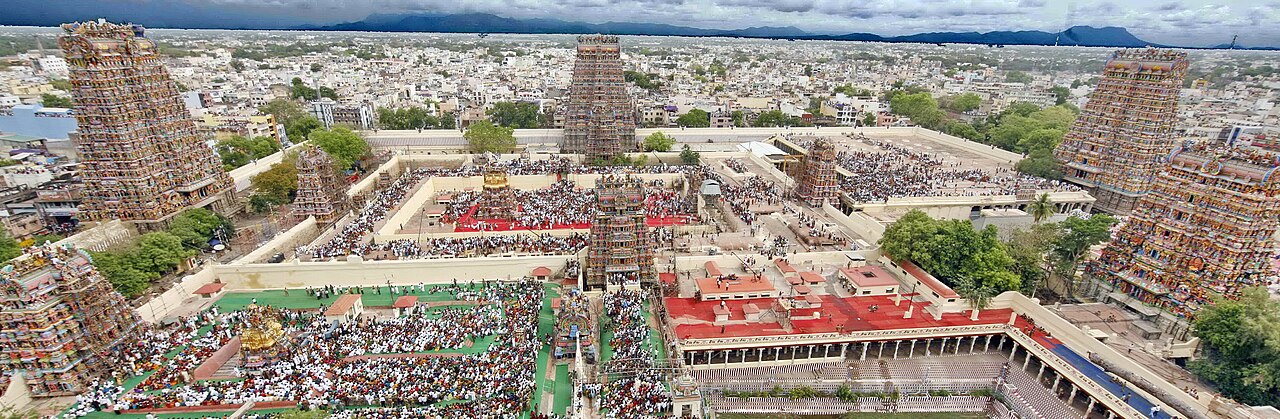
The dynasty was an important patron of Tamil literature and temple building. Sangam-era poets wrote about Pandya courts, and later Pandya rulers supported the construction and renovation of major temples in Madurai and surrounding districts. Religious life combined indigenous Tamil traditions with forms of Shaiva and Vaisnava Hindu practice, reflected in temple sculpture, inscriptions and ritual endowments.
Legacy and distinctions
As one of the three classical Tamil polities, the Pandyas are often compared with the Cholas, who developed broad imperial control, and the Cheras, who were centered on the western coast. The Pandya contribution to maritime commerce, Tamil literary culture, and monumental temple architecture remains a significant part of South Indian history. Modern understanding depends on literary sources, epigraphy and archaeology, which together illuminate a long-lived regional dynasty whose cultural impact persists in Tamil heritage and historical studies.
Questions and answers
Q: What was the Pandyan dynasty?
A: The Pandyan dynasty was an ancient Tamil state in South India.
Q: Was the Pandyan kingdom one of the three ancient Tamil kingdoms?
A: Yes, the Pandyan kingdom was one of the three ancient Tamil kingdoms along with Chola and Chera.
Q: How long did the Pandyas rule the Tamil country?
A: The Pandyas ruled the Tamil country from pre-historic times until the end of the 15th century.
Q: From where did the Pandyas rule initially?
A: The Pandyas ruled initially from Korkai, a sea port on the southern most tip of the Indian peninsula.
Q: Where did the Pandyas move to later on?
A: The Pandyas moved to Madurai in later times.
Q: Do we know the exact antiquity of the Pandyan kingdom?
A: No, we do not know the exact antiquity of the Pandyan kingdom.
Q: Aside from the Pandyas, what are the other two ancient Tamil kingdoms?
A: The other two ancient Tamil kingdoms were Chola and Chera.
Related articles
Author
AlegsaOnline.com Pandya dynasty Leandro Alegsa
URL: https://en.alegsaonline.com/art/74350