
Oxford University Press: history, structure, and global publishing
Overview of Oxford University Press, its governance, history, major publications, global expansion, production changes, and its role as the largest university press and a charity supporting the University of Oxford.
Overview
Oxford University Press (OUP) is the publishing arm of the University of Oxford and is widely recognised as the largest university press in the world and the second-oldest, after Cambridge University Press. As part of the university it operates with charitable objectives: revenues generated by OUP are used to support the university’s teaching and research missions. The Press produces a broad range of material for academic, educational and general readers, including reference works, textbooks, journals, and books for children and adults.
Image gallery
5 Images


Governance and organisation
OUP is governed by a body known as the Delegates of the Press, a group of university members who oversee policy and strategy. The Delegates are supported by a Secretary to the Delegates, who functions as the Press’s chief executive and acts as the main liaison with other university bodies. This form of internal university oversight has roots that reach back several centuries and reflects the Press’s dual identity as both a commercial publisher and a university department.
History and development
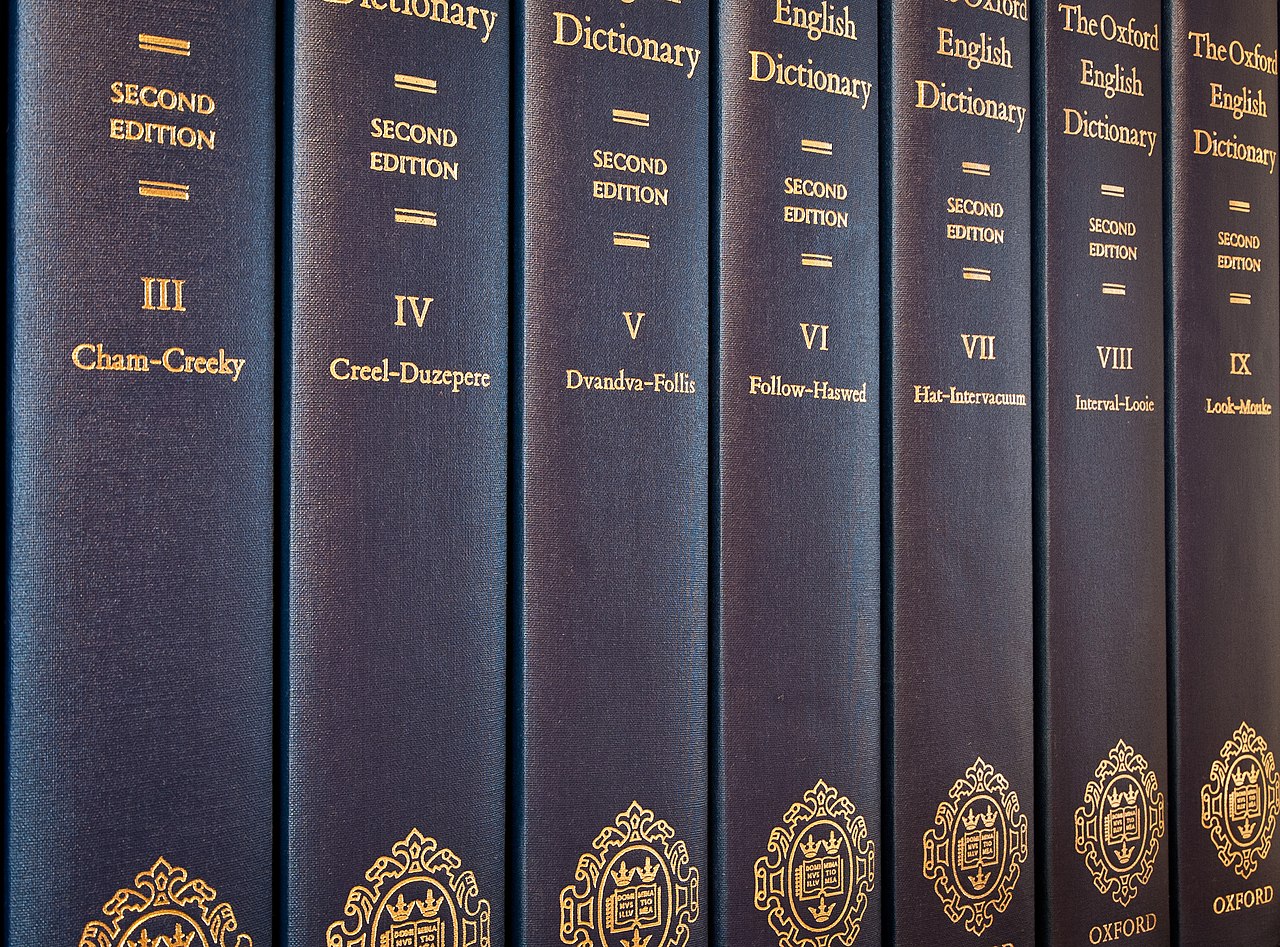
Printing associated with the University of Oxford dates to the late 15th century, with early printers producing scholarly texts, Bibles and liturgical books. Over time the operation expanded into a full publishing house. One of the Press’s most ambitious projects began in the late 19th century and eventually became the Oxford English Dictionary, now an internationally influential historical dictionary of English. The Press broadened its scope through the 19th and 20th centuries to include educational series, music, and popular classics.
Publications and notable series
OUP’s output spans a range of formats and subject areas. Major categories include:
- Reference works and dictionaries, notably the Oxford English Dictionary and other language resources;
- Academic monographs and journals across humanities, social sciences, and sciences;
- Educational materials and school textbooks aimed at national curricula and global markets;
- English Language Teaching (ELT) products which have been commercially significant worldwide;
- General trade lists such as the World’s Classics series and books for children and general readers.
These offerings are complemented by scholarly journals and digital databases used by libraries and institutions internationally.
Production, technology and global presence
OUP opened its first international office in New York in 1896 as part of a long process of global expansion. In the late 20th century, technological change and cost considerations led the Press to move away from in-house large-scale printing and binding. Its traditional printing house in Oxford closed in 1989, and related facilities such as the former paper mill at Wolvercote were later decommissioned. Today the Press operates through a network of international offices and partners while delivering content in print and digital formats.
Output, finance and impact
The Press issues thousands of new titles annually and maintains a large backlist of enduring scholarly and educational works. Operated within a university framework, OUP returns surplus income to the University of Oxford to support research and teaching activities. Beyond its financial contribution, its editorial and publishing standards have influenced academic publishing and language study worldwide.
For further information on related organisations and the Press’s major projects, see: the University of Oxford, the history of the Oxford English Dictionary at OED resources, details of international offices such as the New York presence at OUP New York, and the Press’s charitable status and governance at charity and governance information.
Related articles
Author
AlegsaOnline.com Oxford University Press: history, structure, and global publishing Leandro Alegsa
URL: https://en.alegsaonline.com/art/73813
Sources
- nytimes.com : "400 Years Later, Oxford Press Thrives"
- wikidata.org : wikidata.org/wiki/Q217595
- authority.bibsys.no : 90223325
- catalogo.bne.es : XX136667
- catalogue.bnf.fr : cb12515799j
- data.bnf.fr : (data)
- cantic.bnc.cat : a1217743x
- ci.nii.ac.jp : DA00318087
- d-nb.info : 812629-X
- isni.org : 0000 0001 2292 9185
- id.loc.gov : n80126136
- kopkatalogs.lv : 000070532
- musicbrainz.org : 00325c55-7326-4898-be9f-db196a9e4211
- id.ndl.go.jp : 00697782
- aleph.nkp.cz : ko2003204713