
Sarcopterygii (lobe‑finned fishes)
Sarcopterygii are lobe‑finned bony fishes—including lungfishes and coelacanths—originating in the Silurian; one lineage led to tetrapods and terrestrial vertebrates.
Overview
Sarcopterygii is the group of bony fishes commonly called lobe‑finned fishes. Members are distinguished by muscular, fleshy fins that contain a central series of bones. The name is applied to a major class or clade of vertebrates within the broader category of fish. This branch is important because one of its lineages ultimately produced the first four‑limbed vertebrates that left the water.
Image gallery
10 Images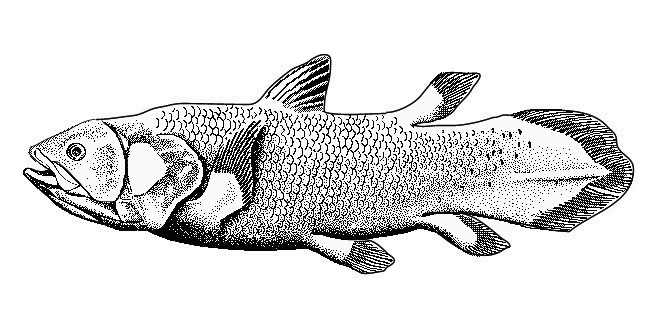
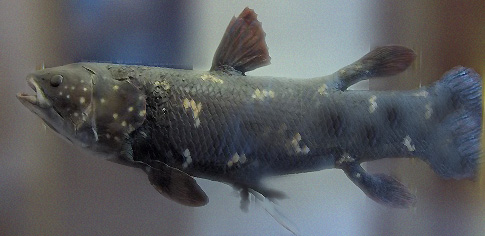

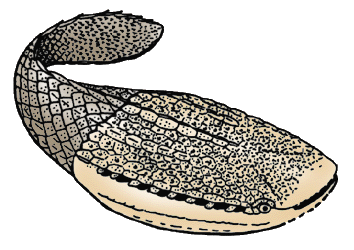


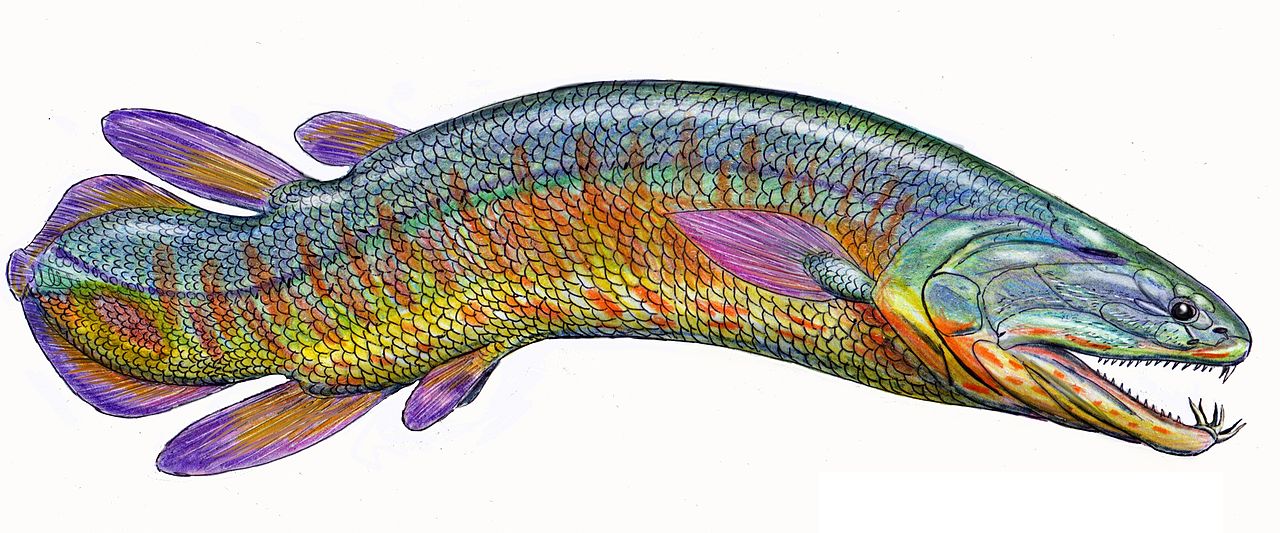

Characteristics
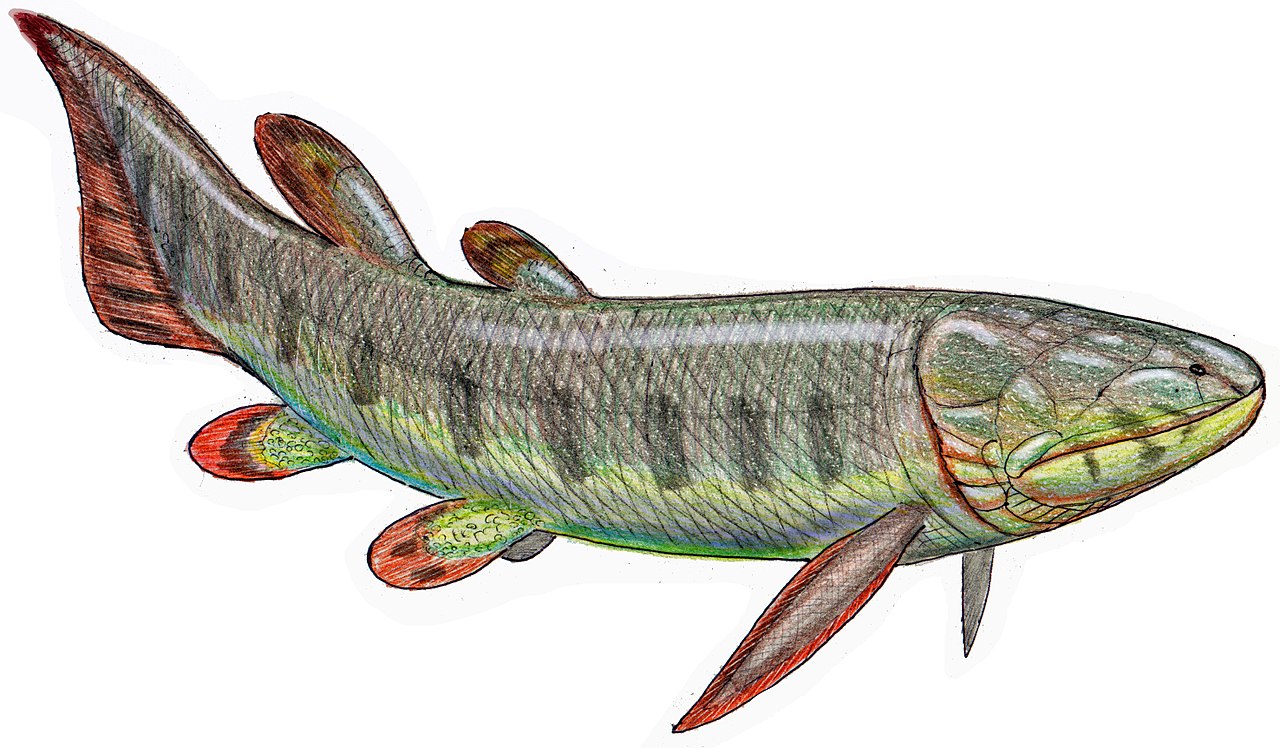
Sarcopterygians share several anatomical traits: robust fin lobes with internal bone structures homologous to tetrapod limb bones, paired appendages, and in many groups primitive lungs or lung‑like organs. Externally they can vary from the scaled, deep‑bodied lungfishes to the streamlined, rare coelacanths. Examples include the lungfish, which can breathe air, and the coelacanths, noted for their distinctive fin placement.
Evolutionary history
The group first appears in the fossil record in the Silurian period and diversified through the Devonian. During that long history, several sarcopterygian lineages produced forms adapted to shallow, vegetation‑choked waters; one of these later evolved adaptations for weight‑bearing limbs and digits. That transition is the origin of the tetrapods, the vertebrate group that includes amphibians, reptiles, birds and mammals.
Living groups and notable facts
Today only a few sarcopterygian lineages survive. Modern lungfishes live in freshwater and can survive dry seasons by estivating; coelacanths are deep‑water fishes once thought extinct and later rediscovered. Fossils of many extinct forms document the gradual anatomical changes that link fish to early land vertebrates.
Significance and classification
Sarcopterygii are central to understanding vertebrate evolution. In contemporary classifications the term may be used narrowly for the lobe‑finned fishes or more broadly to include tetrapods, reflecting the evolutionary continuity from fin to limb. They stand in contrast to the ray‑finned fishes (Actinopterygii), which have a very different fin structure and represent the other great lineage of bony fishes.
Questions and answers
Q: What is the Sarcopterygii?
A: The Sarcopterygii is a class of fish.
Q: What type of fish are the Sarcopterygii?
A: They are lobe-finned fish, like the lungfish and coelacanths.
Q: When did the Sarcopterygii first appear?
A: The Sarcopterygii first appeared in the Silurian, 418 million years ago (mya).
Q: What is the significance of the Sarcopterygii in relation to tetrapods?
A: One line in the Sarcopterygii group gave rise to the tetrapods.
Q: Are the Sarcopterygii considered to be bony fish?
A: Yes, the Sarcopterygii are a clade of bony fish.
Q: How many years ago did the Sarcopterygii first appear?
A: The Sarcopterygii first appeared 418 million years ago (mya).
Q: Which other fish are related to the Sarcopterygii?
A: The lungfish and coelacanths are related to the Sarcopterygii as they are also lobe-finned fish.
Related articles
Author
AlegsaOnline.com Sarcopterygii (lobe‑finned fishes) Leandro Alegsa
URL: https://en.alegsaonline.com/art/87334