
One Hot Minute (Red Hot Chili Peppers album)
One Hot Minute is the Red Hot Chili Peppers' sixth studio album, released in 1995. It features guitarist Dave Navarro, darker lyrical themes and a mixed critical and commercial response.
Overview
One Hot Minute is the sixth studio album by American alternative rock band Red Hot Chili Peppers. It was released on September 12, 1995 by Warner Bros. Records. The record marks a distinct period in the group's career because it was made after long-time guitarist John Frusciante departed and was replaced by Dave Navarro. Navarro's background in hard rock and alternative metal contributed to a different sonic character than the band's previous work.
Image gallery
1 Image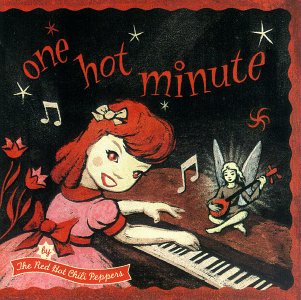
Recording, line-up and sound
The lineup for this album comprised Anthony Kiedis (vocals), Flea (bass), Chad Smith (drums) and Navarro (guitar). Recording sessions produced a heavier, more textured guitar approach with occasional metal-influenced riffs and atmospheric layers. The album retains the band's funk-rock foundation but experiments with longer arrangements, denser guitar tones and a darker production palette than their preceding release, Blood Sugar Sex Magik.
Lyrical themes and influences
Lyrically the album departs from much of the band's earlier material. Rather than the overtly sexual and celebratory mood found on some prior records, songs on One Hot Minute address topics such as substance abuse, personal turmoil and introspection. During the period leading up to and during the album's creation, vocalist Anthony Kiedis struggled with addiction, and those experiences informed several compositions. The result is a set of songs that often feel brooding and confessional.
Release and commercial performance
The album reached the top five on the Billboard 200, peaking at number four, but it did not match the commercial heights of its predecessor. Sales figures and public response were mixed: while some listeners praised the band’s willingness to explore new territory, others missed the melodic chemistry of earlier material. Within a few years the band and Navarro parted ways, with official statements noting musical differences as a factor.
Critical reception and legacy
Critics were divided. Some reviewers applauded the ambition and weight of the arrangements, while others described the record as unfocused compared with the band’s most celebrated work. Retrospective appraisals often frame the album as a transitional record: an honest document of a turbulent era for the band that nonetheless contains moments of memorable songwriting and distinctive production choices.
Notable tracks and distinctions
- Singles and standout songs exhibit a range from driving rock to slower, moodier pieces.
- The album is often cited in discussions about how personnel changes can reshape a group's sound.
- Its darker tone and heavier guitar work set it apart from the band's earlier funk-driven albums.
Further reading and related links
- Alternative rock context and genres
- Band histories and biographies
- Red Hot Chili Peppers official topics
- Album discography listings
- Record label information
- John Frusciante background
- Dave Navarro and his work
- Themes of sexuality in popular music
- Love and relationship themes in songwriting
- Substance abuse as a lyrical topic
- Depression and music
- Heavy metal influences in alternative rock
- Guitar techniques and tones
- Riff construction and examples
- Anthony Kiedis: vocals and writing
- Addiction and recovery topics
- Cocaine and its cultural impact
- Heroin in popular music narratives
- Lyric analysis methods
- Media coverage and band statements
One Hot Minute remains a debated chapter in the Red Hot Chili Peppers' catalogue: neither the band's most celebrated nor its least interesting release, it documents a creative group navigating personnel changes, personal struggles and a desire to expand their musical vocabulary.
Questions and answers
Q: What is One Hot Minute?
A: One Hot Minute is the sixth studio album by American alternative rock band Red Hot Chili Peppers. It was released on September 12, 1995 by record label Warner Bros. Records.
Q: Who joined the band after Blood Sugar Sex Magik?
A: Dave Navarro joined as the new guitarist after Blood Sugar Sex Magik.
Q: How did Red Hot Chili Peppers' music change with Navarro's addition?
A: Red Hot Chili Peppers' music became very different because of Navarro and was less about sex and love than their previous work, but instead focused on themes like drugs and depression with some heavy metal guitar riffs.
Q: What were some of the lyrics in One Hot Minute about?
A: Some of the lyrics Anthony Kiedis wrote were about the effects of drugs due to his addiction to cocaine and heroin in 1994.
Q: How successful was One Hot Minute compared to Blood Sugar Sex Magik?
A: One Hot Minute did not sell many copies, even though it reached number four on the Billboard 200 chart, while Blood Sugar Sex Magik sold twice as many copies as One Hot Minute.
Q: Why did Dave Navarro leave Red Hot Chili Peppers in 1998?
A: In 1998, Dave Navarro was asked to leave the band because they and he liked to make different kinds of music according to what Red Hot Chili Peppers told media outlets at that time.
Q: How would Stephen Thomas Erlewine describe One Hot Minute?
A: Stephen Thomas Erlewine of Allmusic said that "One Hot Minute is as musically ambitious as Blood Sugar Sex Magik, but is even more unfocused, which means it provides the fewest thrills of any of the group's albums."
Related articles
Author
AlegsaOnline.com One Hot Minute (Red Hot Chili Peppers album) Leandro Alegsa
URL: https://en.alegsaonline.com/art/72576
Sources
- rollingstone.com : "Pepper Guitar Mill Grinds On"
- wc10.allmusic.com : "One Hot Minute album review"