
Old World warbler
Informal name for a diverse group of small insectivorous passerine birds once placed in Sylviidae; modern research has split them into multiple families and clarified relationships with other warblers.
Overview
The term "Old World warbler" refers to a broad assemblage of small, mostly insect-eating passerine birds traditionally grouped in the family Sylviidae. Historically the family included more than 400 species in some seventy or more genera, a scope that produced considerable taxonomic uncertainty and frequent revision. For a historical sense of that diversity see references on traditional Sylviidae.
Image gallery
5 Images
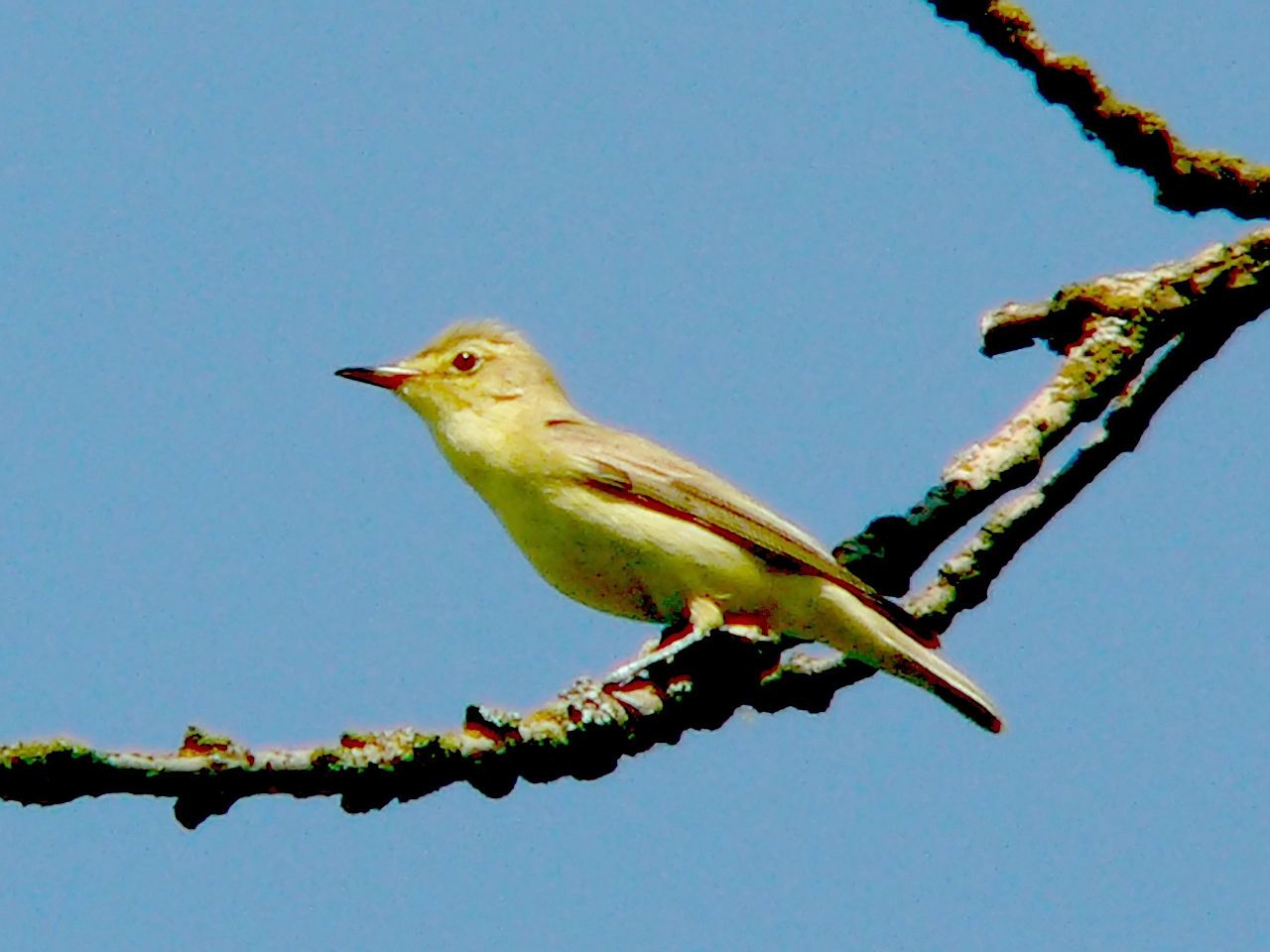


Characteristics
These birds are typically small, often plain-coloured, and possess slender bills adapted for gleaning insects. Many are arboreal or skulking in dense vegetation, and a number are renowned for their songs rather than showy plumage. Life histories vary: some species are sedentary, while others undertake long migrations between breeding grounds in temperate regions and wintering areas in the tropics.
Taxonomic history and reclassification
Classification of Old World warblers was long based on morphology and behaviour, but molecular phylogenetic studies from the late 20th century onwards revealed that the traditional grouping was polyphyletic. As a result many former sylviids have been reassigned to several distinct families. These include, among others:
- Acrocephalidae (reed and marsh warblers)
- Phylloscopidae (leaf warblers)
- Cettiidae (bush warblers and allies)
- Locustellidae / historically referred to as Megaluridae (grassbirds and grasshopper warblers)
- Cisticolidae (prinia and allies) and other smaller groups
The process of splitting and redefining groups has been driven by genetic data and remains the subject of ongoing research; resources summarizing these changes discuss the taxonomic confusion and its resolution in more detail and provide modern arrangements of updated families.
Distribution, ecology and importance
Old World warblers are found mainly across Europe, Asia and Africa, with some lineages extending into Australasia. Ecologically they play important roles as insect predators and as components of food webs. Because many species have narrow habitat requirements, they are useful indicators of habitat quality; habitat loss, wetland drainage and changes in land use threaten several species and drive conservation concern for particular taxa.
Distinctions and notable facts
The label "Old World warbler" is informal and should not be taken to imply a single evolutionary lineage. These birds are not closely related to the New World warblers (family Parulidae), despite superficial similarities in size and feeding habits — a classic example of convergent evolution. Well-known representatives formerly placed in the broad Sylviidae include familiar species of the genera Sylvia, Acrocephalus, Phylloscopus and Locustella, many of which remain subjects of field study and conservation work.
Related articles
Author
AlegsaOnline.com Old World warbler Leandro Alegsa
URL: https://en.alegsaonline.com/art/72314