
Old Japanese: the language of early Nara and its written record
Old Japanese refers to the earliest attested stage of Japanese, preserved in 7th–8th century texts. It is known from Chinese-derived writing, man'yōgana, wooden tablets and poetic anthologies.
Overview
Old Japanese denotes the earliest stage of the Japanese language known from surviving records, mainly from the seventh and eighth centuries. Scholars commonly treat the period that produced these texts as ending with the start of the Heian era in 794 Heian period, though the precise beginning of what should be called Old Japanese is harder to fix. The term is used to describe both the linguistic system reconstructed for that era and the forms of Japanese attested in documents and inscriptions of the time Old Japanese.
Image gallery
4 Images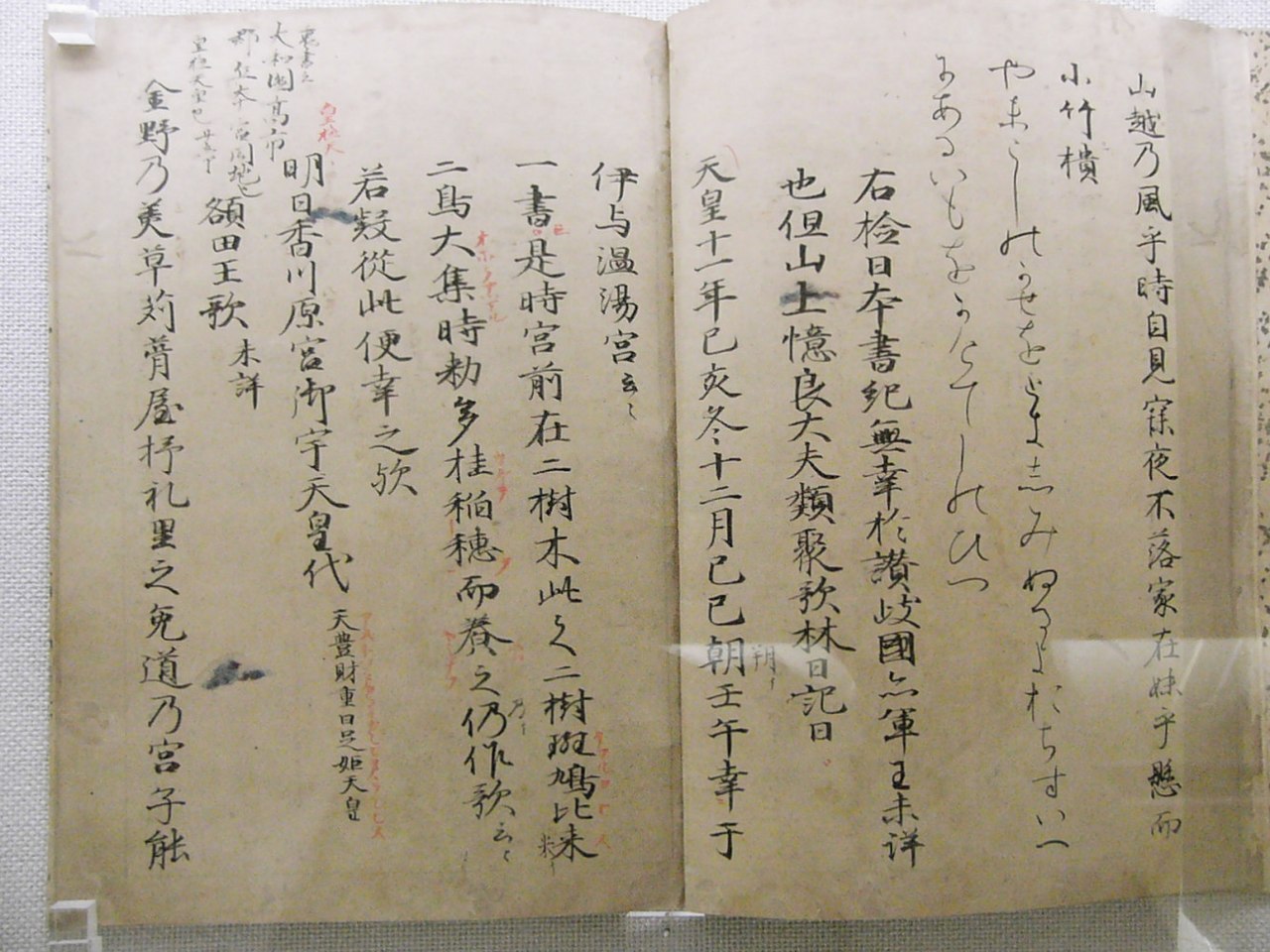


Written records and primary sources
The earliest extended surviving works in which Old Japanese appears date from the early Nara period and slightly before. Administrative and religious contacts introduced Chinese characters to Japan, and many early documents are written in Chinese characters or classical Chinese with Japanese influence. Important collections include chronicles and poetry anthologies compiled in the eighth century, and short inscriptions on wooden tablets and objects. The oldest dated extended compilation often cited is from 712, within the Nara period (710–794) Nara period (710–794). Other primary items include poetic compilations and local gazetteers that preserve forms of language not found later.
How Old Japanese was written
Because Japanese had no indigenous syllabic script at the time, writers used Chinese characters in two principal ways. Some texts adopt classical Chinese as the literary medium, sometimes showing Japanese syntactic influence, while other texts employ characters for their phonetic values to record Japanese speech. The phonetic use of Chinese characters is known as man'yōgana, a system that lets researchers infer aspects of Old Japanese pronunciation. Short messages and receipts carved on wooden tablets (mokkan) and inscriptions likewise contribute data about everyday language and orthographic practice.
Phonology and grammar
Old Japanese is characterized as an agglutinative, subject–object–verb (SOV) language with a rich system of particles and verbal endings. While basic word order and many grammatical markers are recognizable to users of later Japanese, several features set Old Japanese apart. Philologists reconstruct distinctions in vowel quality that were later lost or merged; some reconstructions posit more vowel contrasts than modern Japanese. Verb and adjective conjugation patterns show archaic forms and auxiliary combinations that evolved in subsequent centuries. Because most surviving records are written with Chinese characters, exact pronunciation and some grammatical details remain matters of careful reconstruction based on orthography and comparative evidence Japanese grammatical patterns and the way authors represented word order.
Development into later stages and writing reforms
Over the ninth and tenth centuries, the practical phonetic use of Chinese characters gave rise to two simplified scripts: cursive forms developed into hiragana and compact signs into katakana. These kana simplified the representation of Japanese sounds and enabled a more faithful written rendering of spoken language. The transition from man'yōgana and mixed Chinese–Japanese writing to kana was gradual and uneven across genres; official documents, Buddhist texts, and poetry adopted innovations at different rates, which helps explain why written norms lagged behind spoken changes.
Importance and research
Old Japanese is central to historical linguistics, philology, and the study of early Japanese culture because it provides the earliest attested grammatical and lexical material for the language. It illuminates contacts with Chinese civilization, the spread of literacy, and the formation of later literary forms. Modern reconstructions remain provisional in places; they rely on patterns found in man'yōgana spelling, comparative data, and internal analysis of morphology. For readers who want to explore primary and secondary materials further, surveys of the language often point to editions of early chronicles, poetic anthologies, collections of mokkan inscriptions and modern scholarly introductions to Old Japanese phonology and syntax, including resources comparing Old Japanese forms with classical Chinese texts and discussing phonetic spelling conventions Old Japanese.
Related articles
Author
AlegsaOnline.com Old Japanese: the language of early Nara and its written record Leandro Alegsa
URL: https://en.alegsaonline.com/art/72283