
Nuclear and radiation accidents
An overview of major nuclear and radiation accidents: causes, notable events, health and environmental effects, emergency response, and safety lessons from power plants, fuel sites, and naval reactors.
Overview
Nuclear and radiation accidents are unintended events at facilities that handle radioactive material — for example power reactors, fuel processing plants, research reactors, medical or industrial sources, and nuclear-powered vessels. These incidents range from small equipment failures with negligible public impact to large releases of radioactivity that cause acute health effects, long-term contamination, and costly social disruption. Compilations of major incidents and comparisons are available in many reference lists, which summarize events by severity and consequences: major incident lists.
Image gallery
2 Images
Causes and common mechanisms
Accidents typically result from combinations of human error, design weaknesses, inadequate procedures, equipment failure, and extreme external events (for example earthquakes, tsunamis, or fires). Typical pathways for harm include loss of coolant or control of the fission process in a reactor, chemical or thermal fires that disperse radioactive material, and accidental criticality in processing facilities. Radioactive releases can be gaseous, particulate, or liquid and affect local and downwind environments depending on weather and containment performance.
Notable incidents and examples
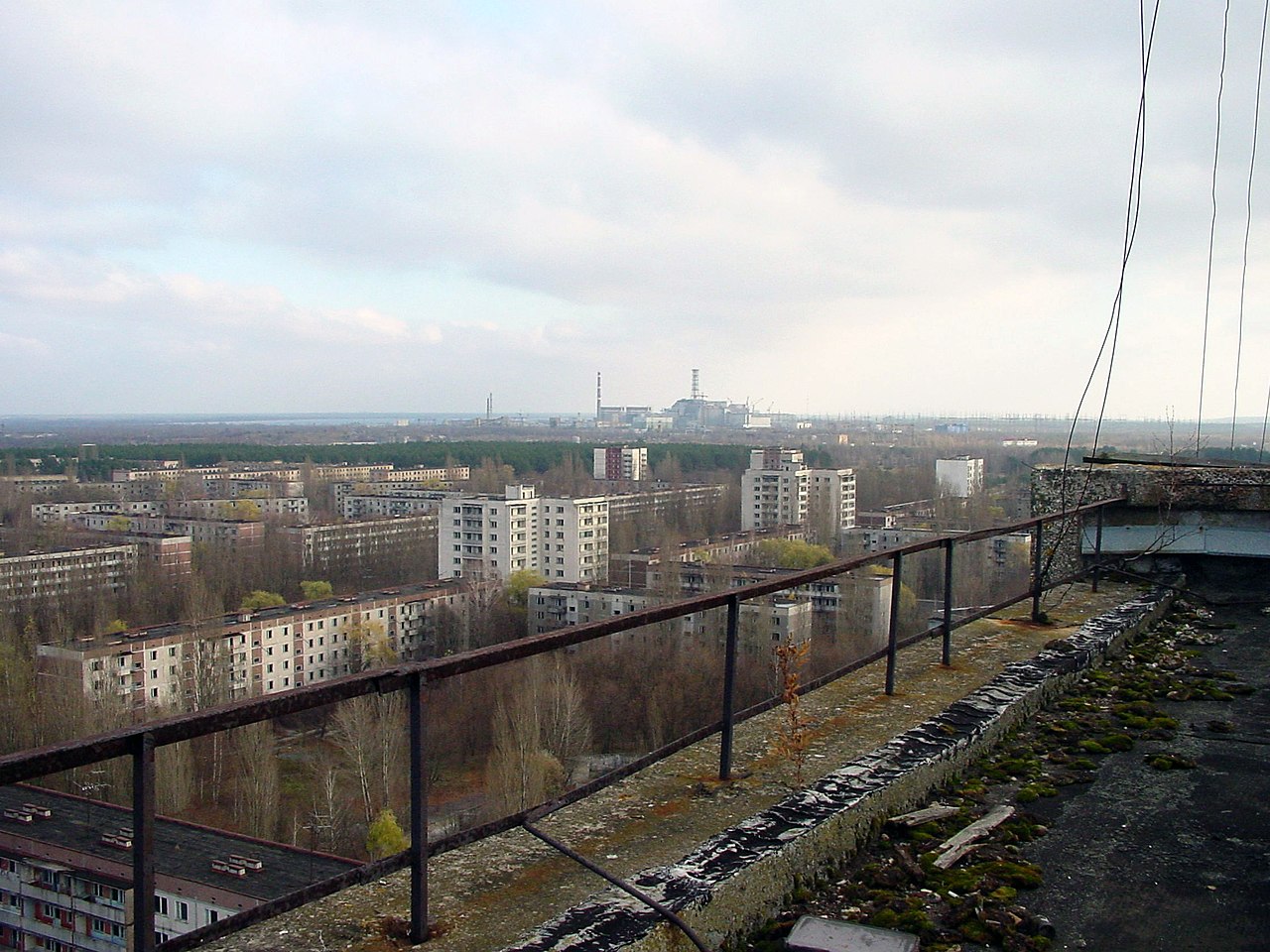
Several accidents are widely cited for their severity and long-term effects. The 1986 Chernobyl disaster, then in the Soviet Union and now in northern Ukraine, produced a large release of radioactivity, caused immediate fatalities among plant staff and emergency workers, forced large-scale evacuations, and left an exclusion zone that remains a prominent symbol of long-term contamination. The 2011 Fukushima Daiichi accident in Japan followed a powerful earthquake and tsunami; it caused fuel damage and releases but far fewer direct radiation fatalities than some early reports had feared. Earlier events such as the 1979 Three Mile Island partial core meltdown in the United States and the 1957 Windscale (Sellafield) fire in the United Kingdom also shaped public and regulatory responses.
In addition to civilian facilities, several serious accidents have involved naval nuclear reactors. A number of these events occurred on submarines and other vessels of the former Soviet fleet; they included reactor accidents and losses at sea that resulted in crew fatalities and localized contamination. Such maritime incidents are commonly listed among the most serious naval nuclear mishaps: naval reactor incidents involving vessels from the Soviet Union era remain subjects of historical and technical study.
Health, environmental and social impacts
Immediate health effects from high radiation doses can include radiation sickness, burns, and early fatalities among those exposed close to the source. Lower-level exposures increase lifetime cancer risk and other potential long-term health outcomes; estimates of future cases vary with the exposed population, dose, and modelling approach. Environmental consequences depend on the radionuclides released: some, like iodine-131, have short half-lives and concentrate in the food chain (notably milk), while others, such as cesium-137 and plutonium isotopes, persist in soils and pose longer-term land-use and ecological challenges. Large accidents also cause social disruption through evacuations, relocation, loss of livelihood, and long-term stigma for affected regions.
Response, mitigation and lessons learned
Emergency response emphasizes rapid assessment, sheltering or evacuation, distribution of stable iodine where appropriate, control of contaminated foodstuffs, and long-term health monitoring. After major accidents, regulators and operators have strengthened safety requirements: improved reactor designs, redundant cooling systems, more robust containment structures, enhanced emergency planning, and greater international cooperation on nuclear safety and radiological monitoring. While technology and regulation have reduced some risks, managing legacy waste, decommissioning damaged plants, and ensuring transparent communication remain enduring challenges.
Distinctions and notable facts
- Not all nuclear accidents involve large releases; many are contained events with minimal public exposure.
- Different metrics are used to compare accidents: immediate fatalities, collective dose, area contaminated, and economic cost — no single metric captures every aspect of harm.
- Public perception and policy responses often weigh potential catastrophic risks heavily, influencing energy, defense, and medical uses of radioactive materials.
Questions and answers
Q: What is the list presented in the text?
A: The list presented in the text is of the worst disasters at nuclear power plants and other nuclear facilities all over the world.
Q: Which event is considered as one of the worst nuclear accidents to date?
A: The Chernobyl disaster, which occurred in 1986 in Ukraine, is considered as one of the worst nuclear accidents to date.
Q: How many people died directly as a result of the Chernobyl disaster?
A: The Chernobyl disaster killed 30 people directly.
Q: What was the estimated financial damage caused by the Chernobyl disaster?
A: The Chernobyl disaster caused damage of approximately $7 billion.
Q: How many additional cancer deaths are estimated to be related to the Chernobyl disaster?
A: An estimated 4,000 additional cancer deaths are believed to be related to the Chernobyl disaster among those exposed to significant radiation levels.
Q: Which areas were most affected by the radioactive fallout from the Chernobyl disaster?
A: The radioactive fallout from the Chernobyl disaster was concentrated in areas of Belarus, Ukraine, and Russia.
Q: Which country's nuclear submarine mishaps have resulted in the most deaths to-date?
A: All of the most serious nuclear and radiation accidents by death toll in the world have involved nuclear submarine mishaps of the former Soviet Union.
Related articles
Author
AlegsaOnline.com Nuclear and radiation accidents Leandro Alegsa
URL: https://en.alegsaonline.com/art/71342
Sources
- johnstonsarchive.net : "Deadliest radiation accidents and other events causing radiation casualties"
- time.com : "The Worst Nuclear Disasters"
- navy.mil : navy.mil/navydata/testimony/safety/bowman031029.txt
- www3.nd.edu : "Fukushima, Flawed Epistemology, and Black-Swan Events"
- esd.mit.edu : "Normal Accidents by Charles Perrow"
- tandfonline.com : A Critical Evaluation of Nuclear Power and Renewable Electricity in Asia
- pt.scribd.com : The Accidental Century - Prominent Energy Accidents in the Last 100 Years
- news.bbc.co.uk : Timeline: Nuclear plant accidents
- hyperphysics.phy-astr.gsu.edu : "Nuclear Accidents"
- iaea.org : "IAEA Report"
- cbsnews.com : "Worker dies at damaged Fukushima nuclear plant"
- iaea.org : "Fukushima Nuclear Accident Update Log"
- johnstonsarchive.net : "K-8 submarine reactor accident, 1960"
- iaea.org : Strengthening the Safety of Radiation Sources