
Nuremberg Military Tribunals
A series of twelve U.S.-run trials in Nuremberg (1946–1949) that prosecuted Nazi officials and collaborators; shaped modern international criminal law, medical ethics and corporate accountability.
The Nuremberg Military Tribunals were a sequence of post‑World War II criminal trials convened by the United States in the German city of Nuremberg. Held in the same Palace of Justice used for the International Military Tribunal (IMT), these U.S. military tribunals ran from 1946 into 1949 and tried senior officials, professionals and industrial figures for war crimes, crimes against humanity and related offenses.
Unlike the IMT that prosecuted the 24 major war criminals in the first, multinational proceeding — often referenced simply as the Nuremberg Trials — the later proceedings were organized and conducted by the occupying authorities. Disagreements among the four wartime allies limited a single, joint series of trials, and each occupying power moved forward in its own zone. The United States therefore instituted a program of twelve tribunals in its zone to address a broad range of defendants and allegations.
Image gallery
4 Images


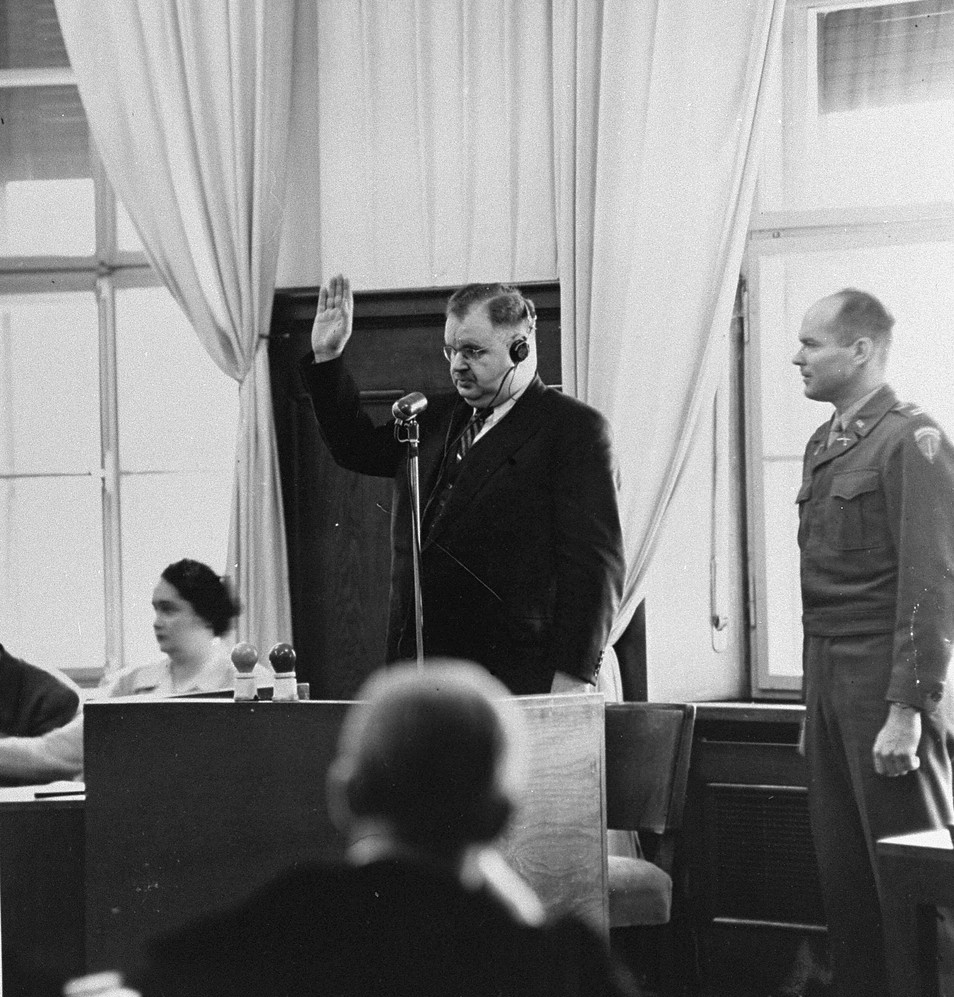
Structure and legal basis
The U.S. tribunals operated under military authority and drew on Control Council Law No. 10 as the underlying framework for prosecuting war crimes and crimes against humanity. Each tribunal assembled a panel of American judges, defense counsel and prosecutors from the U.S. military government. The cases varied in subject and scale: some targeted medical professionals and legal officials, others focused on industrial corporations, SS organizations, military commands and administrators accused of facilitating or directing atrocities.
Notable trials
- The Doctors' Trial — trials of physicians and medical administrators for human experimentation and abuses that also led to the Nuremberg Code of research ethics.
- The Judges' (or Justice) Trial — prosecution of jurists and legal officials who applied Nazi racial and political laws.
- Einsatzgruppen Trial — cases against mobile killing units responsible for mass shootings in occupied territories.
- Industrial and economic cases — including prosecutions of corporations and executives (for example, industrial conglomerates and steelmakers) for exploitation, slave labor and support of criminal policies.
- Additional cases addressed high command planning, SS offices, concentration camp administration and other institutional actors implicated in crimes.
The U.S. rounds of trials are often referred to collectively as the Nuremberg Military Tribunals; they involved more than a hundred defendants across the dozen proceedings. Sentences ranged from acquittal to long imprisonment and death; some punishments were later reviewed or commuted. The trials were conducted before ordinary civilian courts could be reestablished in Germany and were part of the wider Allied effort to administer justice in the occupation zone administered by the occupying powers.
The tribunals had several lasting impacts. They clarified and expanded legal concepts such as crimes against humanity and command responsibility, tested the liability of corporations for wartime conduct, and produced the Nuremberg Code that set standards for human experimentation. Critics condemned elements of the proceedings as "victor's justice" and raised questions about retroactive application of criminal law; nonetheless, the tribunals influenced later international tribunals and the development of contemporary international criminal law.
For those seeking more specific documentation and case records, the U.S. trials are preserved in military archives and secondary research. The Nuremberg Military Tribunals remain an essential chapter in legal history, illustrating how courts confronted state‑sponsored mass crimes and how legal doctrines evolved in the aftermath of war. Further summaries and case lists prepared by U.S. authorities and historians are available for consultation through official repositories and specialized studies on the United States-conducted proceedings.
Related articles
Author
AlegsaOnline.com Nuremberg Military Tribunals Leandro Alegsa
URL: https://en.alegsaonline.com/art/71471