
Occupy Wall Street (2011 protest movement)
A 2011 protest movement that began in New York City to criticize economic inequality, corporate influence, and political power; it inspired occupations and demonstrations across the United States and internationally.
Overview
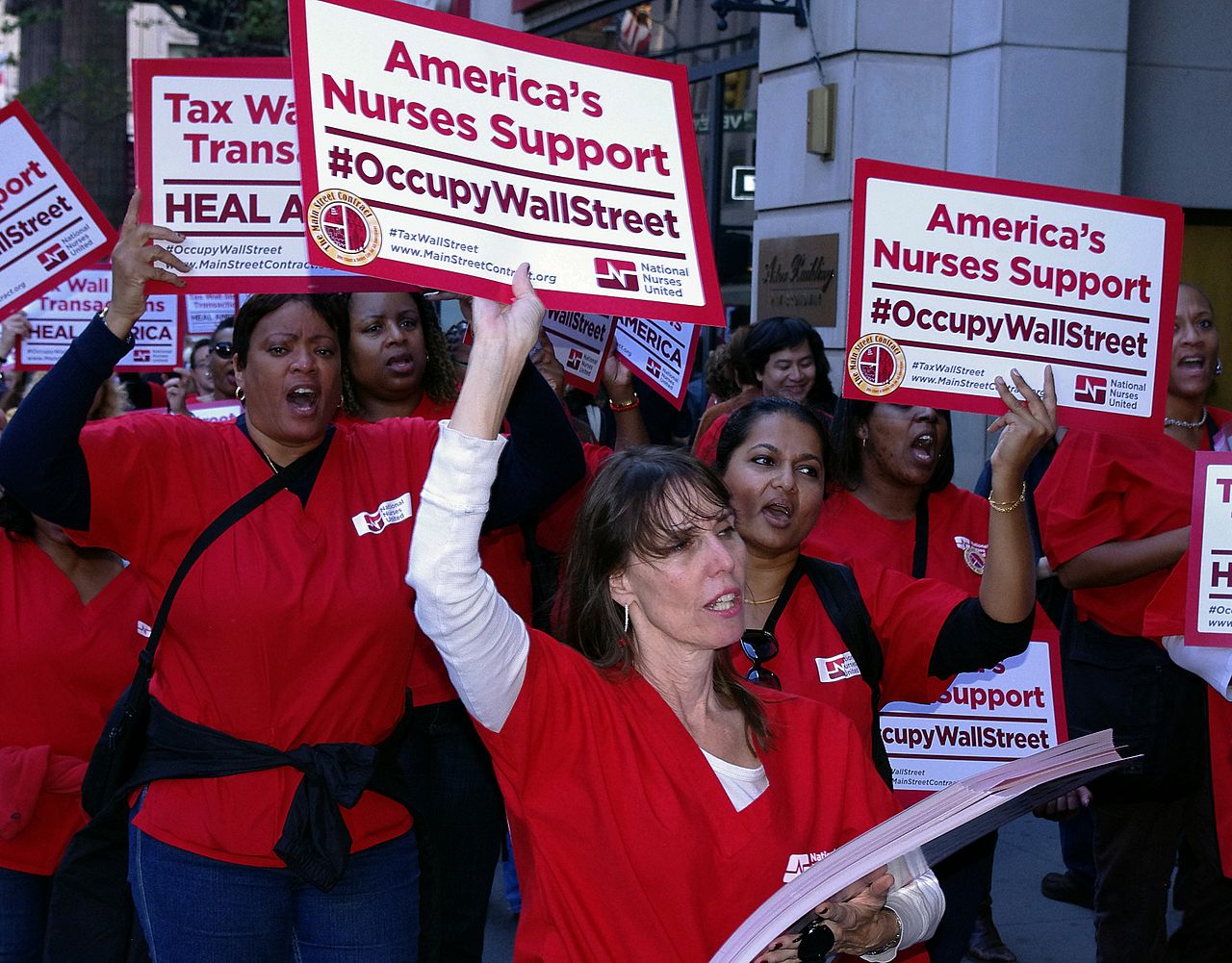
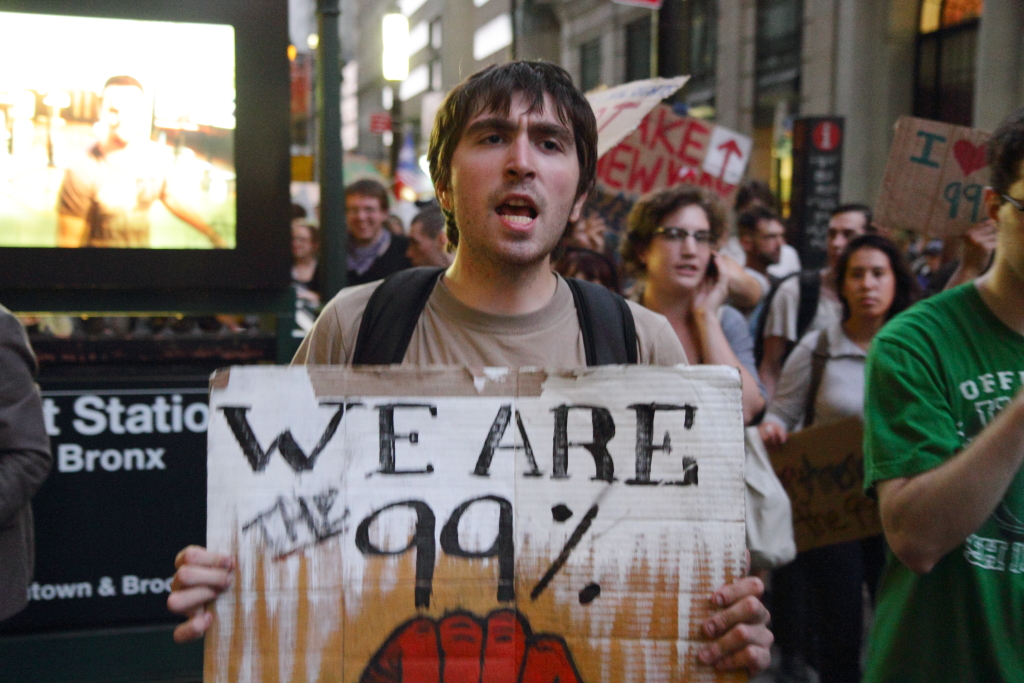
Occupy Wall Street was a social and political protest movement that began in 2011 in Lower Manhattan and rapidly inspired related demonstrations elsewhere. Its public presence centered on sustained, visible occupations of public spaces and on a critique of economic inequality, the political influence of corporations, and perceived failures of financial institutions. Participants often invoked the slogan "We are the 99%" to highlight disparities between a small wealthy minority and the broader population. The movement drew a wide range of participants and viewpoints and emphasized horizontal organization and participatory decision-making.
Image gallery
10 Images




Origins and development
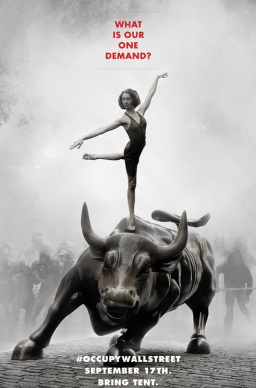
The initial demonstration began in New York City on September 17, 2011, when activists and volunteers gathered in a privately owned public space near the financial district. From that start point the idea spread to many other cities across the United States and to communities abroad. Local groups adopted the occupation model at different times and with local priorities; many new encampments and protest events appeared throughout October and the following months. Some sites remained occupied for weeks while others were short-lived or symbolic gatherings.
Characteristics and tactics
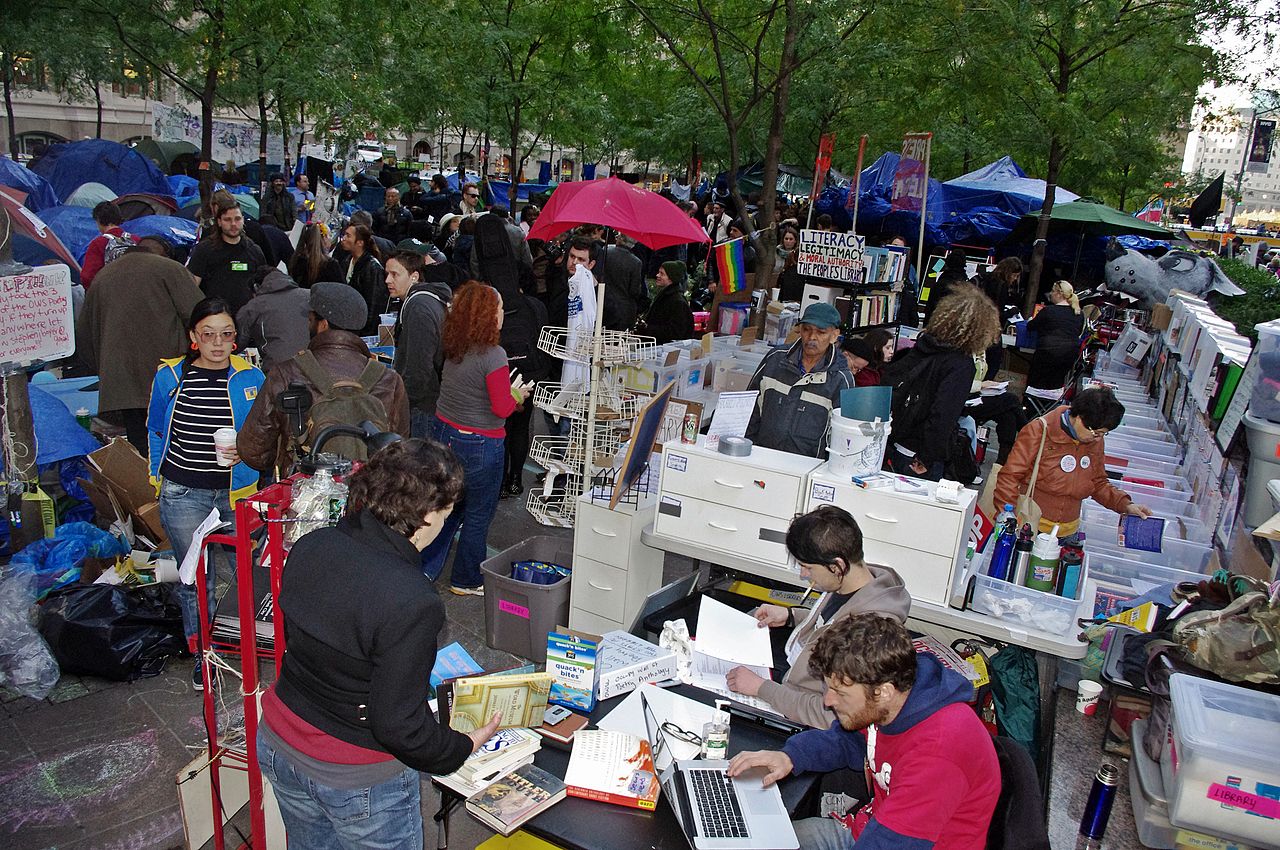
Occupy Wall Street was notable for its use of public encampments, general assemblies, working groups, and consensus-based decision processes. Key tactics included open public meetings, marches, teach-ins, sieges of financial institutions, and creative nonviolent protest. The movement deliberately avoided centralized leadership structures, favoring loose coordination among committees focused on media, logistics, legal support, and outreach. That organizational style both allowed broad participation and made unified policy demands harder to articulate.
Responses and controversies
Reactions varied widely: some demonstrations remained peaceful and engaged local officials and police cooperatively, while in other locations confrontations and evictions occurred. Law-enforcement responses ranged from tolerant oversight to forceful removal of encampments, sometimes leading to arrests and criticism of police tactics. Observers and commentators debated the legality and public order implications of long-term occupations as well as the movement's messaging and effectiveness. Supporters praised its attention to inequality and corporate power; critics argued it lacked concrete policy proposals and sustainable organization.
Impact and legacy
Although public encampments diminished after their initial year, the movement had durable effects on public discourse and activism. It helped place economic inequality and the role of major corporations on the national agenda, influenced later campaigns and local policy debates, and contributed to renewed interest in grassroots organizing and participatory forums. Elements of its rhetoric and tactics reappeared in subsequent protest movements and policy discussions about taxation, campaign finance, and labor.
Notable facts and distinctions
- Place of origin and initial site: New York City, specifically a public plaza near the financial district.
- First gathering and occupation model: organizers and participants began encampment-style demonstrations on September 17, 2011; the idea subsequently spread to cities across the country and world (spread to other cities).
- Core grievance: concerns about income and wealth disparities and the influence of large corporations and financial institutions (economic inequality, corporate influence).
- Composition: participants included a broad cross-section of political perspectives, from left-leaning activists to those with more moderate or libertarian views (moderates, conservatives).
- Variation in local outcomes: some places experienced cooperative policing and peaceful demonstrations (Miami, local police support), while others saw confrontations and forceful clearances (Denver, incidents involving police).
- Further reading and archival material are available through news archives and academic studies that document the movement's organization and influence (primary reports and analyses).
For researchers and readers, the movement is significant as a case study in decentralized protest, the public politics of economic grievance, and the ways modern social movements use occupation, media, and assembly to shape conversation and policy priorities.
Related articles
Author
AlegsaOnline.com Occupy Wall Street (2011 protest movement) Leandro Alegsa
URL: https://en.alegsaonline.com/art/71835