
Attacus atlas (atlas moth)
A very large tropical moth from Southeast Asia, famed for its huge wings, snake-head wing tips, short adult life without feeding, and its life cycle from leaf-eating caterpillar to silken cocoon.
Overview
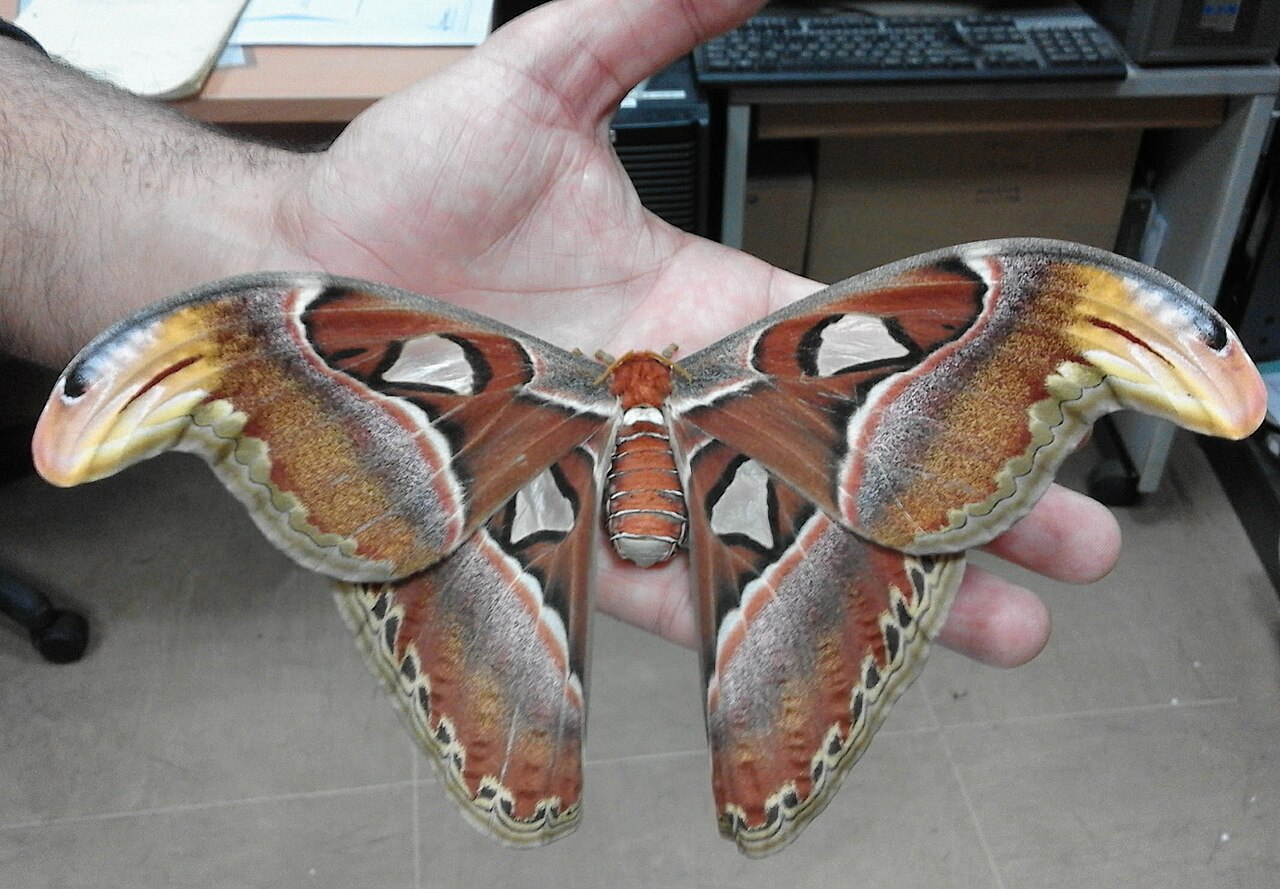
Attacus atlas, commonly called the atlas moth or Attacus moth, is one of the largest lepidopterans in the world. Native to tropical and subtropical parts of Asia, it is most often encountered in forested and semi-wooded habitats. The species is notable for enormous wings with bold, patterned markings and wing tips that resemble the head of a snake — a likely adaptation to deter predators. For a general reference see atlas moth.
Image gallery
10 Images



Key characteristics
The adult atlas moth has very broad wings and a large wing surface area compared with most moths. Wingspan can reach extraordinary dimensions among moths, and wing coloration blends browns, reds and cream bands with translucent window-like spots. Adult moths have reduced or non-functional mouthparts and do not feed; they survive on fat reserves accumulated as caterpillars, usually for only one to two weeks while they mate and lay eggs. More on their range is described at distribution.
Life cycle and behavior
- Egg: tiny, laid on host-plant leaves.
- Larva (caterpillar): large, voracious leaf-eating stage that grows through several molts; often green with tubercles and a waxy surface.
- Pupa: enclosed within a dense cocoon of silk where metamorphosis occurs.
- Adult: winged moth with limited lifespan and a primary focus on reproduction.
The cocoon is a tough silken structure. The silk produced by atlas moth caterpillars is coarse and difficult to reel into continuous filament silk, so it is generally spun rather than reeled for local textile uses.
Significance and distinctions
Attacus atlas is frequently cited in lists of the world's largest moths, alongside a few other giant species. Its dramatic wing shape and cryptic markings make it a popular subject in natural history and insect collections. Because adults do not feed, conservation of the species depends on preserving larval host plants and suitable habitat. For technical details on wing measurements and comparisons see wing data.
Although not typically listed as critically endangered, atlas moth populations are sensitive to deforestation, habitat fragmentation, and collection in some localities. They remain an important example of how life-history traits — such as a short adult stage and a long larval feeding period — shape ecology and human interest in large moth species.
Related articles
Author
AlegsaOnline.com Attacus atlas (atlas moth) Leandro Alegsa
URL: https://en.alegsaonline.com/art/7096