
Norte de Santander Department, Colombia
Norte de Santander is a border department in northeastern Colombia with capital Cúcuta. It features Andean mountains, valleys and cross-border commerce with Venezuela and is named for Francisco de Paula Santander.
Overview
Norte de Santander is an administrative department in northeastern Colombia. Its capital and largest city is Cúcuta, a major commercial and transport hub on the international frontier with Venezuela. The department takes its name from Francisco de Paula Santander, a leader in Colombia's independence era.
Image gallery
4 Images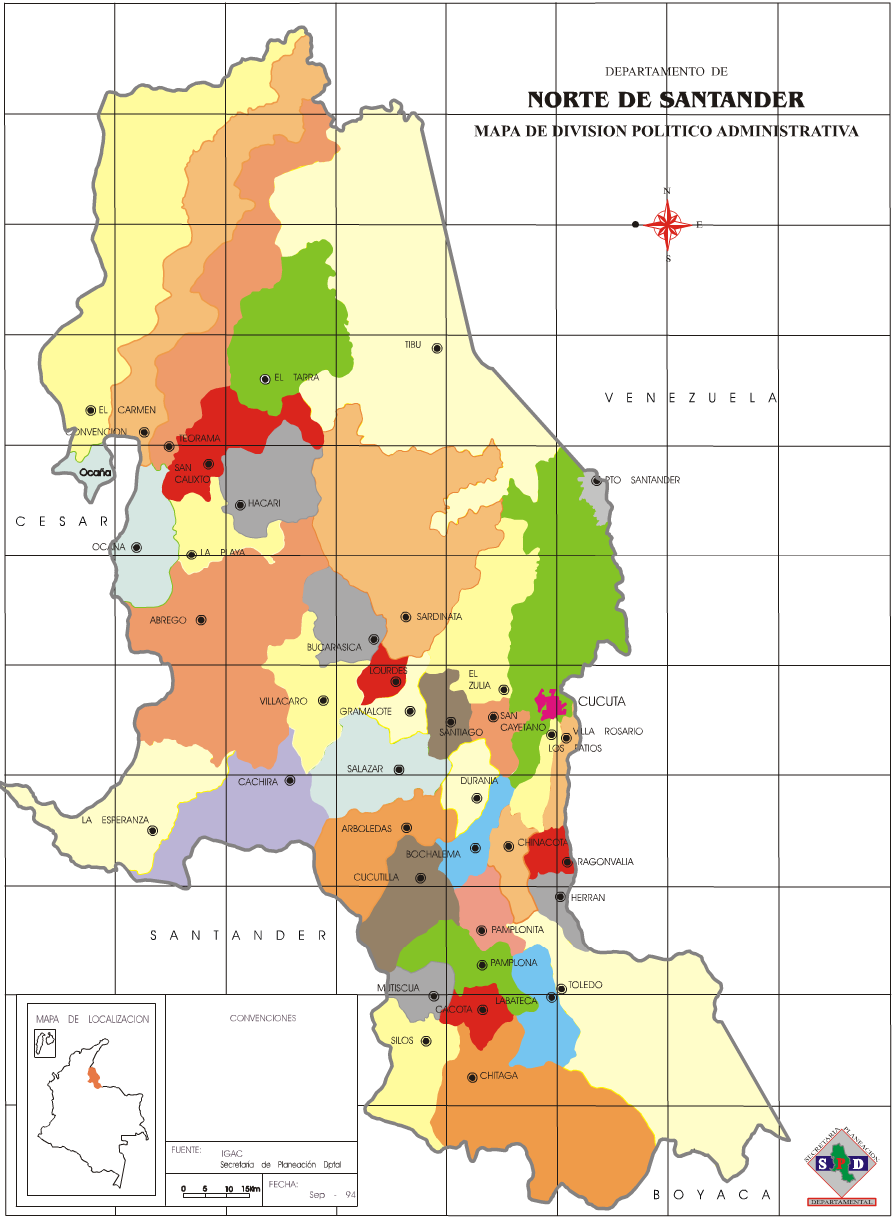


Geography and environment
The territory includes parts of the Eastern Andes, intermontane valleys and lower river basins. Elevations range from mountain ridges to lower plains, producing a mix of climates and ecosystems. Rivers and wetlands in the Catatumbo basin influence local agriculture and biodiversity, and the landscape supports both cultivated land and patches of native forest.
History and administration
Historically the area has been shaped by frontier relations with neighboring Venezuela and by its role in republican Colombia since independence. Administratively it is subdivided into municipalities that govern urban centers, rural districts and mountain communities. Cúcuta functions as the political, economic and cultural capital of the department.
Economy and infrastructure
The economy blends agriculture, livestock, trade and industry. Key activities include cultivation of regional crops, livestock raising, small and medium manufacturing, and services tied to cross-border commerce. Transport corridors and international bridges facilitate trade and movement, while public and private infrastructure supports the departmental capital and surrounding towns.
Society and significance
Norte de Santander is notable for its role as a commercial gateway, its regional cultural ties across the border, and varied landscapes that support urban and rural livelihoods. The department has experienced migration and complex bilateral dynamics that shape local policy, humanitarian responses and economic planning.
Notable facts
- Named for Francisco de Paula Santander, an important figure in Colombian independence.
- Cúcuta serves as the principal urban center and border hub.
- The region combines Andean highlands with lower river valleys and cross-border trade corridors.
Related articles
Author
AlegsaOnline.com Norte de Santander Department, Colombia Leandro Alegsa
URL: https://en.alegsaonline.com/art/70796
Sources
- dane.gov.co : "DANE"
- commons.wikimedia.org : Norte de Santander Department