
Cúcuta (San José de Cúcuta) — Border city and capital of Norte de Santander
Cúcuta is the capital of Norte de Santander in northeastern Colombia, on the border with Venezuela. A regional commercial hub, it has grown since the mid-20th century and features notable infrastructure and historical ties.
Overview
Cúcuta, formally San José de Cúcuta, is the principal city and administrative center of the Norte de Santander Department in Colombia. Its location beside the international boundary with Venezuela has shaped its economy, population movements and local culture. The name is pronounced with a local variant; see the city pronunciation for guidance. Residents are commonly called cucuteños.
Image gallery
10 Images



Geography and urban growth
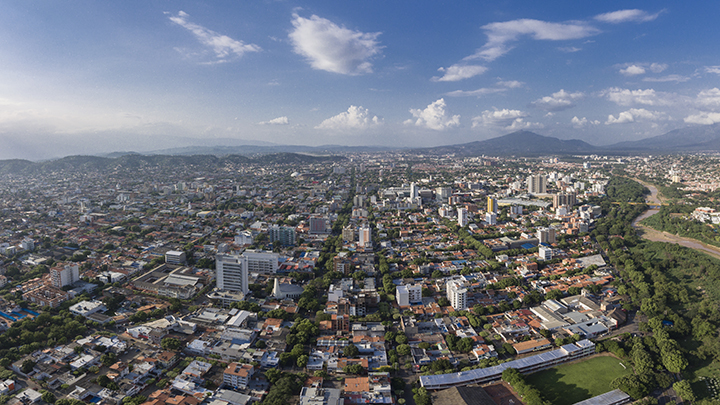
Cúcuta sits in a valley near the border and serves as a gateway between the Andean interior and the Venezuelan plains. The urban area expanded rapidly from the 1960s onward as industry, commerce and migration reshaped the region. Suburban municipalities such as Villa del Rosario and Los Patios have become integrated into a larger metropolitan zone, providing residential neighborhoods, industrial parks and services that support the central city.
Economy and cross‑border role
The city functions as an important commercial and logistical hub for northeastern Colombia. Its border position creates both formal trade opportunities and informal cross‑border exchanges; transport, retail and warehousing are significant local activities. In recent decades planners and business leaders have looked to diversify the economy by attracting manufacturing and export-oriented firms, in part by taking advantage of trade arrangements such as the Colombia–United States trade framework and regional market access.
Infrastructure and urban projects
Local and departmental authorities have invested in several visible infrastructure projects intended to modernize transport and public facilities. Prominent initiatives include:
- Construction of multiple overpasses to reduce congestion on key corridors.
- A convention center to host conferences and attract events.
- Upgrading the main bus terminal and introducing a bus rapid transit style system often described locally as Metrobus.
- Efforts to recover and revitalize the downtown commercial district alongside school improvements and sports facility expansions.
History and civic importance
Though its modern growth accelerated in the 20th century, the area around Cúcuta has earlier historical significance. Nearby localities played roles in the independence-era political reorganization of northern South America, and the city has long been a meeting point for people and ideas across the frontier. Its civic institutions and anniversaries reflect a blend of Colombian and cross‑border cultural influences.
Culture, transport and notable facts
Cúcuta's cultural life mixes regional Colombian traditions with influences from Venezuela due to proximity and family ties that cross the boundary. Transportation links include major road connections to interior cities and international crossings at bridges and customs points. Urban planners continue to balance demands for economic growth, social services and infrastructure to accommodate both daily commuters and periodic surges of cross‑border movement.
For visitors and researchers, Cúcuta offers a case study in how border locations shape urban development, commerce and social networks. Further reading and resources on pronunciation, departmental context and regional links can be found through local and national information portals: pronunciation, department details, national context, Venezuela relations, suburban expansion, transport projects, convention facilities, downtown recovery and trade agreements.
Questions and answers
Q: What is Cúcuta?
A: Cúcuta is the capital of the Norte de Santander Department in Colombia.
Q: Why is Cúcuta an important city in northeastern Colombia?
A: Cúcuta is an important city in northeastern Colombia because it is located on the border with Venezuela.
Q: What are people from Cúcuta called?
A: People from Cúcuta are called cucuteños.
Q: When did the area around Cúcuta start to grow fast?
A: The area around Cúcuta started to grow fast since the 1960s.
Q: What has contributed to the progress and development of Cúcuta in recent years?
A: The building of six overpasses, a convention center, a new bus terminal, a new Integrated Massive Transportation System called Metrobus, the modernization of state owned schools, the recovery of Cucuta's downtown, and the duplication of the capacity for the General Santander Stadium have contributed to the progress and development of Cúcuta.
Q: What are the expectations for new industries in Cúcuta?
A: The expectation is that new industries will come from Venezuela and will set up their factories in Cúcuta aiming at exporting through the Colombia Trade Promotion Agreement between Colombia and the United States.
Q: What are the suburbs of Cúcuta that have grown fast since the 1960s?
A: The suburbs of Villa del Rosario and Los Patios have grown fast since the 1960s.
Related articles
Author
AlegsaOnline.com Cúcuta (San José de Cúcuta) — Border city and capital of Norte de Santander Leandro Alegsa
URL: https://en.alegsaonline.com/art/24544
Sources
- lablaa.org : "Cities and towns foundations"
- dane.gov.co : dane.gov.co/files/investigaciones/poblacion/series_proyecciones/Dptos/norte_sant.xls
- comiteempresarial.org : Comite Empresarial: TLC
- lablaa.org : Biblioteca Luis Angel Arango: Geografia Cucuta
- web.minambiente.gov.co : Ministerio del Medio Ambiente: Colombia; Rio de Cucuta
- greatestcities.com : Greatest Cities: Cucuta
- andi.com.co : ANDI: Asociacion Nacional de Industriales - Colombia
- bart.ideam.gov.co : Instituto de Estudios Ambientales IDEAM: Temperatura Cucuta
- azapedia.com : Azapedia: Fabiola Zuluaga