
Norma (Bellini) — Italian bel canto opera in two acts
Norma is a two-act Italian opera by Vincenzo Bellini with a libretto by Felice Romani. Premiered at La Scala in 1831, it features the aria "Casta Diva" and a demanding title role central to bel canto repertory.
Overview
Norma is an Italian opera in two acts composed by Vincenzo Bellini with a libretto by Felice Romani. It premiered at La Scala in Milan on December 26, 1831. Based on the play Norma ou l'infanticide by Louis Alexandre Soumet, the drama is set in ancient Gaul under Roman occupation and combines private tragedy with public and religious conflict. The work is widely regarded as one of Bellini's masterpieces and a landmark of the bel canto tradition.
Image gallery
10 Images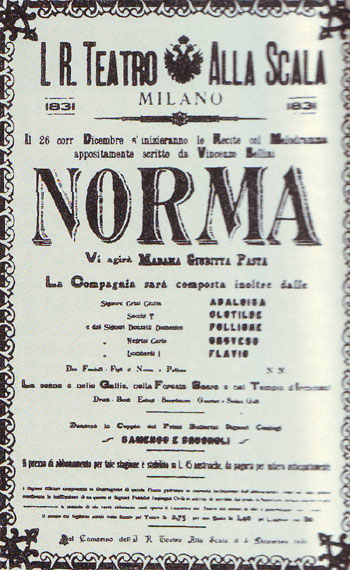


Musical style and notable numbers
Bellini's writing for Norma is characterised by long, singing lines, an emphasis on legato, and expressive melodic continuity. The best-known number, the prayer aria "Casta Diva", requires sustained lyrical control and is often counted among the great showcases for a dramatic soprano. The score balances solo arias, duets, ensembles and choral scenes to support the unfolding psychological drama. As a hallmark of the bel canto idiom, the opera also allows for vocal ornamentation while demanding dramatic sincerity and technical security.
Synopsis (brief)
Norma, a Druid high priestess, secretly loves the Roman proconsul Pollione and has borne him two children. When Pollione's affections shift to the young novice Adalgisa, conflict erupts between personal desire and religious duty. Accusations, revelations and a tragic resolution follow as characters confront betrayal, honor and sacrifice. The narrative foregrounds moral and emotional extremes rather than elaborate plot mechanics.
Principal roles
- Norma — soprano (dramatic, high coloratura demands)
- Adalgisa — mezzo-soprano or lyric soprano (youthful, contrasting timbre)
- Pollione — tenor (Roman proconsul)
- Oroveso — bass (Druid leader)
Performance history and interpreters
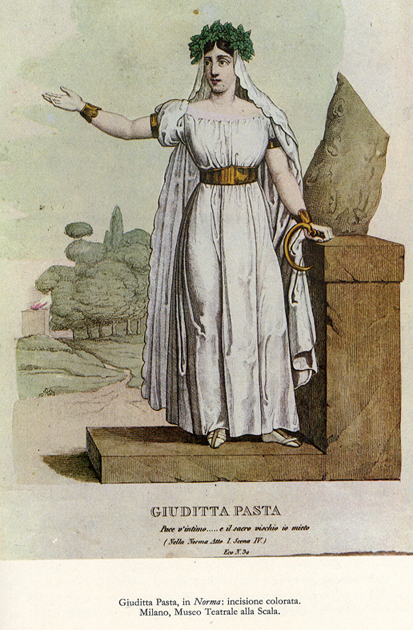
Early reception to Norma was mixed, but the opera quickly secured a place in the repertory and became a benchmark for leading sopranos. The title role is notoriously exacting: it requires agility, a wide range, and the ability to sustain long phrases while conveying intense drama. Eminent interpreters of Norma in the 20th century have included Maria Callas, Joan Sutherland and Montserrat Caballé, whose recordings and stage appearances shaped modern performance practice. The opera is also central to study in conservatories and frequently discussed in scholarly works on bel canto (bel canto studies).
Legacy
Norma remains a touchstone of nineteenth-century Italian opera: it exemplifies the fusion of vocal virtuosity and expressive depth. Productions continue to vary in their staging and interpretive emphasis, but the music—especially the aria Casta Diva and key duets—retains a prominent place in concert and recording catalogues. For further reading and recordings consult dedicated opera guides, historical surveys and major music libraries, which document the work's score, performance history and critical reception. Norma is regularly cited in overviews of Bellini's contribution to opera and in discussions of repertoire that test a singer's technical and interpretive range.
Related articles
Author
AlegsaOnline.com Norma (Bellini) — Italian bel canto opera in two acts Leandro Alegsa
URL: https://en.alegsaonline.com/art/70728