
Bel canto: the Italian art of beautiful singing
Bel canto is an Italian-derived singing style emphasizing smooth legato, agility and balanced tone across registers; central to early 19th-century Italian opera and revived in the 20th century.
Bel canto, literally "beautiful singing" in Italian, is a vocal approach and repertory associated with elegance, evenness and vocal agility. It is most often discussed in the context of opera, where composers and singers sought a seamless legato, expressive phrasing and control of dynamics across the voice. The phrase itself became common only after the era when the style first flourished, but the practices that define bel canto trace back to early opera and were codified in the late 18th and early 19th centuries.
Image gallery
3 Images

Core characteristics
At its heart bel canto emphasizes a smooth, connected line (legato), evenness of timbre from lowest to highest notes, and technical flexibility so singers can produce rapid passagework and ornaments without strain. Important techniques associated with the style include messa di voce (controlled crescendo and diminuendo on a sustained tone), precise breath management, and an approach to coloratura that favors clarity and musical expression over sheer volume. These qualities allow a singer to shape long melodic phrases and to execute elaborate embellishments while maintaining vocal quality.
- Legato and evenness across registers
- Agility for fast runs and ornamentation
- Controlled dynamics and expressive phrasing
- Focus on purity of tone rather than dramatic force
Historical development and repertoire
The style evolved from early operatic practice in the 1600s but is most often associated with the operas written and performed in the first decades of the 1800s. Works by Rossini, Bellini and Donizetti exemplify the repertoire that requires true bel canto technique. As musical tastes shifted later in the 19th century toward a heavier, more orchestral sound exemplified by composers such as Wagner, many singers and theaters favoured a larger, more dramatic vocal approach. That change prompted critics and musicians to label earlier practices collectively as "bel canto."
Bel canto experienced a revival in the mid-20th century when interpreters and teachers re-examined early 19th-century scores and performance methods. This renewed interest brought many long-neglected operas back into performance and encouraged singers to study the technical subtleties the style demands.
Performance practice, teaching and notable artists
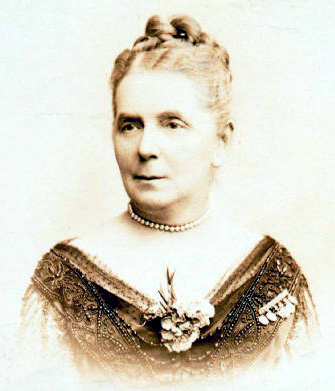
Teaching methods for bel canto emphasize careful breath support, even vowel production, and exercises that develop flexibility and tonal control. Influential 19th-century teachers such as Mathilde Marchesi helped transmit these ideas to later generations. In the modern era, a number of prominent singers have become associated with bel canto performances: sopranos and tenors who combined musicianship with technical finesse include Maria Callas, Joan Sutherland, Montserrat Caballé, Beverly Sills, Francisco Araiza, Juan Diego Flórez, Alfredo Kraus and Luciano Pavarotti. Their recordings and performances played a significant role in popularizing bel canto technique and repertoire for contemporary audiences.
Bel canto remains an important historical and practical category in vocal studies. It contrasts with later operatic styles that require heavier, more dramatic voices, and it continues to inform how singers approach phrasing, diction and technical training. Musicians, teachers and opera companies still turn to bel canto works for their musical purity, demanding vocal artistry and the expressive opportunities they offer.
Questions and answers
Q: What does the term "bel canto" mean?
A: Bel canto is a way of singing in opera that comes from the Italian language and means "beautiful singing".
Q: When did bel canto singing start?
A: Bel canto singing started when opera began in the 1600s.
Q: When was the term "bel canto" first used?
A: The term "bel canto" was not used at the time of its origin, but only started being talked about in the mid-to-late 19th century.
Q: What type of operas need bel canto singers?
A: Operas by composers such as Rossini, Bellini and Donizetti need bel canto singers.
Q: Why did bel canto operas become popular again in the 1950s?
A: Bel canto operas became popular again in the 1950s because they had been out of favour for 50 or 60 years prior to that time.
Q: Who are some famous recent bel canto singers?
A: Famous recent bel canto singers include sopranos Maria Callas, Joan Sutherland, Montserrat Caballé, Beverly Sills and tenors Francisco Araiza, Juan Diego Florez, Alfredo Kraus and Luciano Pavarotti.
Q: Who was a famous 19th-century belcante teacher?
A: Mathilde Marchesi was a famous 19th-century belcante teacher.
Related articles
Author
AlegsaOnline.com Bel canto: the Italian art of beautiful singing Leandro Alegsa
URL: https://en.alegsaonline.com/art/10184