
Ninigi-no-Mikoto — heavenly grandson in Japanese myth
Ninigi-no-Mikoto is a Shinto deity, grandson of Amaterasu, whose descent to earth (Tenson kōrin) brought divine authority, agriculture and the ancestral link to Japan's imperial house.
Overview
Ninigi-no-Mikoto is a prominent figure in Japanese mythology, especially within Shinto tradition. Portrayed as a divine grandson who comes from the heavenly realm, he plays a key role in narratives that explain the origins of rule, ritual authority and early agriculture on the Japanese islands.
Image gallery
8 Images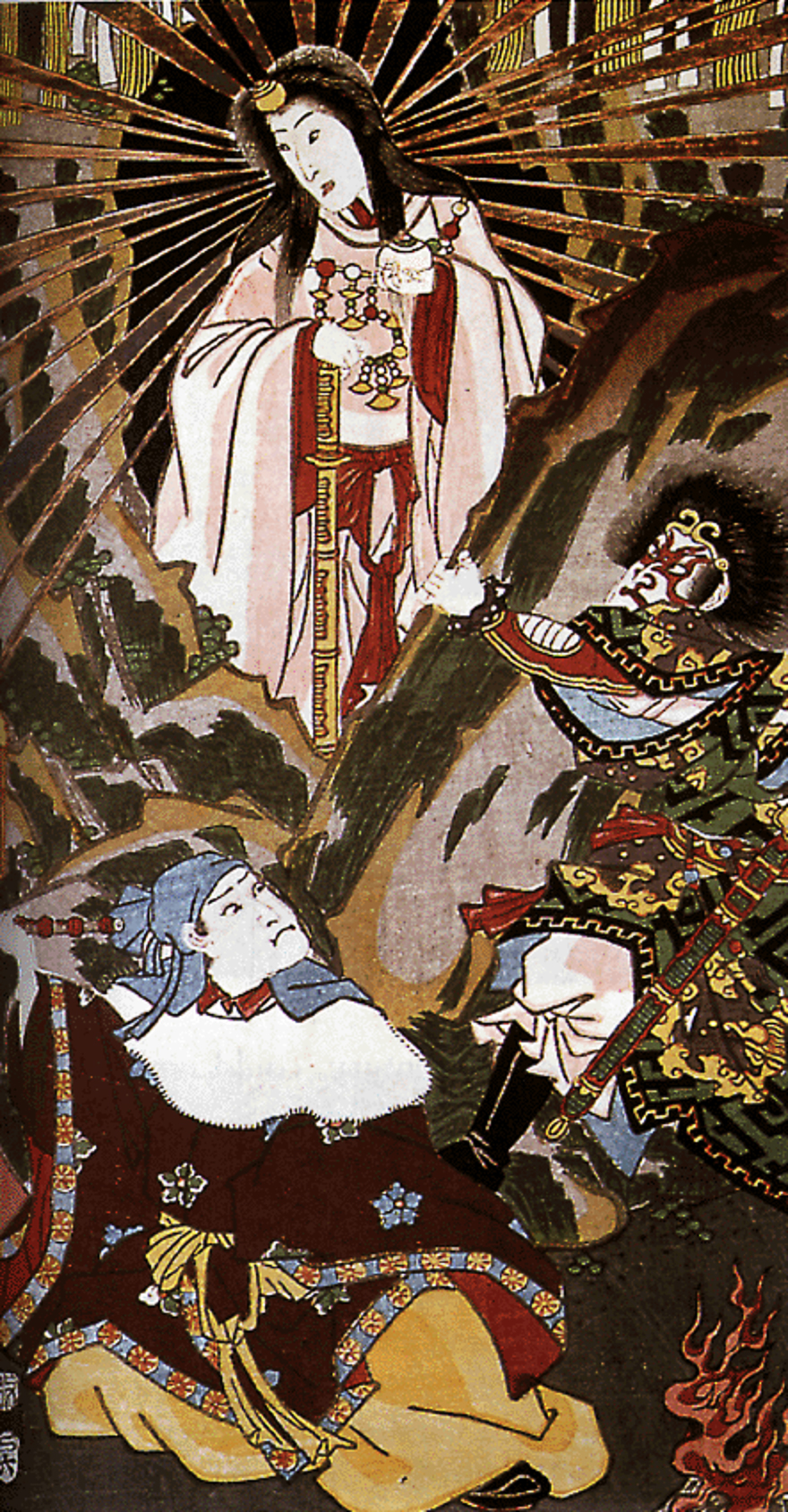


Genealogy and identity
Traditionally described as the son of Ame no Oshihomimi and the grandson of the sun goddess Amaterasu, Ninigi is often represented as the link between the kami of the heavens and human rulers. His descent symbolizes the transfer of sacred power from the celestial world to those who govern on earth.
The descent (Tenson kōrin) and mission
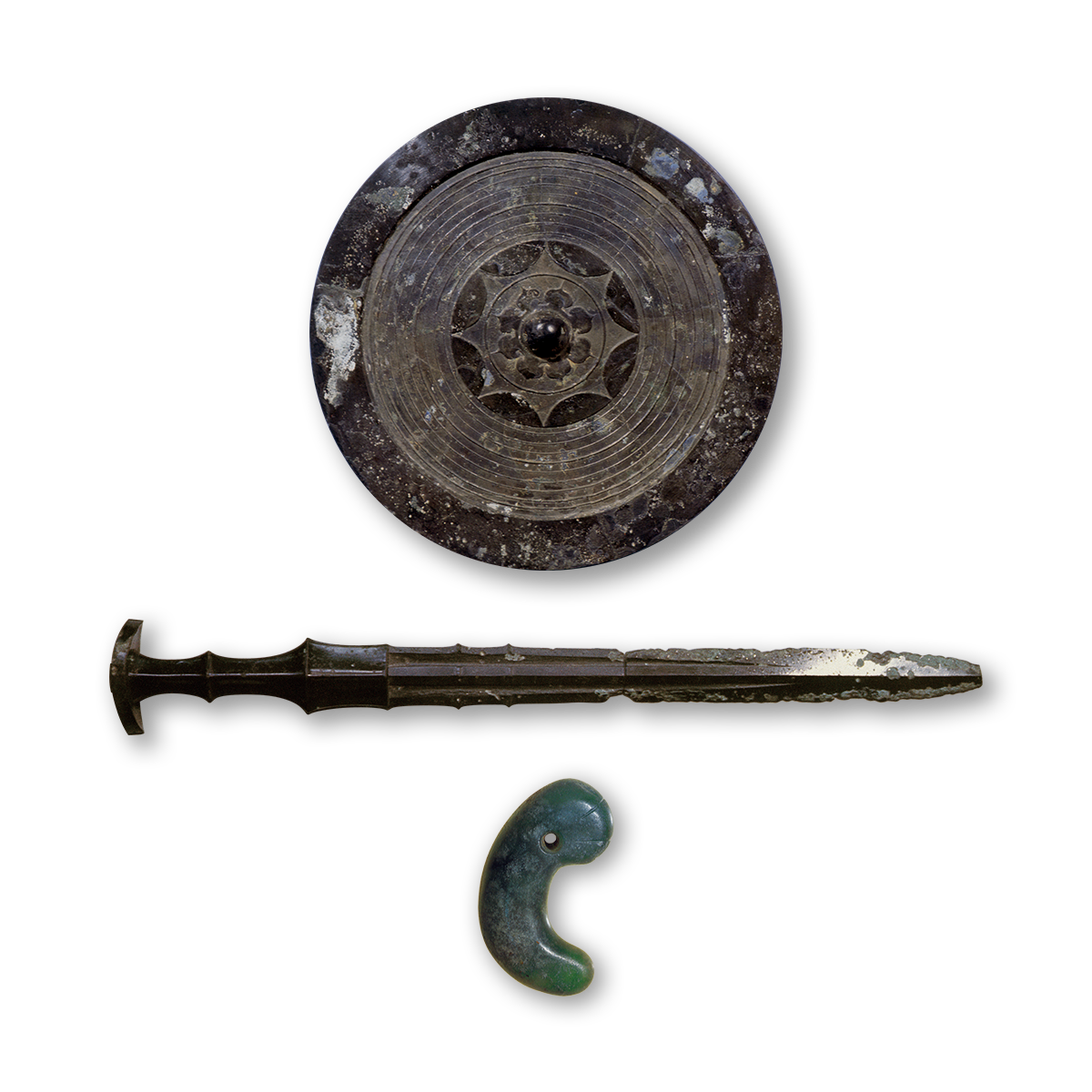
In the core myths Ninigi is sent down in an event called the Tenson kōrin, the "Descent of the Heavenly Grandson." Charged with establishing order and overseeing cultivation, he is associated with the introduction and promotion of rice farming and other staples. This episode explains how divine sanction was given to agricultural practice and local rule when the heavenly line took an active role on the land rather than remaining aloof above the clouds. See also traditional accounts that emphasize his role in bringing tools of sovereignty and ritual authority to earth.
Family, descendants and imperial connection
Ninigi's marriage to the mountain blossom deity Konohanasakuya-hime and their offspring anchor a genealogical chain that culminates in the legendary first emperor. His lineage is commonly presented as the direct ancestral line leading to Emperor Jimmu, thereby providing a mythic foundation for the imperial family's claim to divine descent. Stories of his children—among them figures who appear in later legends—link heavenly origins with foundational court traditions.
Sources, shrines and cultural role
Accounts of Ninigi appear in early chronicles such as the Kojiki and Nihon Shoki, where versions differ in detail and emphasis. He is venerated at several shrines in Kyushu and elsewhere; sites associated with his descent and life are important places of regional devotion. His myth functions both as an origin story for rice-centered agriculture and as a legitimizing narrative for political authority.
Notable distinctions
- Ninigi embodies the theme of heavenly power descending to the human realm, distinct from purely earthbound kami.
- Different textual traditions vary on the gifts and symbols he carried, and on the precise geography of his landing.
- His story is often taught alongside broader explanations of the imperial regalia and ritual continuity, though specific attributions vary among sources.
For overviews and primary-text citations consult specialist works and translations of early Japanese chronicles; comparative studies also explore how Ninigi's narrative shaped later conceptions of sovereignty and sacred kingship. Additional background and local shrine guides can be found through resources linked from general introductions to Shinto and mythic history.
plant rice and agricultural motifs appear repeatedly in regional retellings and ritual observance, reflecting Ninigi's long-standing association with fertility and cultivated land. For accessible summaries and further reading see introductory materials on Shinto myth and imperial origins at reliable cultural sources.
Amaterasu and other central kami are often part of the same narrative clusters; cross-referencing those accounts helps clarify variations. For comparative notes consult scholarly commentaries and annotated translations.
Further reading and primary sources can be located via curated bibliographies and specialist databases on early Japanese religion and mythology.
Related articles
Author
AlegsaOnline.com Ninigi-no-Mikoto — heavenly grandson in Japanese myth Leandro Alegsa
URL: https://en.alegsaonline.com/art/70274