
Nickel (United States coin)
A United States five-cent coin commonly called the nickel. Covers its composition, design history (including the Jefferson nickel), circulation, uses, and notable variations.
The nickel is the five-cent denomination of United States coinage and is a standard component of everyday cash transactions. First issued in the 19th century as a copper-nickel piece, the coin has served both monetary and cultural roles in U.S. commerce. For an overview of official specifications and minting, see official coin information.
Image gallery
10 Images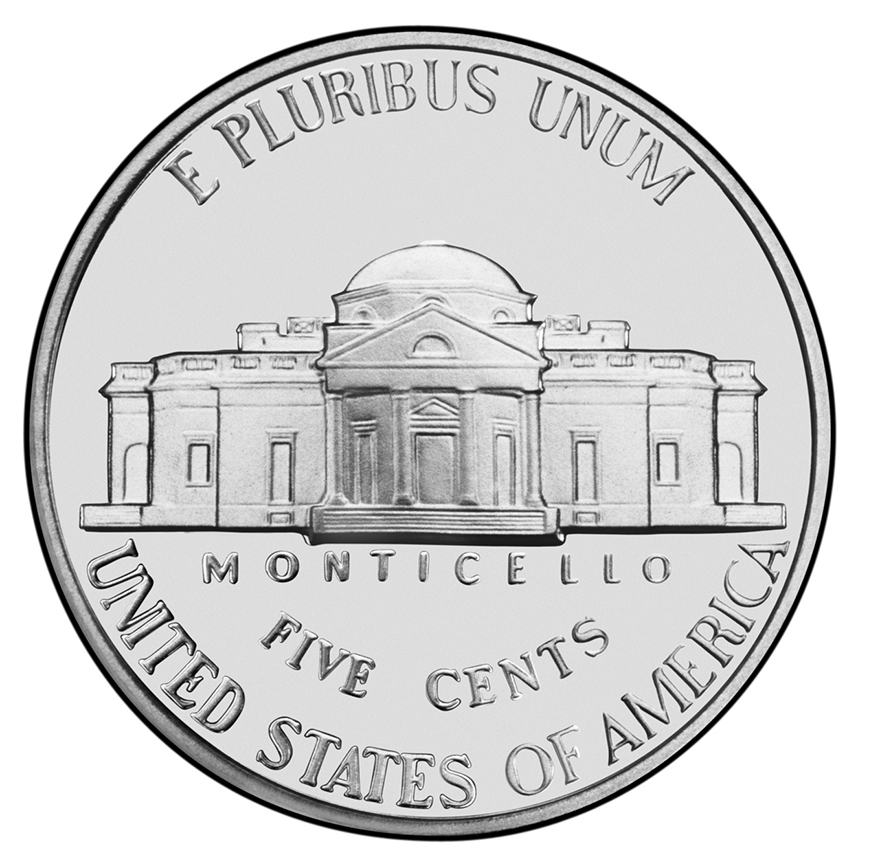


Composition and design
Modern nickels are made from a cupronickel alloy—a combination of copper and nickel—that gives the coin its silvery appearance and durability. The most common alloy used since the late 19th century is about three parts copper to one part nickel, producing a surface and weight suited to circulation. Design elements have varied: the current and best-known reverse and obverse designs feature President Thomas Jefferson and his home, Monticello, although other portraits and motifs have appeared at different times. See more on composition and design changes at material and design notes.
History and development
The U.S. five-cent piece evolved from earlier small silver coins (half dimes) to base-metal nickels in the 1860s. The coin form commonly called the "nickel" became established after the Civil War era. A major redesign took place in 1938 when the Jefferson portrait was introduced; special issue designs and temporary wartime composition changes have occurred in response to metal shortages and commemorative programs. A concise history can be found at historical background.
Uses, circulation, and collecting
Nickels are used daily for making change, operating machines calibrated to U.S. coinage, and in banking. Because of their size and metal content, they remain common in pocket change and coin rolls. Collectors seek older varieties, proof strikes, and error coins; some nickels are more valuable to numismatists than their face value. Practical guidance and collecting resources are available via coin collecting resources.
Notable facts and distinctions
- Although worth less than a dime, a nickel is physically larger—an often-noted curiosity in U.S. coinage.
- Wartime alloys and short-lived reverse designs create distinct series that are of interest to historians and collectors.
- Minor design tweaks and mint marks can signal different mintage years and production locations.
As official legal tender, the nickel continues to be struck by the U.S. Mint and remains a visible piece of the nation’s monetary system. For additional technical details or recent changes, consult further references.
Related articles
Author
AlegsaOnline.com Nickel (United States coin) Leandro Alegsa
URL: https://en.alegsaonline.com/art/69964