
Nordic model: welfare capitalism and social democracy in the Nordic countries
A concise overview of the Nordic model: its core institutions, history, policy mix of market economy and comprehensive welfare state, outcomes, variations across the Nordic countries, and current challenges.
Overview
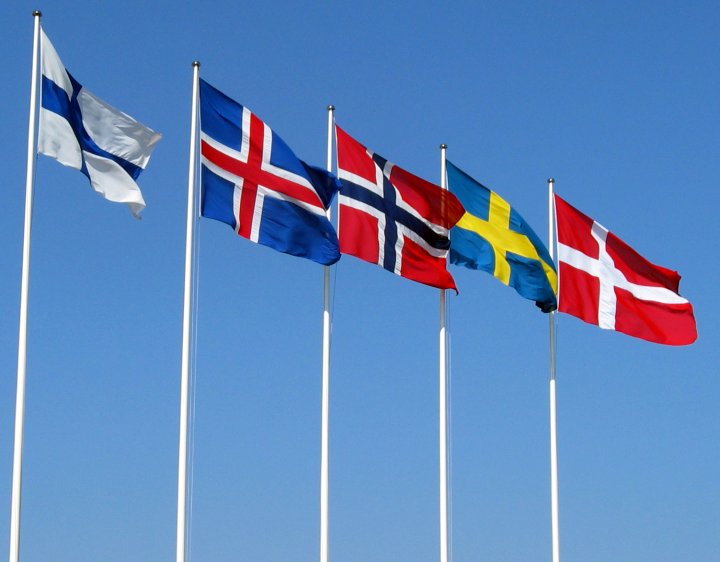
The Nordic model describes a set of economic and social arrangements found across the Nordic region, including Nordic countries such as Denmark, Finland, Norway, Iceland, Greenland, Faroe Islands and Sweden. It is often called Nordic capitalism or Nordic social democracy and denotes a distinctive combination of market-based economies with extensive public welfare provision and social regulation.
Image gallery
2 Images
Core elements
At its core the model combines reliance on private enterprise with strong public institutions. Key components include competitive markets (often described as free market frameworks) operating within a system of widespread capitalism, funded and balanced by a comprehensive welfare state. This mix aims to ensure both economic dynamism and social protection.
Typical characteristics
- Generous universal or near-universal social benefits: healthcare, education, family support and pensions.
- High levels of public spending and progressive taxation to finance services.
- Strong labour market institutions: collective bargaining and active labour policies that promote re‑employment.
- High union density and coordination between employers, unions and government in wage-setting.
- Policy emphasis on gender equality, social mobility and broad access to public services.
History and development
The Nordic model developed gradually from late 19th century social movements and was consolidated after World War II when social democratic parties and cross‑class agreements shaped tax, labour and welfare systems. Over decades the model adapted to globalization, with episodic reforms to pensions, labour market rules and service delivery while preserving core redistribution and universal-access principles.
Outcomes, variations and importance
Proponents point to relatively low income inequality, high human development, and robust public services as evidence of the model's strengths. Each country implements the model differently: for example, Norway uses substantial petroleum revenues to support public spending, while Denmark emphasizes labour-market flexibility combined with social insurance. These national differences mean the model is not uniform but rather a family of related approaches.
Challenges and distinctiveness
The Nordic model faces several pressures: aging populations, migration, fiscal constraints, and competitive globalization that test public budgets and employment policies. Critics argue about efficiency, tax burdens and the role of private provision in some services, while supporters stress resilience and social cohesion. The model remains a widely studied example of balancing market mechanisms with extensive social protection.
Further reading: See introductory resources for comparative welfare states and labour relations (regional overview, national case studies such as Denmark and Sweden), and literature on market systems (free market, capitalism) and welfare institutions (welfare state).
Related articles
Author
AlegsaOnline.com Nordic model: welfare capitalism and social democracy in the Nordic countries Leandro Alegsa
URL: https://en.alegsaonline.com/art/70678
Sources
- books.google.com : pp 89-115
- iea.org.uk : "The surprising ingredients of Swedish success - free markets and social cohesion"
- investopedia.com : "The Nordic Model: Pros and Cons"