
Normal good (economics)
A normal good is a product or service for which demand rises as consumer income increases; contrasted with inferior or luxury goods and measured by income elasticity of demand.
Overview
In economics, a good is termed a normal good when consumers increase their quantity demanded as their income grows, holding other factors constant. The basic idea is that higher disposable income allows people to purchase more or better-quality items. A common everyday example often given is that people with rising incomes may attend the cinema more frequently; tickets such as those for films are frequently cited as a normal good (cinema tickets).
Image gallery
1 Image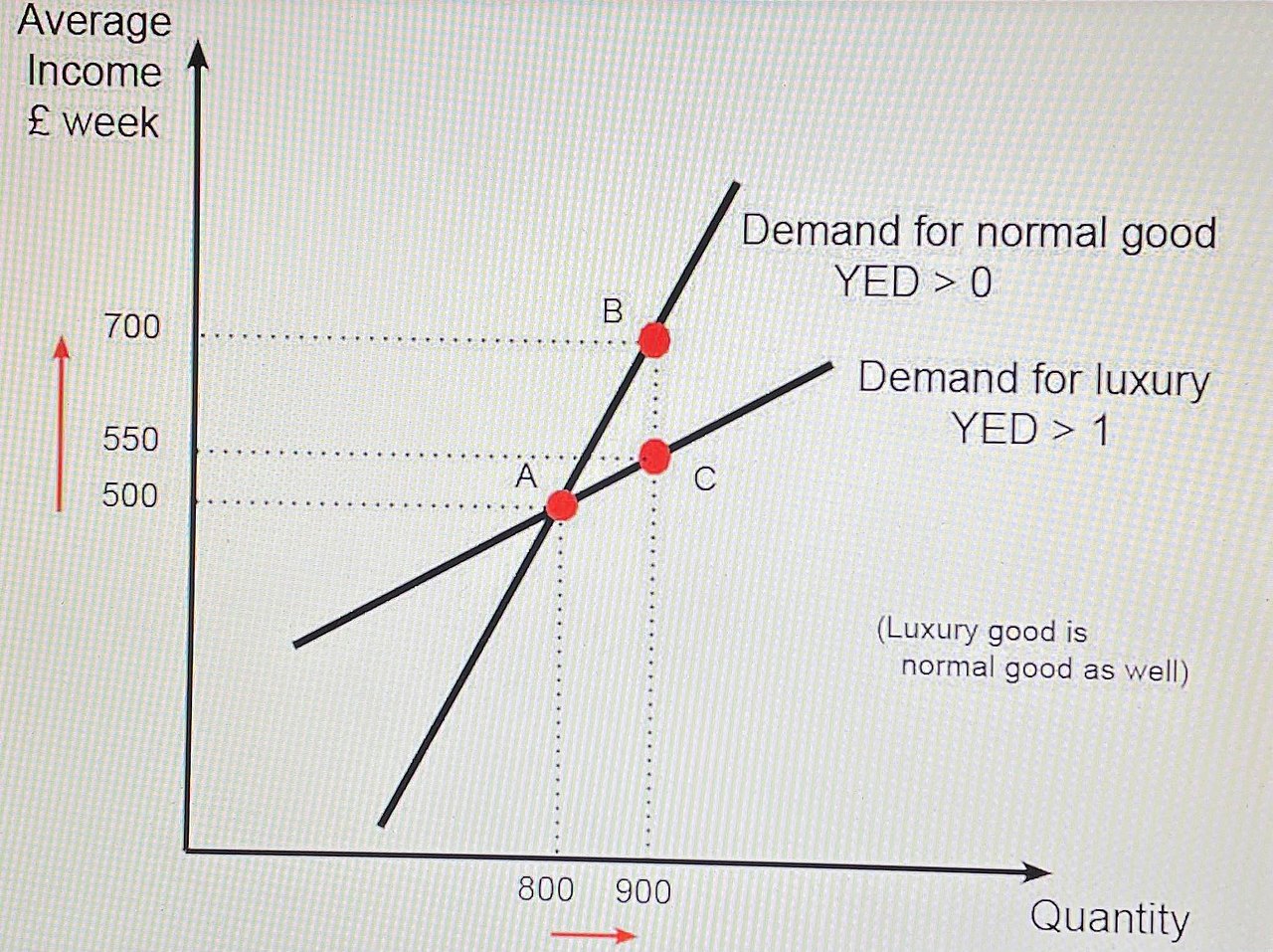
Key characteristics
Normal goods are identified by a positive relationship between income and demand. Economists use the income elasticity of demand to classify goods: when income elasticity is greater than zero, the good is normal. Within this broad category, there are typical distinctions:
- Necessities: goods with positive but low income elasticity (demand rises slowly as income rises).
- Luxuries: goods with high income elasticity (demand rises faster than income increases).
Measurement and interpretation
Income elasticity of demand is calculated as the percentage change in quantity demanded divided by the percentage change in income. Empirical estimates come from household surveys, sales data, and time-series studies. Estimates can vary by region, time period, and the income level of purchasers; a product that is a luxury in one economy may be a necessity in another.
Examples and contrasts
Typical examples of normal goods include many types of clothing, restaurant meals, and electronic consumer products, though whether an item is normal can depend on the consumer group. By contrast, an inferior good sees demand fall as income rises—examples often include low-cost generic brands or some forms of public transport for certain income groups. Rare cases like Giffen goods violate standard intuition and are treated as special exceptions in microeconomic theory.
History, uses and policy relevance
The distinction between normal and inferior goods underpins demand analysis, household budgeting studies and welfare comparisons. It connects to empirical work such as Engel curves and to policy design: knowing which goods are normal helps governments predict how consumption patterns shift with economic growth or under tax and subsidy changes. Firms also use these distinctions for pricing, product positioning and forecasting as incomes evolve.
Related articles
Author
AlegsaOnline.com Normal good (economics) Leandro Alegsa
URL: https://en.alegsaonline.com/art/70738