
Nicholson Memorial — obelisk monument near Taxila in the Margalla Hills
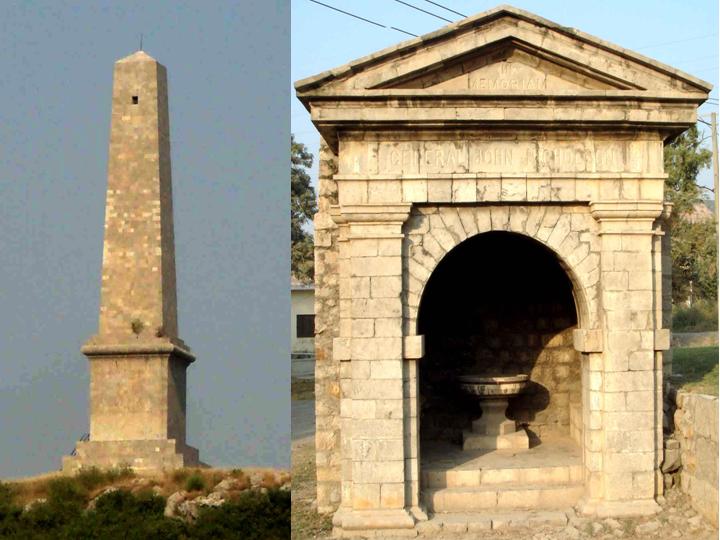
A 19th-century obelisk commemorating British Indian officer John Nicholson, the Nicholson Memorial stands on the Margalla Hills near Taxila, Pakistan, and is a notable colonial-era landmark.
Overview
The Nicholson Memorial is a nineteenth-century monument located on the slopes of the Margalla Hills, close to the ancient site of Taxila, in modern-day Pakistan. Often referred to simply as the Nicholson obelisk, it marks the memory of a British-era military figure and is visible from nearby valleys and trails. The memorial is one of several colonial-era markers that remain in the northern Punjab and Islamabad region.
Image gallery
2 Images
Design and physical characteristics
The structure takes the form of an obelisk rising from a low plinth. Constructed of stone and set on a cleared hilltop, it bears inscriptions and a dedication that record the name and rank of the man it commemorates. Its simple, vertical silhouette was a common form for memorials of the period and was intended to be legible from some distance. Over time the stone has weathered and the base is surrounded by native vegetation and rocky outcrops typical of the Margalla range.
History and namesake
The memorial was erected in 1868 in memory of John Nicholson, a British Indian Army officer noted for his role during the upheavals of 1857. Nicholson was a prominent figure in several campaigns of that era and was mortally wounded during the fighting of the Indian Rebellion of 1857. The monument commemorates his service and reflects the practices of British colonial authorities and local supporters who commemorated fallen officers with prominent markers.
Context and significance
Placed near Taxila, itself an important archaeological and historic landscape, the Nicholson Memorial sits at the intersection of ancient South Asian history and more recent colonial history. As a relic of the Raj it has been the subject of local interest and occasional commentary about how colonial memory is represented in public spaces. For historians and visitors it illustrates how 19th-century Britain commemorated military figures far from the imperial metropole.
Visiting and notable facts
- The site functions as a local landmark and is sometimes visited by hikers and students of history from the region; it can be viewed from surrounding trails in the Margalla Hills.
- The memorial was commissioned by colonial authorities and supporters shortly after the disturbance of 1857; its erection in 1868 reflects the era's commemorative practices and the continued military presence in the region.
- Because it commemorates a British Indian officer, the monument is part of broader discussions about colonial monuments and heritage management in Pakistan.
Visitors who study the monument often pair a visit with the archaeological sites around Taxila or with nature walks on the Margalla ridges. For reference material and further reading, several regional guides and historical surveys discuss the life of John Nicholson and the events of the 1857 rebellion, while local heritage organizations sometimes note the memorial in broader inventories of colonial-era structures.
If seeking more detailed archival or scholarly descriptions, consult repositories and published works that cover British military history in South Asia and the landscape history of the Taxila–Margalla area; local conservation bodies occasionally undertake condition assessments of such monuments and their surroundings. The Nicholson Memorial remains a visible example of how personal commemoration, imperial history, and landscape intersect in the region.
For a concise reference to the monument itself see the entry often titled "Nicholson Memorial" or "Nicholson's Obelisk" in regional guides and heritage lists, which provide further practical notes on how to locate and view the site safely from public paths and overlooks.
Further reading and external listings may be found through local archives and museum catalogues that index colonial memorials and biographical material on the officer commemorated by this monument; such resources provide useful context about its commissioning and subsequent conservation history.
Related reference links: Nicholson Memorial entry, national context, obelisk form, colonial military category, biography, 1857 events.
Related articles
Author
AlegsaOnline.com Nicholson Memorial — obelisk monument near Taxila in the Margalla Hills Leandro Alegsa
URL: https://en.alegsaonline.com/art/69948