
Nguni people
Nguni peoples are Southern African Bantu-speaking communities whose related languages and cultures include Zulu, Xhosa, Swazi and Ndebele traditions across South Africa, Eswatini and Zimbabwe.
The Nguni are a cluster of closely related Bantu-speaking peoples in southern Africa who share linguistic roots, cultural patterns and historical connections. Their societies are widely known through languages such as Zulu and Xhosa and through distinctive social institutions, oral histories and artistic forms. Nguni identity is linguistic and cultural rather than a single political unit.
Image gallery
5 Images


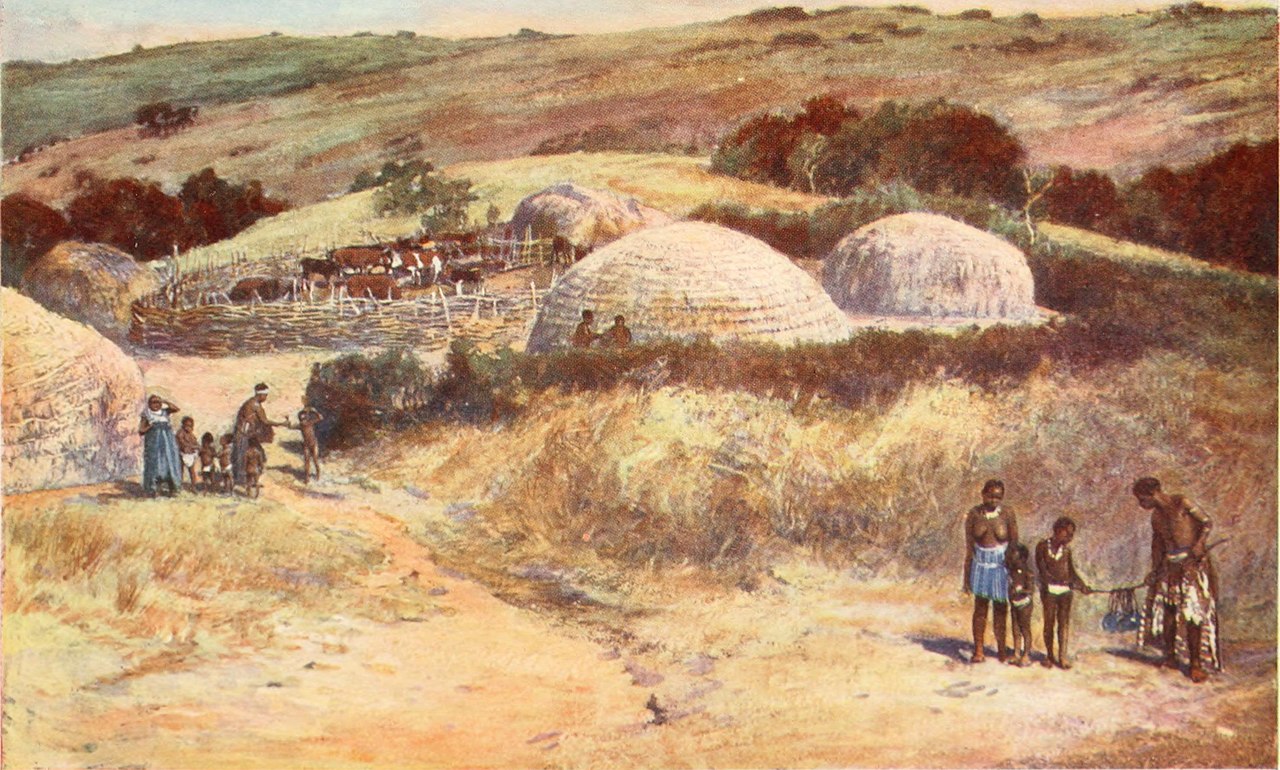

Languages and major groups
Nguni speech varieties form a subgroup within the Bantu language family; scholars commonly refer to them collectively as Nguni languages. Principal Nguni groups and varieties include:
- Zulu and Xhosa (prominent in what is today South Africa);
- Swazi or Swati, associated with Eswatini (formerly Swaziland);
- Northern and Southern Ndebele, present in Zimbabwe and parts of South Africa.
History and development
Like other southern African Bantu groups, the Nguni descend from earlier waves of Bantu-speaking migrants who moved southward centuries ago. In the later precolonial era, processes of state formation, migration and conflict—often summarized under terms such as the Mfecane—rearranged political landscapes and contributed to the prominence of powerful kingdoms and chiefdoms, while clan networks and oral genealogies remained central to identity.
Culture, society and notable features
Nguni societies traditionally emphasize kinship, clan totems, cattle as wealth markers, initiation rites and age-grade ceremonies. Material culture includes beadwork, distinctive dress and dance, while several Nguni languages incorporate click sounds adopted through contact with Khoisan languages. Traditional leadership and praise poetry have long been important vehicles for history and social values.
Modern distribution and significance
Today Nguni-speaking communities are a major part of the population of southern African states. They influence national politics, literature, music and urban culture. Members live in rural and urban settings, participate in national economies and maintain cultural practices alongside modern institutions in places such as Zimbabwe and neighboring countries.
Distinctions among Nguni groups rest on language varieties, clan histories and regional traditions; while closely related, each group preserves its own customs and historical narrative within the broader Nguni family.
Related articles
Author
AlegsaOnline.com Nguni people Leandro Alegsa
URL: https://en.alegsaonline.com/art/69887