
New York Clipper (weekly entertainment newspaper)
A 19th–early 20th century New York weekly covering theatre, vaudeville, dance, music, circuses, sports and outdoor pursuits; widely used as a primary source for popular entertainment history.
Overview
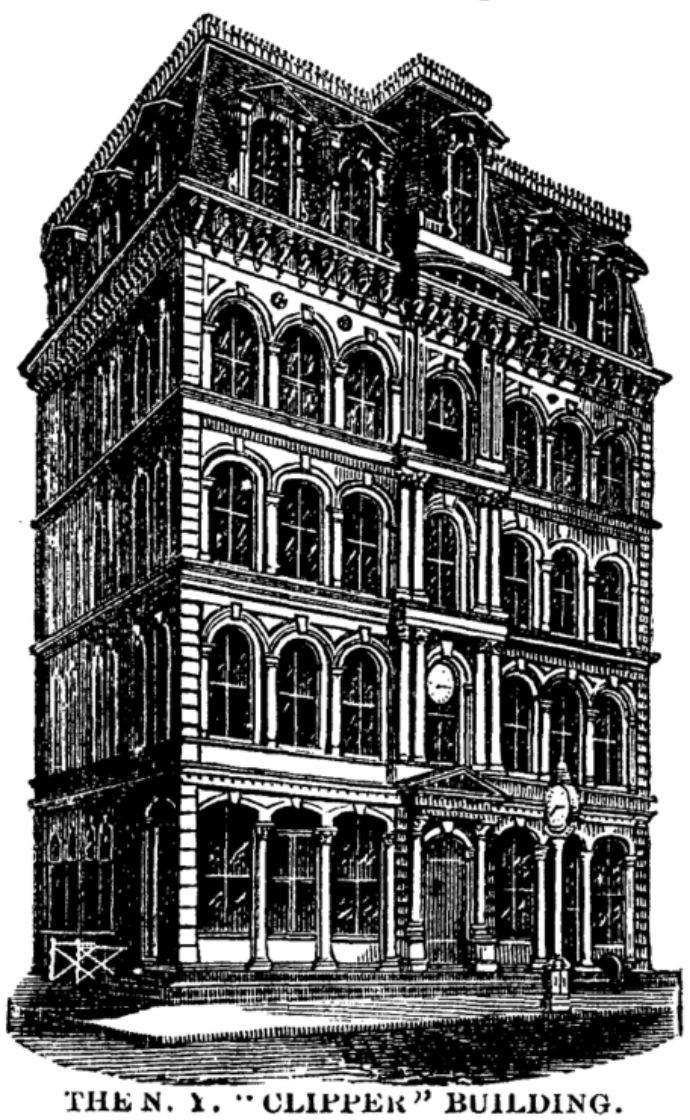
The New York Clipper, commonly called The Clipper, was a weekly entertainment newspaper published in New York City from 1853 to 1924. It functioned as both a trade journal and a popular periodical for performers, managers, agents and audiences, reporting schedules, reviews, business notices and classified advertisements. For publishing history and brief summaries consult collections and bibliographies noted by libraries and specialists. Publication information.
Image gallery
3 Images

Content and format
The paper appeared in a compact weekly form that combined news dispatches, critical notices, printed playbills, and classified listings. Regular items included performance announcements, personnel changes, tour itineraries, box-office and circuit reports, and advertising for shows and training. It mixed practical trade material for professionals with items intended for general readers. Surviving paper runs and finding aids are indexed in several catalogs and archival guides.
Subjects covered
- Theatre and vaudeville: playhouses, touring companies, and booking circuits.
- Dance and ballet: reviews, listings of dance schools and reports on touring dancers.
- Music: concert and sheet-music notices, popular songs and band or orchestra reports.
- Circus and novelty entertainments: announcements, performer profiles and advertising.
- Sports and outdoor life: coverage ranged from boxing and horse racing to yachting and early baseball reportage.
Historical significance
As one of the principal weekly sources for entertainment news in the United States during its run, the Clipper documents changes in popular culture, the growth of touring networks, and the organization of entertainment professions. Scholars use it for research into minstrel shows, vaudeville, circuses and the early development of professional sports. Its New York base placed it at the center of commercial theatre and touring circuits. Regional context.
Research use and access
Original issues are preserved in many libraries and special collections and have been digitized in parts by various repositories. Researchers consult holdings lists, indexes and microfilm runs to locate advertisements, obituaries, cast lists and business notices. For overviews of holdings and searchable tools see institutional catalogs and digital indexes. Holdings overview and digital indexes are useful starting points; selected examples of musical and sporting notices can be viewed in specialist compilations and databases. Sample music notices and sports columns illustrate its range.
Limitations and bias
While rich in contemporary detail, the Clipper reflects the commercial and cultural priorities of its era and place: urban entertainment, mainstream touring circuits and the interests of industry professionals. Coverage can be uneven by region, genre, race and class; researchers should combine Clipper evidence with other primary sources and critical scholarship when reconstructing historical narratives.
Legacy
The Clipper remains a key primary source for genealogists, theatre historians and historians of popular culture. Its detailed notices and advertisements provide empirical evidence about performers’ careers, theatrical economies and changing tastes in entertainment during the late 19th and early 20th centuries.
Related articles
Author
AlegsaOnline.com New York Clipper (weekly entertainment newspaper) Leandro Alegsa
URL: https://en.alegsaonline.com/art/69654