
Nestor (genus)
Nestor is a small genus of large, stocky parrots native to New Zealand and nearby islands, including the kea and kākā; it includes two living species and two recently extinct island species.
The genus Nestor comprises a distinctive group of parrots notable for their robust bodies, powerful beaks and short, square tails. They belong to the family Nestoridae and, together with the ground-dwelling kakapo, form the ancient superfamily Strigopoidea. Members of this genus are best known from New Zealand and nearby islands where they occupied a variety of forested and alpine habitats.
Image gallery
7 Images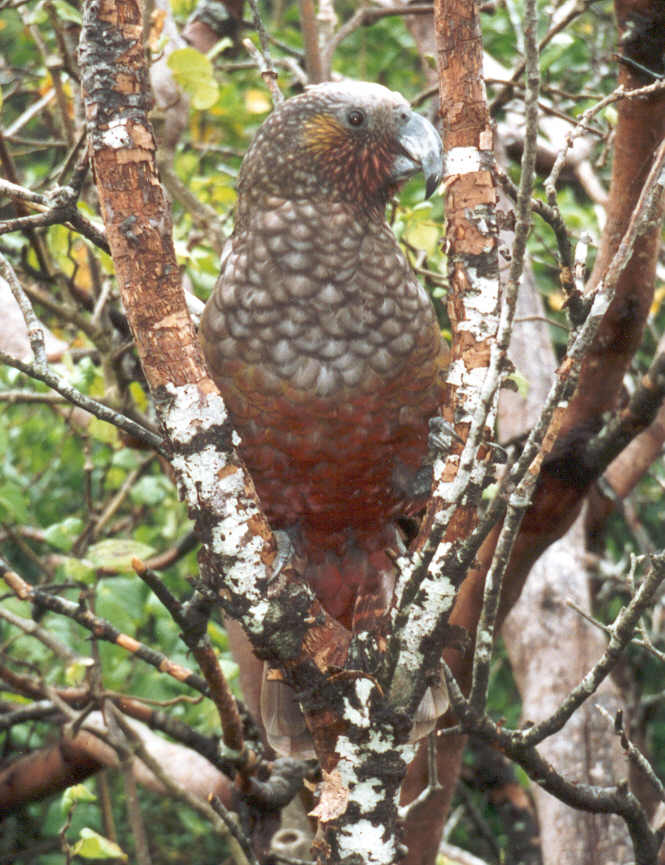


Species
- Extant: Kea (Nestor notabilis) and Kākā (Nestor meridionalis).
- Extinct: Norfolk Island kākā (Nestor productus) and Chatham Island kākā (Nestor chathamensis).
These species differ in ecology and behavior: the kea occupies alpine and subalpine zones and is famed for intelligence and bold interactions with people, while the kākā is a forest canopy feeder. The two island taxa became extinct following human colonization and the arrival of introduced predators.
Physical characteristics
Nestor parrots are large and stocky with strong, curved bills adapted for breaking wood, extracting seeds and manipulating food. They have zygodactyl feet (two toes forward, two back), relatively short tails and plumage that varies from olive-brown to more colorful markings in the kea. Sexual dimorphism is subtle in most species, often limited to size and tonal differences rather than dramatic color differences.
Behaviour and diet
Members of Nestor are omnivorous and opportunistic feeders. Kākā forage for fruit, seeds, nectar and invertebrates in forest canopies, using their bills to probe and strip bark. Kea exploit alpine food resources, scavenge, and are known for problem solving and play; their curious nature has brought them into frequent contact with humans. Breeding typically involves tree cavities or sheltered sites where a small clutch is raised.
Distribution, decline and conservation
The genus had a wider island distribution in the past, including Norfolk Island (Norfolk Island) and islands in the South Pacific; some subfossil records extend toward Australia. Populations have declined because of habitat loss, introduced mammals, direct persecution and other human impacts. Conservation efforts focus on habitat protection, predator control, monitoring and, where necessary, captive management to support wild populations.
Taxonomically, Nestor is treated as one of the most ancient lineages of parrots confined to the Zealandia region, making its species important for studies of avian evolution in island ecosystems and for understanding how isolation shaped specialized behaviours and morphologies in parrots.
Related articles
Author
AlegsaOnline.com Nestor (genus) Leandro Alegsa
URL: https://en.alegsaonline.com/art/69247