
Norfolk Island: geography, history, culture and conservation
Norfolk Island is a small external Australian territory in the South Pacific, known for its convict-era heritage, Pitcairn settlers and Norfuk language, distinctive Norfolk pines, and conservation-based tourism.
Overview
Norfolk Island is a small external territory of Australia, located in the South Pacific Ocean roughly between New Zealand and New Caledonia. The island has a compact land area and a small, largely permanent community. Its identity reflects a mix of British colonial history, the descendants of Pitcairn Island settlers, and contemporary links with the Australian mainland. Norfolk is also known for its attractive coastal scenery and a tourism sector oriented to visitors seeking heritage, walking, diving and relaxed island life.
Image gallery
10 Images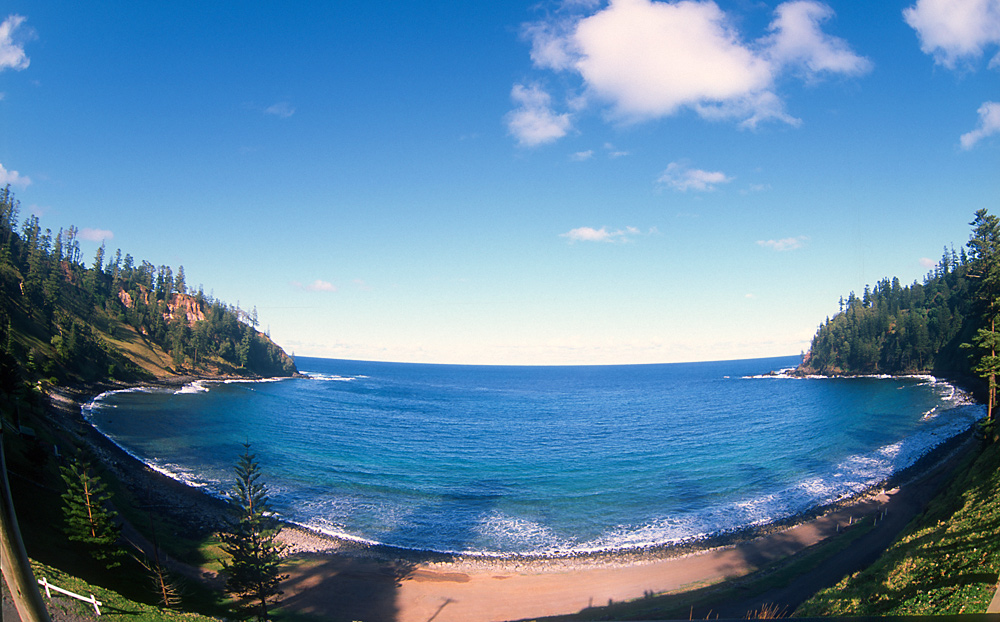


Geography and natural environment
Norfolk is volcanic in origin and forms a single main island with two smaller islets to the south. The island’s longest dimension is about 5 miles (approximately 8 km), and much of the interior rises to around 350 ft (107 m) above sea level, with a couple of higher points approaching 1,000 feet. The volcanic geology and coastal cliffs produce varied soils and habitats. Native vegetation includes the iconic Norfolk pine; local waters and reserves support seabirds, endemic plants and several species of conservation concern. Two small islets immediately to the south add to the island’s maritime and ecological interest.
History and settlement
Norfolk Island's recorded history under European influence began with British expansion into the Pacific. It was one of the early British outposts and at times served as a penal settlement for transported convicts, a history that left substantial archaeological remains and built heritage. In the mid‑19th century descendants of the settlers of Pitcairn Island relocated to Norfolk, bringing elements of Polynesian culture and contributing to a distinct local identity. Sites associated with the convict period and later settlement are prominent features of the island’s cultural landscape and have been preserved and interpreted for visitors.
Language, culture and community life
The island’s small community preserves a blend of British colonial traditions and Pacific influences. The Norfuk language (also written Norf'k or Norfuk Ailen) is a creole that combines elements of 18th‑century English and Tahitian and is an acknowledged part of local heritage; English is used for administration and education. Community life revolves around small-scale agriculture, fishing, local churches, community events and crafts. Cultural festivals, music and storytelling contribute to a strong sense of place among residents.
Administration, economy and services
Norfolk’s formal ties are with the Australian government and it operates under arrangements that reflect its status as an external territory. The local economy is modest and diversified: public services and administration, visitor accommodation and guided experiences, small-scale farming, horticulture and artisanal goods all play roles. Tourism focused on the island’s history, walking tracks, birdwatching and diving provides an important source of income. Transport connections to larger regional centres such as Sydney and Auckland shape travel and supply links.
Conservation and heritage
Conservation efforts on Norfolk Island aim to protect endemic flora and fauna, fragile coastal ecosystems and the island’s archaeological and built heritage. The protection of native trees such as the Norfolk pine, recovery programs for threatened bird species, and management of invasive plants and animals are ongoing priorities. Historic areas that reflect the island’s convict and colonial past are managed for education and tourism, and they form a focal point for cultural preservation.
Visiting and practical information
Visitors are attracted by Norfolk’s layered history, walking trails, calm bays and relatively unspoilt landscapes. Accommodation is generally small-scale, and visitor activities emphasize low-impact experiences: guided historical tours, snorkeling, diving, birdwatching and walking. Weather is generally temperate and maritime, making the island pleasant for outdoor activities for much of the year. Because the island is small and services are limited compared with large cities, travellers are advised to plan ahead and consult official sources for up‑to‑date information on travel, accommodation and permitted activities.
Notable points
- Territorial status: Norfolk is an external Australian territory with distinctive local governance arrangements.
- Colonial origins and a prominent role in 18th–19th century Pacific history.
- Volcanic origin that shaped the island’s cliffs, soils and habitats.
- Relocation and cultural influence of Pitcairn Island settlers in the 19th century.
- Compact dimensions (5 mi / 8 km) and elevations around 350 ft (107 m), giving a varied but intimate landscape.
For authoritative details on visiting, conservation programs and the island’s heritage, consult local government and visitor information resources represented above by the link tokens. Practical guides and official sources provide up‑to‑date advice about access, permits, and community events.
Questions and answers
Q: What is Norfolk Island?
A: Norfolk Island is a territory of Australia located in the South Pacific Ocean.
Q: What is the size of Norfolk Island?
A: Norfolk Island is approximately 5 miles (8 km) by 3 miles (5 km) in size.
Q: Where is Norfolk Island located?
A: Norfolk Island is located between Australia, New Zealand, and New Caledonia in the South Pacific Ocean.
Q: Why was Norfolk Island used as a penal colony?
A: Norfolk Island was used as a penal colony twice in the past.
Q: What is the history of Norfolk Island?
A: Norfolk Island was one of the first British settlements in the Pacific, and people from Pitcairn Island were relocated there. It is now a popular holiday destination.
Q: What are the high points on Norfolk Island?
A: There are two high points on Norfolk Island that are roughly 1,000 feet (305 m) above sea level.
Q: What are the names of the islands south of Norfolk Island?
A: The islands south of Norfolk Island are Nepean Island and Phillip Island.
Related articles
Author
AlegsaOnline.com Norfolk Island: geography, history, culture and conservation Leandro Alegsa
URL: https://en.alegsaonline.com/art/70701
Sources
- commons.wikimedia.org : Norfolk Island
- info.gov.nf : Norfolk Island Broadcasting Act 2001 – Norf'k Ailen Brordkaasen Aekt 2001
- info.gov.nf : Norfolk Island Language (Norf'k) Act 2004 (Act No. 25 of 2004)
- cia.gov : "CIA - The World Factbook"
- amonline.net.au : "The Prehistoric Archaeology of Norfolk Island, Southwest Pacific"
- hmssirius.com.au : "The World of Norfolk"
- lanecc.edu : "The Mystery Islands of South Polynesia Bibliography of Prehistoric Settlement on Norfolk Island, the Kermadecs, Lord Howe, and the Auckland Islands"
- discovernorfolkisland.com : "Norfolk Island History - Starvation on Norfolk"
- adb.anu.edu.au : "Foveaux, Joseph (1767 - 1846)"
- discovernorfolkisland.com : "Norfolk Island History - The Second Settlement"
- thecommonwealth.org : Commonwealth Secretariat - Member States
- wikidata.org : wikidata.org/wiki/Q31057
- catalogo.bne.es : XX5436571
- catalogue.bnf.fr : cb12452554z
- data.bnf.fr : (data)