
Kakapo (Strigops habroptilus): New Zealand's flightless parrot
The kakapo is a nocturnal, flightless parrot endemic to New Zealand. This article explains its appearance, behavior, history, conservation and unique place in culture and science.
Overview
The kakapo (Strigops habroptilus) is a large, nocturnal parrot native to New Zealand. Its Māori name means "night parrot" and reflects its largely nocturnal habits. The kakapo is unique among parrots for being unable to fly: its stout wings are adapted for balance and climbing rather than sustained flight — a trait highlighted in discussions of flightlessness.
Image gallery
10 Images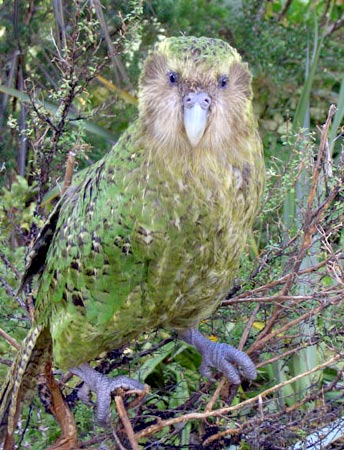


Physical characteristics and behaviour
Kakapo have mossy-green, cryptic plumage, a heavy body and a facial disc of feathers that gives them an owl-like appearance. They are primarily herbivorous, feeding on leaves, seeds, fruits and other native plants. Kakapo are solitary and largely active at night. Males establish display sites and produce low-frequency booming calls and other loud noises to attract females; individuals also use harsh contact calls to defend space from rivals.
- Size and life span: relatively large for parrots and known to live many decades in the wild and care — lifespans of around 60 years are often cited.
- Reproduction: males form leks and call from depressions, while females raise chicks alone.
- Vocalizations: includes booming, grunts and the familiar rasping sounds used in territorial interactions; local names describe these calls as distinctive screeches.
Habitat and distribution
Historically the species occupied diverse habitats including grassland, scrub and coastal areas across New Zealand. Because of predation by introduced mammals and habitat changes, wild kakapo populations now survive only on predator-free offshore islands and in heavily managed sanctuaries. Their status as an island endemic makes them particularly vulnerable to ecosystem disturbances.
Conservation, cultural importance and notable facts
Conservation programs have involved translocation to secure islands, intensive monitoring, supplementary feeding and veterinary care. Recovery work is collaborative and long-term, reflecting the kakapo's slow reproductive rate and specialised needs. The species is significant to Māori and modern conservation alike: it is the world's best-known flightless parrot and one of the few parrots with a lek breeding system. For more general background on parrots and conservation practice see resources on the parrot family and on efforts to protect territorial and breeding behaviour (territory management) in endangered birds. Additional reading and resources are available from conservation organizations and wildlife databases that track population trends and recovery work (flightless bird studies, habitat restoration, island sanctuaries, New Zealand conservation, vocalization recordings).
The kakapo remains an emblematic example of how island endemics can suffer after human arrival and how dedicated conservation can prevent extinction. Continued public interest and scientific support are central to its recovery.
Questions and answers
Q: Can the Kakapo fly?
A: No, the Kakapo is the only parrot that cannot fly.
Q: Where does the Kakapo live?
A: The Kakapo lives in grassland, scrubland and coastal regions of New Zealand.
Q: Why is it difficult to see Kakapos in New Zealand?
A: Kakapos are so rare they can only be seen on protected offshore islands.
Q: What does the word "Kakapo" mean in Maori language?
A: "Kakapo" means 'night parrot' in the Maori language.
Q: When are Kakapos most active?
A: Kakapos are most active at night (nocturnal).
Q: Do Kakapos like to be alone?
A: Yes, Kakapos like to be alone.
Q: How long can a Kakapo live for?
A: A Kakapo can live for about 60 years.
Related articles
Author
AlegsaOnline.com Kakapo (Strigops habroptilus): New Zealand's flightless parrot Leandro Alegsa
URL: https://en.alegsaonline.com/art/51923
Sources
- kakaporecovery.org.nz : "Kakapo Habitat"
- durrellwildlife.org : "GERALD DURRELL'S CAREER"
- elwin.co.nz : The Unnatural History of the Kakapo
- odt.co.nz : "Fry making kakapo doco"
- bbc.co.uk : bbc.co.uk/programmes/b00mg3qk