
Needle (sewing tool and related applications)
A needle is a small pointed implement for passing thread or performing puncturing tasks. This article covers types, parts, materials, history, uses and safety of sewing, medical and other needles.
A needle is a small pointed implement designed to pierce or pass through a relatively small opening. In its most familiar form it has a sharp point, a long thin shaft and an eye or hole that accepts thread. Needles are central to textile work such as making clothing and producing footwear, but the word also applies to other slender, pointed tools used in medicine, crafts and navigation.
Image gallery
7 Images




Characteristics and main parts
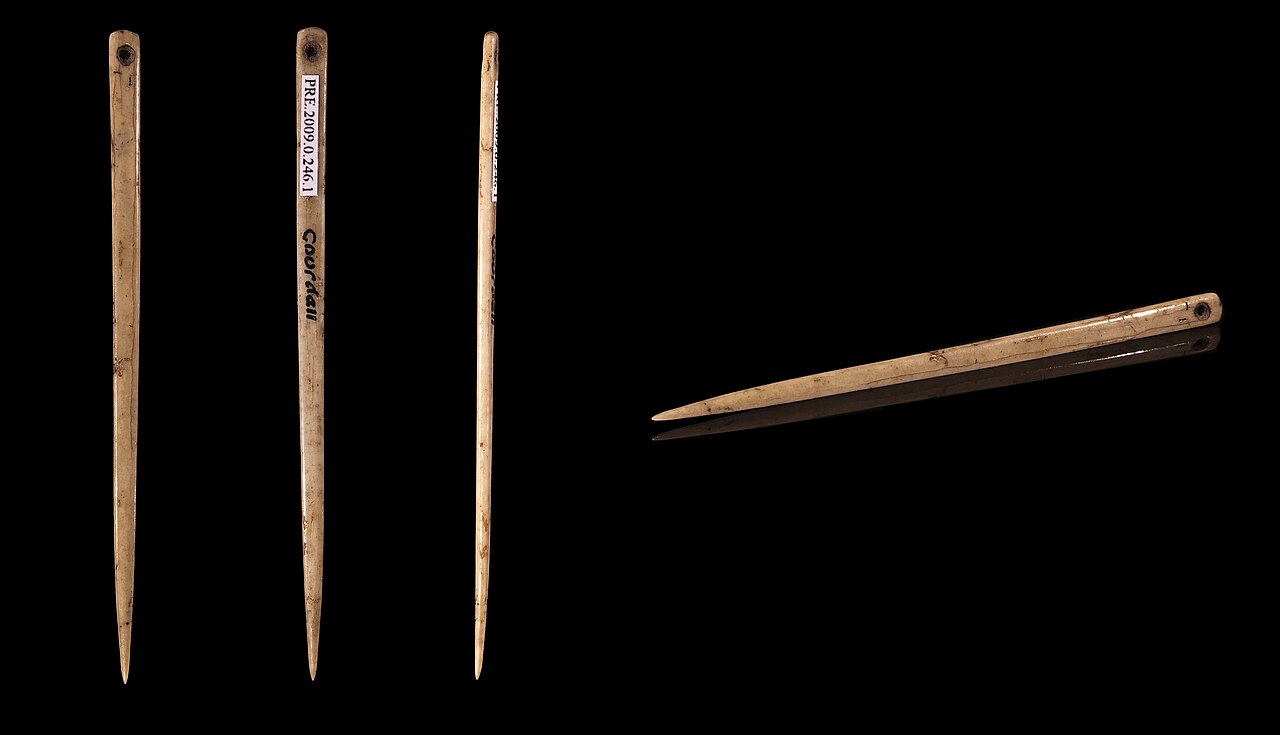
Typical hand-sewing needles consist of three basic parts: the point that penetrates the material, the shaft which guides and supports the needle, and the eye that carries a length of thread. Variations include long, blunt tapestry needles for coarse fabrics, very fine sharps for delicate work, and specialized needles with elongated or offset eyes for embroidery. Materials range from natural bone and wood in prehistoric examples to modern stainless and plated steels chosen for strength, corrosion resistance and smoothness.
Types and common uses
- Hand-sewing needles: used for garment construction, mending and decorative stitching.
- Machine needles: designed for use in sewing machines; shaped and sized to match fabrics and threads.
- Knitting needles: long rods without an eye, used to form loops of yarn into fabric.
- Medical needles: hollow hypodermic needles and solid acupuncture needles used for injections, sampling or therapeutic puncture; they require strict sterility and, often, single use.
- Other forms: compass needles (magnetized pointers), phonograph stylus tips and various industrial probes.
History and development
Needles appear early in the archaeological record. Prehistoric people fashioned sewing needles from bone, ivory and fine wood to stitch hides and construct clothing suited to cold climates. As metalworking developed, copper and bronze examples appeared and were eventually supplanted by iron and steel, which allowed stronger, finer points and mass production. Advances in metallurgy and manufacturing in the 19th and 20th centuries made standardized sizes and specialized coatings common in modern needle production.
Manufacture, sizing and selection
Modern metal needles are typically made from drawn wire that is ground to form a point and shaped to receive an eye. Surface finishing — polishing or plating — reduces friction and prevents rust. Needles are offered in many sizes and shapes; selecting the right needle depends on the weight and weave of the fabric or material, the type of thread or yarn, and the task (sewing, quilting, beading). For medical needles, gauge and length are chosen according to clinical need and patient safety.
Care, safety and notable facts
Hand needles can be kept sharp and rust-free with proper storage; damaged or bent needles should be discarded. Medical needles are subject to strict single-use and disposal protocols to prevent infection. Archaeologically, the presence of early needles indicates advances in clothing and shelter that supported human migration and adaptation to different climates. For practical learning, many needlecraft resources and suppliers provide guidance on matching needle type to material; for example, instructions often show how to thread a needle and pass it through a chosen material. For general background on textiles and early tools see broader resources on prehistory and craft techniques such as those linked here: prehistoric textiles and tools.
Needles remain a small but essential technology: simple in form, widely adapted, and fundamental to sewing, medicine and many crafts.
Related articles
Author
AlegsaOnline.com Needle (sewing tool and related applications) Leandro Alegsa
URL: https://en.alegsaonline.com/art/69002