
Negative feedback (control systems and biological regulation)
Negative feedback is a regulatory mechanism in which a system's output acts to reduce or oppose changes to its input, used across engineering, physiology, and control theory to maintain stability and set points.
Overview
Negative feedback is a control process in which a portion of a system's output is returned in such a way that it counteracts deviations from a desired state. It is a foundational idea in cybernetics and the study of regulation, and it underpins many devices and biological processes. Engineers use it to stabilise machines and signals, while physiologists recognise it as a key principle of homeostasis. The concept appears across disciplines including engineering and physiology.
Image gallery
6 Images



Definition and basic behavior
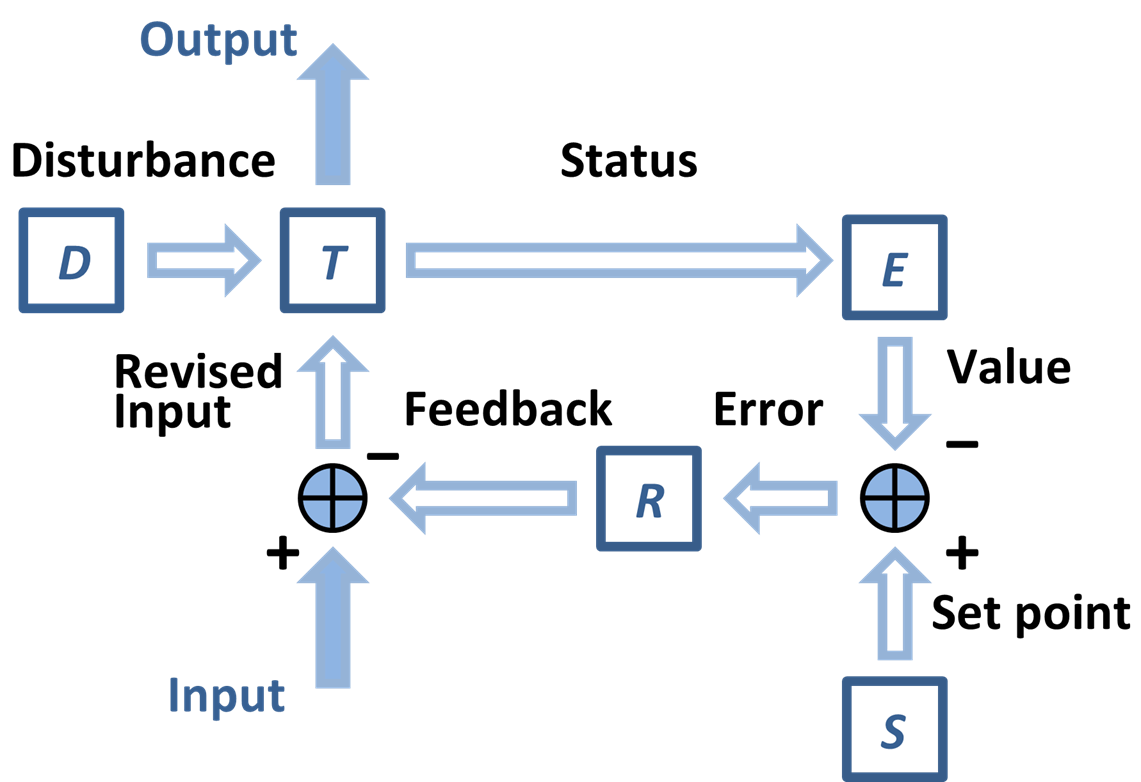
At its simplest, negative feedback occurs when a system's output produces an effect that reduces the original input or the change produced by that input. This opposition tends to resist change, dampen disturbances, and keep variables near a target value. For many practical purposes a negative-feedback loop improves steadiness: when the measured quantity rises above the set point the loop produces a response that lowers it, and vice versa.
Core components
- Sensor — measures the current state of the system (system variable).
- Comparator or controller — compares measurement with a set point and decides how to respond.
- Actuator — carries out changes that push the system back toward the set point.
- Feedback path — the route by which the output is fed back into the controller.
History and development
Interest in feedback grew with early studies of automatic control and the interdisciplinary field of cybernetics. Control theory formalised many ideas about stability, gain, and response, allowing designers to predict when feedback will improve performance and when it will lead to instability. The thermostat is a classic, intuitive illustration: a temperature sensor and switch cut heating when a chosen temperature is reached, an example often described by textbooks to show how feedback maintains conditions.
Examples and applications
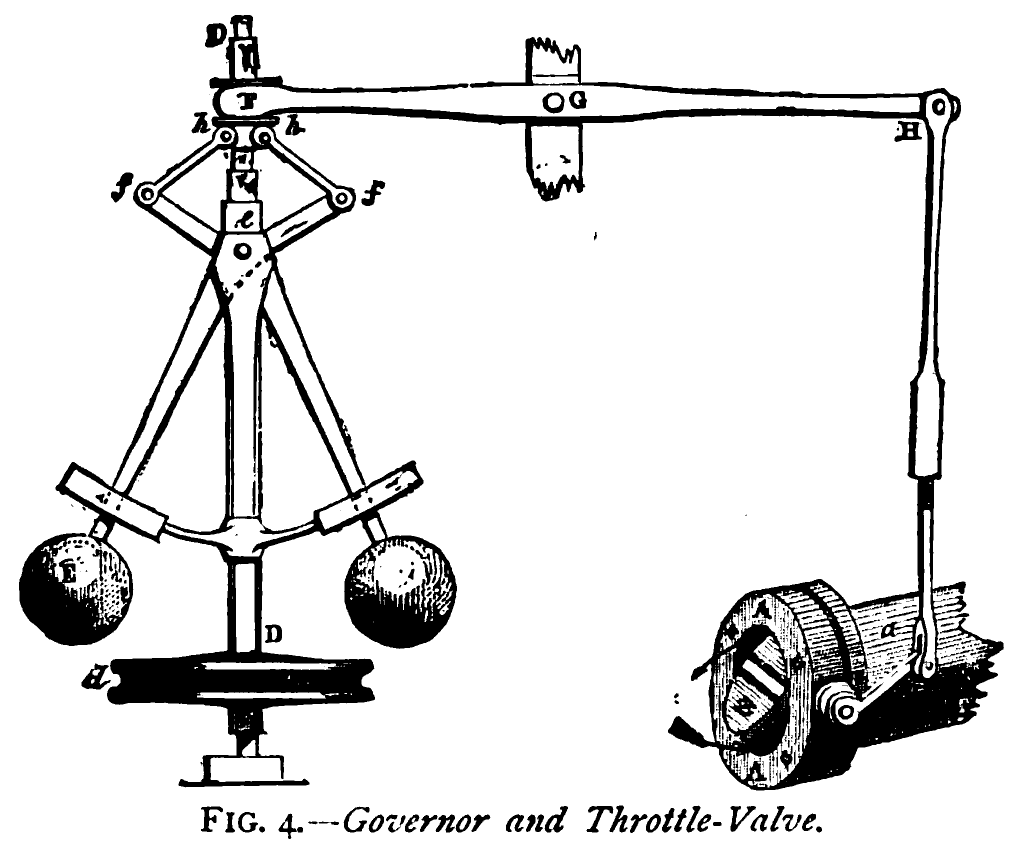
Negative feedback appears in many engineered systems: amplifier circuits use it to widen bandwidth and reduce distortion, vehicle cruise control adjusts throttle to maintain speed, and thermostats regulate building temperatures (thermostat). In biology, negative feedback stabilises body temperature, blood glucose levels, and hormone concentrations; these processes are central to homeostasis. Practical design balances responsiveness and stability so that corrections are neither too slow nor so aggressive they cause oscillation.
Distinctions and design limits
Negative feedback is distinct from positive feedback, which amplifies deviations and can lead to runaway effects. While negative feedback generally promotes stability, it can produce undesirable oscillations if there are delays or excessive gain. Control engineers therefore analyse loop dynamics and may combine multiple feedback paths or add damping to achieve desired behavior. Understanding these trade-offs is essential when applying negative feedback in both technical and biological settings.
Further reading: introductory texts on control theory, practical guides to regulators, and entries on engineering and biological physiology provide expanded treatments of feedback concepts.
Questions and answers
Q: What is negative feedback?
A: Negative feedback is a basic concept of cybernetics; it is the basis of regulation and control.
Q: Where is negative feedback important?
A: Negative feedback is important in engineering and physiology.
Q: What is homeostasis?
A: In biology and physiology, negative feedback is known as homeostasis.
Q: What occurs when negative feedback happens?
A: Negative feedback occurs when the output of a system acts to oppose changes to the input of a system.
Q: What is the result of negative feedback?
A: The result of negative feedback is that the changes are made less, and the system kept within limits.
Q: What is the classic example of negative feedback?
A: The classic example of negative feedback is a central heating system which cuts off when a (suitably placed) temperature sensor hits a pre-set mark.
Q: What is the negative feedback part in a central heating system?
A: The negative feedback part in a central heating system is the thermostat.
Related articles
Author
AlegsaOnline.com Negative feedback (control systems and biological regulation) Leandro Alegsa
URL: https://en.alegsaonline.com/art/69017