
Near West Side, Chicago: overview, neighborhoods, history, and landmarks
The Near West Side is a historic Chicago community area west of the Loop, mixing longtime neighborhoods, major institutions (UIC, Illinois Medical District), cultural hubs and recent redevelopment.
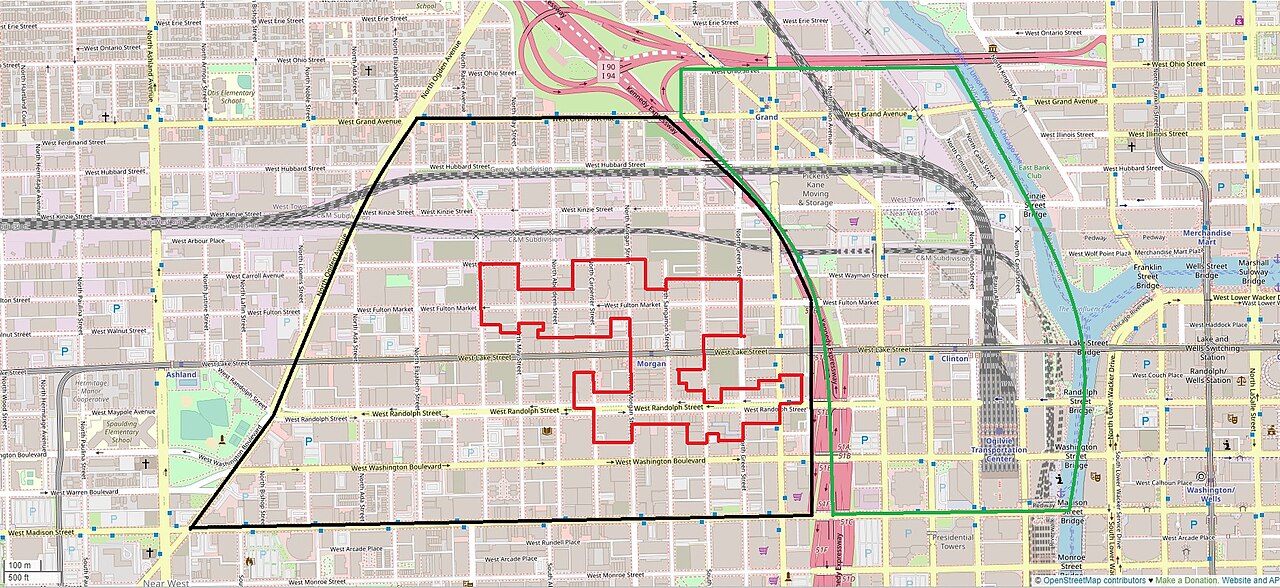
The Near West Side is one of Chicago's 77 community areas, positioned immediately west of the central business district. Bordered by the Chicago River to the east and extending into a portion of the city's West Side, it forms a transitional corridor between the Loop and more residential neighborhoods. The area combines institutional campuses, cultural enclaves, arenas, hospitals and evolving commercial districts that reflect both Chicago's industrial past and rapid 21st‑century reinvention.
Geographically compact but diverse in function, the Near West Side contains blocks of dense urban housing, former factories converted to lofts, and large land parcels occupied by universities and medical facilities. Its proximity to downtown makes it well served by transit and arterial streets, and it remains an important access point for commuters, patients, students and visitors drawn to downtown Chicago.
Image gallery
10 Images



Neighborhoods and landmarks
- Greektown — a clustered dining and cultural district known for restaurants and festivals.
- United Center — a major arena hosting professional sports, concerts and large events.
- Hull House — the settlement house founded in the late 19th century that played a key role in social reform and immigrant services.
- Sites associated with the Great Chicago Fire — parts of the fire's origin and early recovery efforts are tied to this area.
- Riverfront and adjacent corridors that have influenced industrial siting and later waterfront redevelopment.
- Community area designation and a range of sub‑neighborhoods that include university districts and medical campuses.
Institutions give the Near West Side much of its character. The Loop sits immediately to the east, while major educational and health institutions anchor several blocks: a prominent university campus and the Illinois Medical District concentrate research, clinical care and training facilities. These institutions coexist alongside entertainment venues and longstanding neighborhood pockets.
Historically, the Near West Side hosted factories, immigrant neighborhoods and social reform movements. Settlement houses provided services to new arrivals, and the district's built environment still shows traces of manufacturing warehouses and 19th‑century housing. In recent decades parts of the Near West Side have experienced substantial redevelopment: former industrial buildings have been repurposed, new residential towers and restaurants have appeared, and a growing tech and culinary presence has reshaped commercial corridors.
Today the Near West Side is valued for its concentration of cultural attractions, medical and educational employers, and accessible urban living. It illustrates several broader city trends at once: the preservation of historical sites, pressures of gentrification and adaptive reuse of industrial fabric. For visitors and residents alike, the area offers a mix of institutional scale and neighborhood amenities that continues to evolve as Chicago changes.
For a general orientation to municipal planning and how this district fits into the city's layout, see references from official guides to Chicago's West Side and to local community area maps and resources (community areas pages and transit descriptions).
Related articles
Author
AlegsaOnline.com Near West Side, Chicago: overview, neighborhoods, history, and landmarks Leandro Alegsa
URL: https://en.alegsaonline.com/art/68933