
At sign (@): origin, uses, and cultural significance
Overview of the at sign (@), its debated origins, historical uses in commerce and email, roles in programming and social media, keyboard placement, and notable linguistic and cultural facts.
Overview
The at sign (@) is a typographic symbol used worldwide to indicate relation or location, most familiarly separating a user name from a host in an email address. It is known by many names—"at sign", "commercial at", "ampersat" and in several languages as "arobase" or "arroba"—and appears in modern computing, commerce and social communication.
Image gallery
5 Images


History and origin
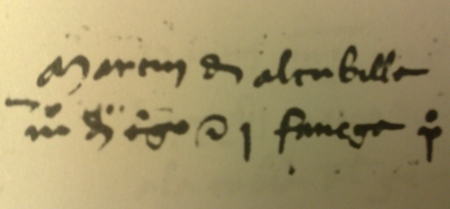
The precise origin of the mark is debated. Some scholars trace it to medieval commercial abbreviations for the Latin word "ad" (meaning "to" or "at"), while others point to ligature or shorthand practices in later European manuscripts. A minority of accounts link the shape to variations of letters used in different scripts; one proposed source is a ligature related to an ancient preposition sometimes cited in historical studies (see discussion). Its modern technological role was popularized when computer engineer Ray Tomlinson selected @ in the early 1970s to separate user names from network hostnames, establishing the familiar form of electronic addressing.
Common uses and examples
The symbol has a range of practical uses. Historically it appeared on invoices and price lists to mean "at the rate of" (for example, "7 widgets @ £2 = £14"); that commercial usage survives in accounting and shorthand contexts (billing example). In computing and communication its functions now include:
- Email addressing: separates the local part and domain in an email address.
- Social media mentions: used to tag or mention accounts on platforms such as Twitter and Instagram.
- Programming and markup: employed in many languages for distinct syntactic purposes—decorators and annotations, string literals, instance variables, or compiler directives. Its role varies by language and framework; programmers recognize it as a multifunctional symbol.
Appearance, encoding and keyboard
The at sign is part of standard character sets including ASCII and Unicode, which ensures broad compatibility across computer systems. It appears on most national keyboards, though its exact location and the modifier keys needed to type it differ by layout (for example, US, UK and many European keyboards place it near the number keys or the quote key). For practical guidance see common keyboard diagrams or input-method references (keyboard layouts).
Notable facts and distinctions
Across languages the @ symbol has acquired many local names and associations: in Spanish and Portuguese "arroba" historically referred to a unit of weight, in French "arobase", in German "Klammeraffe" ("spider monkey"). Its adoption in electronic mail and later social platforms gave it a global identity as an address and mention marker, making it one of the most widely recognized non-alphanumeric characters in modern communication. For historical context and further reading, see introductions to typographic symbols and electronic communication (typography) or technical histories of email systems (Tomlinson and early email).
Related articles
Author
AlegsaOnline.com At sign (@): origin, uses, and cultural significance Leandro Alegsa
URL: https://en.alegsaonline.com/art/6873