
Austroasiatic languages: overview, classification and significance
A family of some 150–160 languages of mainland Southeast Asia and eastern India, including Vietnamese and Khmer; diverse typology, historical depth, and several endangered languages.
The Austroasiatic languages form a widespread language family chiefly found in mainland Southeast Asia and parts of eastern India. Together they comprise roughly 150–160 distinct languages and are spoken by an estimated 100–120 million people. The best known members are Vietnamese and Khmer, both of which serve as official languages of modern nation-states. Communities speaking Austroasiatic languages are concentrated in Southeast Asia but also extend westward into central and eastern India.
Image gallery
3 Images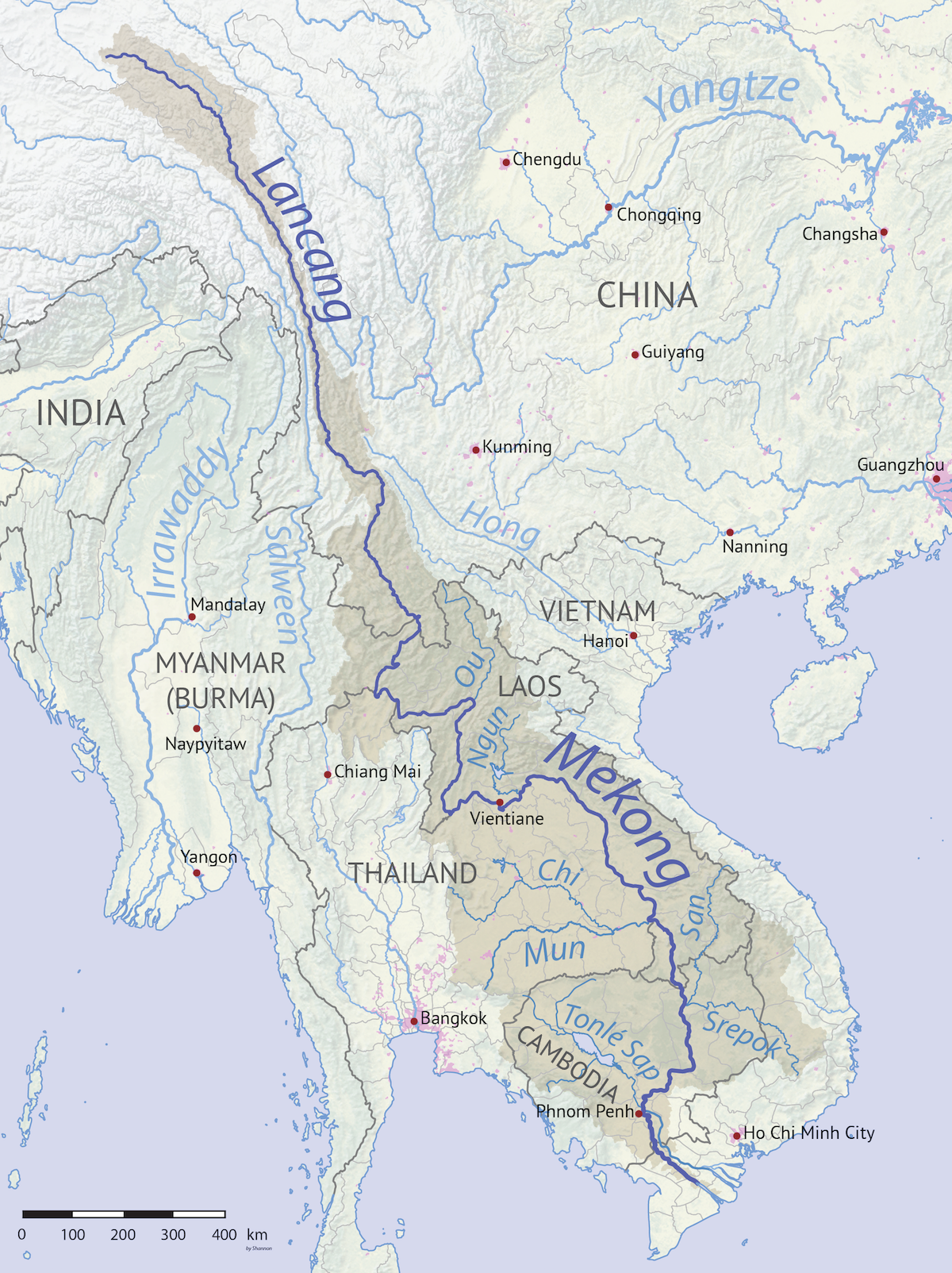


Characteristics
Austroasiatic languages exhibit substantial internal diversity. Many mainland branches (for example Vietnamese and Khmer) are largely analytic, relying on word order and particles rather than complex inflection. Several languages are monosyllabic or feature monosyllabic roots. Tonal systems have developed independently in some branches (notably Vietnamese) through historical phonation and segmental changes, while others remain non‑tonal. The Munda branch, spoken in India, often shows more agglutinative morphology and complex verb forms, contrasting with the isolating profiles found farther east.
Classification and history
Scholars typically divide the family into two broad clusters: the Munda languages of the Indian subcontinent and the Mon‑Khmer grouping of mainland Southeast Asia (a label sometimes used loosely to cover many non‑Munda branches). Linguists have reconstructed a Proto‑Austroasiatic ancestor and debate its original homeland; many place it in mainland Southeast Asia or nearby regions of southern China. Over millennia the family spread and diversified through migration, contact with neighboring families (Tai‑Kadai, Sino‑Tibetan, Austronesian) and local innovations.
Geographic distribution and examples
Austroasiatic speakers are distributed across several modern countries. Major languages and areas include:
- Vietnamese in Vietnam (large national language).
- Khmer in Cambodia and parts of Thailand (national language of Cambodia).
- Mon in parts of Myanmar and Thailand.
- Munda languages such as Santali and Mundari in eastern and central India.
- Smaller groups and numerous minority languages across Laos, southern China and peninsular Thailand.
Writing, literature and cultural role
Several Austroasiatic languages have long written traditions. Khmer preserves an ancient Brahmi‑derived script with inscriptions dating back over a millennium. Vietnamese today uses a Latin‑based alphabet (quốc ngữ), a script which became widespread in the 20th century, while some other languages were transcribed historically with Indic scripts or later adopted scripts from neighboring peoples. Austroasiatic languages have contributed to regional vocabularies and trade languages over several centuries.
Notable facts and contemporary issues
The family contains both large national languages and dozens of small, often endangered tongues. Language shift, urbanization and assimilation into dominant regional languages threaten many minority varieties. Academic interest remains high: researchers study Austroasiatic languages to understand prehistoric migrations, phonological change (including tonogenesis), and the effects of long‑term contact among Southeast Asian language families. For introductory overviews and reference listings, see resources linked at Southeast Asia language surveys and pages on Vietnamese and Khmer.
Tags
Related articles
Author
AlegsaOnline.com Austroasiatic languages: overview, classification and significance Leandro Alegsa
URL: https://en.alegsaonline.com/art/7552