
Logogram (logograph): symbols that stand for words or morphemes
A logogram is a written symbol that represents a whole word or morpheme rather than a sound. Used in writing systems such as Chinese and ancient Egyptian, logograms contrast with phonetic signs.
A grapheme type known as a logogram (or logograph) denotes a complete word or a meaningful unit such as a morpheme in a language. Instead of encoding individual sounds, a logogram carries lexical or semantic value: seeing the symbol conveys a concept or lexical item directly. Logograms appear in many writing traditions and often coexist with other sign types in the same orthography.
Image gallery
2 Images
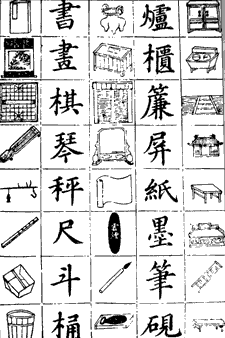
Characteristics
- Meaning-centered: the sign maps to meaning rather than pronunciation.
- Economy and ambiguity: one symbol can represent multiple pronunciations across dialects but retain a shared meaning.
- Combining strategies: logograms can be combined with phonetic or determinative elements to guide pronunciation or category.
- Stability: many core logograms remain recognizable over long historical spans.
Historically, logograms arise when a community's needs favor visual representation of concepts—counting, names, commodities, ritual terms—before full phonetic alphabets develop. Prominent examples include Chinese characters and ancient Egyptian hieroglyphs, which mixed purely logographic signs with phonetic complements and semantic determinatives.
Examples and uses
Classical and modern uses range from full logographic systems to hybrid scripts. In Chinese, most characters function as morpheme-sized logograms; in cuneiform and Egyptian scripts, signs served both logographic and syllabic roles. Logograms are frequently used for numerals, common nouns, religious names, and shorthand symbols in modern iconography.
Distinctions and relevance
Logograms differ from phonograms (sound-signs) and syllabaries (signs for syllables) by prioritizing meaning. In practice, many writing systems are mixed, using logograms for core vocabulary while employing phonetic elements for inflection, foreign words, or phonetic clarification. Today, logograms remain central to literacy in several languages and are of interest in comparative linguistics, palaeography, and digital encoding standards.
Understanding logograms illuminates how human cultures map thought to visible form and how writing adapts through contact, technology, and social change.
Author
AlegsaOnline.com Logogram (logograph): symbols that stand for words or morphemes Leandro Alegsa
URL: https://en.alegsaonline.com/art/58875