
Nationalist Movement Party (Milliyetçi Hareket Partisi, MHP)
Turkish political party founded 1969, rooted in Turkish ultranationalism and Pan‑Turkist ideas; known for its nationalist platform, youth movement, electoral history, alliances, and controversies.
Overview: The Nationalist Movement Party (Milliyetçi Hareket Partisi, commonly abbreviated MHP) is a political party in Turkey with a long history in Turkish nationalist politics. Established by Alparslan Türkeş on 9 February 1969, the MHP promotes a form of Turkish ultranationalism that blends cultural conservatism, state‑centred policies and elements of Pan‑Turkic identity. Its emblem, historically prominent youth organizations and frequent presence in national debates have made it a significant actor in modern Turkish politics.
Image gallery
7 Images


Ideology and characteristics
The party is most often described as nationalist and conservative. Key themes in its platform include the primacy of the Turkish nation and state, strong national defence, preservation of cultural identity, and scepticism toward supranational institutions. The MHP has been associated with Pan‑Turkist currents and has promoted policies intended to strengthen national unity. It is generally Eurosceptic and has expressed reservations about deeper integration with the European Union. Over time the party has combined secular republican ideas with more religiously conservative rhetoric in practice, particularly through political alliances.
Organization and symbols
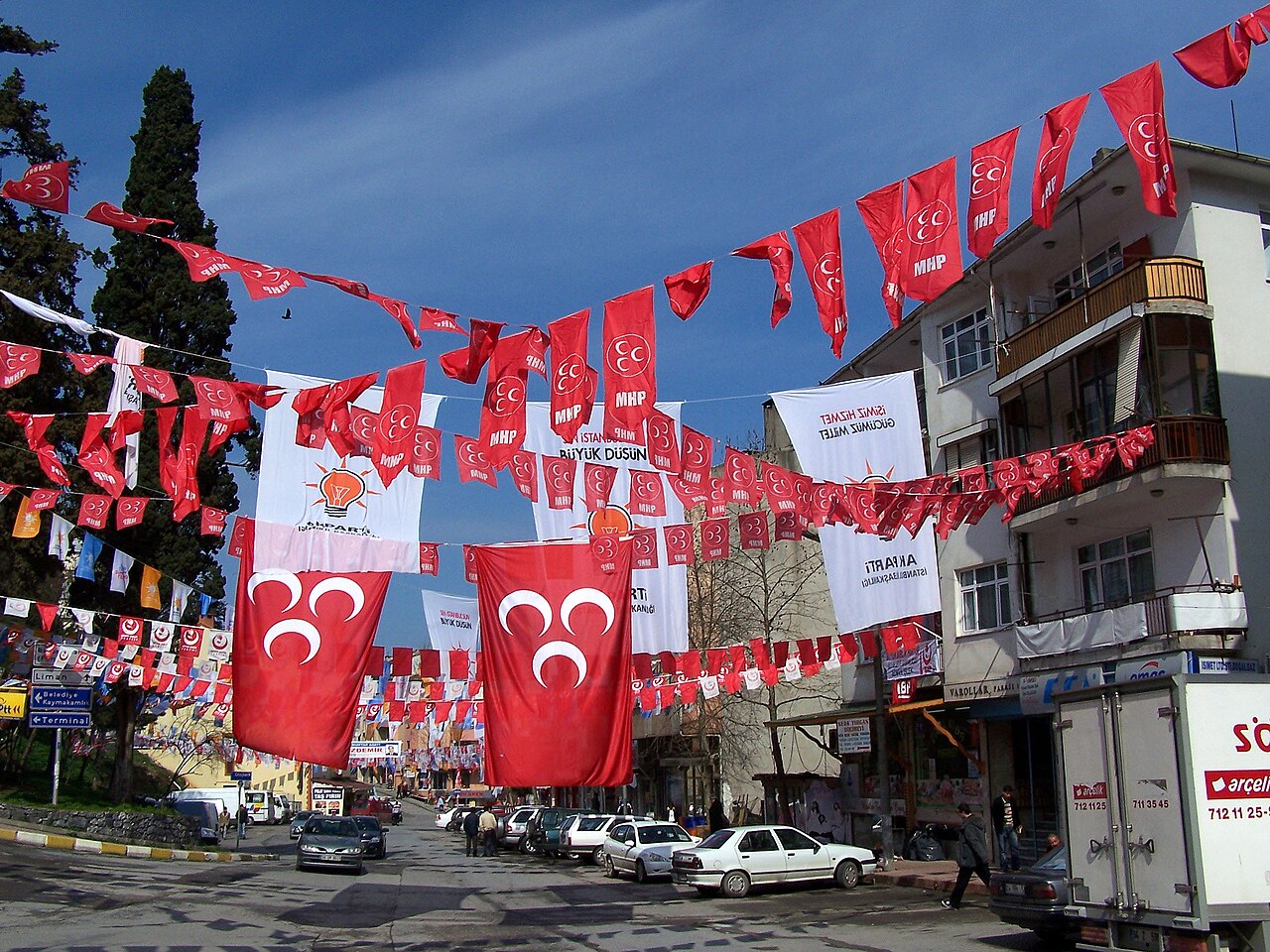
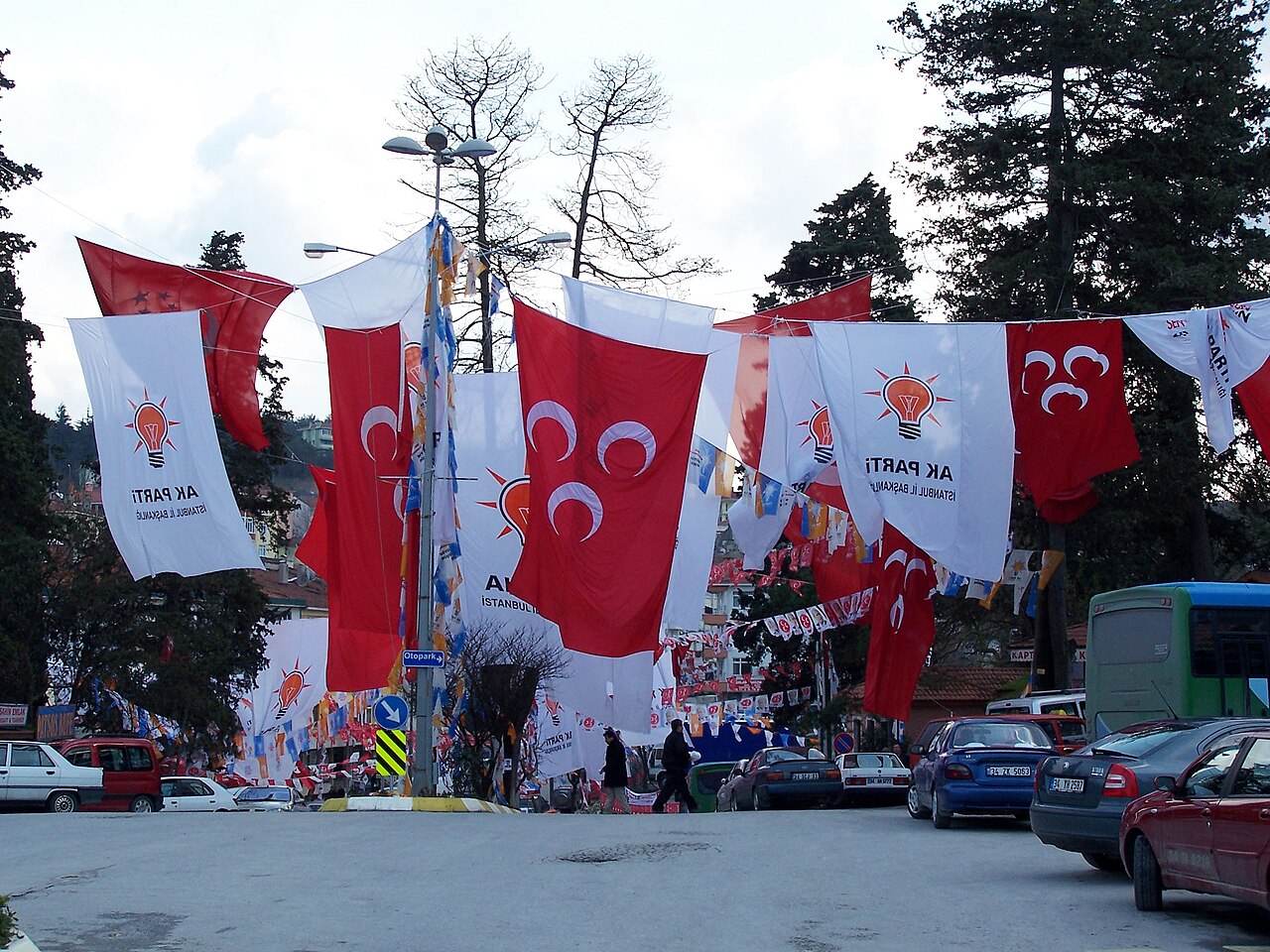
The MHP grew from a network of supporters and affiliated youth groups; the nationalist student and activist organizations that formed around the party have been influential in shaping its image. Its leadership structure centers on a party chairman and an executive board; a notable long‑serving leader is Devlet Bahçeli, who took the party leadership in the late 1990s. The party uses strong national imagery in its symbols and public messaging, and its slogans have aimed at mobilizing voters around national continuity and security—one such slogan is Ülkenin Geleceğine Oy Ver ("Vote for the country's future").
History and electoral performance
Founded in 1969 by Alparslan Türkeş, the MHP became a visible force in the 1970s and re‑emerged after political upheavals in later decades. Its best parliamentary result cited in public records came in 1999, when it won 129 of 550 seats with roughly 5.6 million votes. In more recent national contests referenced in contemporary reporting the party’s vote totals and seat counts have fluctuated; for example, the source figures note an outcome of about 5.6 million votes and 40 seats in a subsequent election. The MHP has at times joined broad electoral alliances with other parties, increasing its influence on government formation and policy despite variable seat counts.
Alliances, stance toward other parties, and influence
From the 2010s onward the MHP’s strategic choices included cooperation with conservative parties, affecting the political balance in parliament and public policy. The party has publicly refused dialogue with certain left‑wing Kurdish nationalist formations, maintaining a firm stance on territorial integrity and national unity. Through coalition arrangements and parliamentary support agreements, the MHP has been able to shape positions on security, constitutional change and migration.
Controversies and notable facts
- Some observers and commentators have described elements of the party or its affiliated movements using terms such as "far‑right" or "neo‑fascist"; these characterizations are debated and vary across scholars and media sources.
- The MHP’s youth and activist networks, historically known by the umbrella term Ülkü Ocakları, have been linked in public discourse to episodes of political violence and street clashes in earlier decades; the party itself positions these networks as cultural and educational organizations.
- The MHP’s policy shifts—particularly its cooperation with conservative Islamist‑leaning parties—have prompted discussion about the party’s balance between secularist traditions and religiously framed politics.
For readers seeking further factual background, consult party materials and independent academic and journalistic sources. Additional context and primary documents can be found through national parliamentary records such as the Grand National Assembly of Turkey and through electoral data repositories. Other topics of interest include the biographies of founders and leaders, the role of student and youth wings, and the party’s evolving policy platform in relation to European integration, Kurdish politics, and civil‑military relations (electoral history, secularism, religious politics, Euroscepticism, European Union, party slogans, relations with Kurdish parties).
Questions and answers
Q: What is the Nationalist Movement Party?
A: The Nationalist Movement Party (MHP) is a political party in Turkey.
Q: When was the MHP founded?
A: The MHP was founded on 9 February 1969 by Alparslan Türkeş.
Q: What was the MHP's most successful election performance?
A: The MHP's most successful performance in an election was in 1999, where they received 5,606,634 votes and won 129 out of 550 seats in the Grand National Assembly of Turkey.
Q: Is the MHP considered a neo-fascist party?
A: Yes, the Nationalist Movement Party has been called a neo-fascist party and has been linked to some violent militias.
Q: What is the MHP's stance on the European Union?
A: The MHP is Eurosceptic, meaning they are against the European Union.
Q: What is the MHP's slogan?
A: The Nationalist Movement Party's slogan is: Ülkenin Geleceğine Oy Ver (meaning "Vote for the country's future").
Q: Does the MHP engage in dialogue with the left-wing Kurdish nationalist Peoples' Democratic Party?
A: No, the MHP refuses to have any form of dialogue with the left-wing Kurdish nationalist Peoples' Democratic Party (HDP).
Related articles
Author
AlegsaOnline.com Nationalist Movement Party (Milliyetçi Hareket Partisi, MHP) Leandro Alegsa
URL: https://en.alegsaonline.com/art/68729
Sources
- yargitaycb.gov.tr : "Milliyetçi Hareket Partisi"
- researchgate.net : "Euroscepticism: Party Ideology Meets Strategy"
- todayszaman.com : "MHP to start rallies against Kurdish initiative on Dec 13" · web.archive.org
- books.google.com.au : The Turkish Deep State: State Consolidation, Civil-Military Relations and Democracy
- news.yahoo.com : "Turkish right-wing dissidents' bid to oust party leader foiled"
- books.google.co.uk : Turkey Recent Economic and Political Developments Yearbook Volume 1 - Strategic Information and Developments
- books.google.co.uk : Global Turkey in Europe II. Energy, Migration, Civil Society and Citizenship Issues in Turkey-EU Relations.
- independent.co.uk : Turkish far right on the rise.