
Nationalist Party of Australia
Conservative Australian party formed in 1917 by a merger of the Commonwealth Liberal Party and National Labor; governed 1917–1929 and later merged into the United Australia Party, precursor to the Liberal Party.
Overview
The Nationalist Party of Australia was a center-right political party formed on 17 February 1917 through the union of the Commonwealth Liberal Party and the breakaway National Labor Party. Its creation followed a major split within the Australian Labor movement over conscription during World War I. The Nationalists became the principal non-Labor force in federal politics for the interwar period.
Image gallery
4 Images

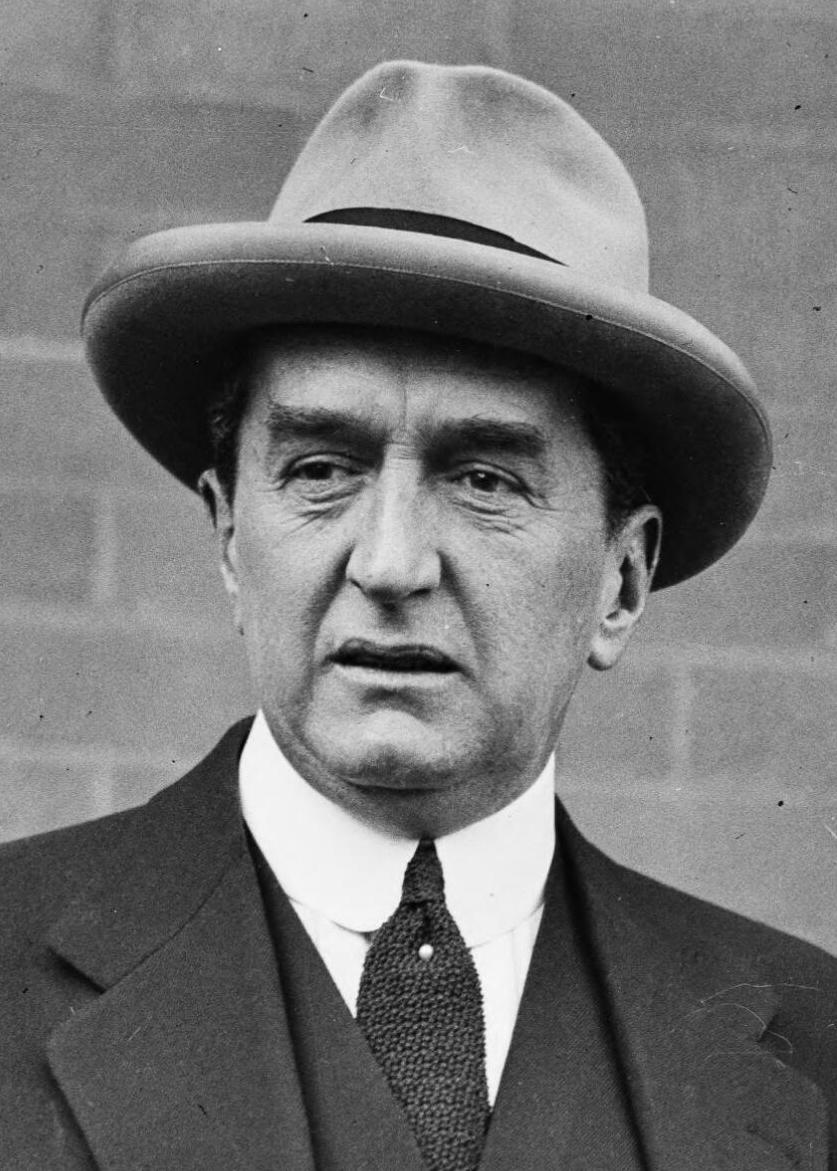

Character and policies
Generally described as conservative and pro-business, the Nationalist Party promoted strong national defence, support for the British Empire, and policies intended to stabilize postwar economics. It attracted middle-class voters, business interests and many former Labor members who supported wartime measures such as conscription. The party often cooperated with agrarian and rural parties to secure parliamentary majorities.
History and leaders
From formation the party was led by William (Billy) Hughes, who had left the federal Labor Party during the conscription controversy and continued as prime minister under the Nationalist banner. In 1923 leadership passed to Stanley Bruce, who served as prime minister until the party's defeat in 1929. The Nationalists governed Australia through much of the 1920s, a period marked by industrial change and the onset of the Great Depression toward the decade's end.
Dissolution and legacy
Electoral defeat in 1929 weakened the party, and in 1931 it joined with a group of Labor dissidents led by Joseph Lyons to form the United Australia Party. That reorganization of non-Labor politics provided the institutional and ideological groundwork that later contributed to the creation of the modern Liberal Party of Australia in 1944. The Nationalist Party's policies and network influenced centre-right politics in Australia for decades.
Notable facts and timeline
- Formation: 17 February 1917, merger of former conservative and pro-conscription Labor elements.
- Period in government: principally 1917–1929, under leaders such as Billy Hughes and Stanley Bruce.
- Reorganization: merged into the United Australia Party in 1931; later lineage contributed to the 1944 founding of the Liberal Party.
The Nationalist Party played a central role in shaping Australia's two-party landscape in the early 20th century. Its emergence out of a wartime political crisis, subsequent governance, and eventual reformation into a broader anti‑Labor grouping are important for understanding the evolution of conservative politics in Australia.
Questions and answers
Q: When did the Nationalist Party of Australia start?
A: The Nationalist Party of Australia started on 17 February 1917.
Q: Which parties joined together to form the Nationalist Party of Australia?
A: The conservative Commonwealth Liberal Party and the National Labor Party (NLP) joined together to form the Nationalist Party of Australia.
Q: How long did the Nationalist Party hold the government?
A: The Nationalist Party held government until 1929.
Q: Which party was the major opposition to the Nationalist Party?
A: The Labor party was the major opposition to the Nationalist Party.
Q: What happened in 1931 regarding the Nationalist Party?
A: In 1931, the Nationalist Party joined with a group who left the Labor Party led by Joseph Lyons and became the United Australia Party.
Q: What was the basis of the Liberal Party of Australia?
A: The basis of the Liberal Party of Australia was the United Australia Party which was formed by the Nationalist Party and a group who left the Labor Party.
Q: When did the Liberal Party of Australia begin?
A: The Liberal Party of Australia began in 1944.
Related articles
Author
AlegsaOnline.com Nationalist Party of Australia Leandro Alegsa
URL: https://en.alegsaonline.com/art/68730
Sources
- commons.wikimedia.org : Nationalist Party of Australia
- adb.online.anu.edu.au : Australian Dictionary of Biography - Billy Hughes
- adb.online.anu.edu.au : Australian Dictionary of Biography - Stanley Bruce
- adb.online.anu.edu.au : Australian Dictionary of Biography - John Latham