
Nasal bone
Paired bones forming the bony bridge of the nose; anatomy, development, clinical significance, and comparative notes for the human nasal bones.
Overview
The nasal bones are two small, paired bones that form the upper, bony portion of the nose. Located in the midline of the face, they meet at the center to create the visible "bridge" or dorsum of the nose. In human anatomy they sit within the facial skeleton and contribute to the external shape and structural support of the nasal region. See the entry for skull for broader context; further focused information is available under nasal bones and the external bridge of the nose.
Image gallery
6 Images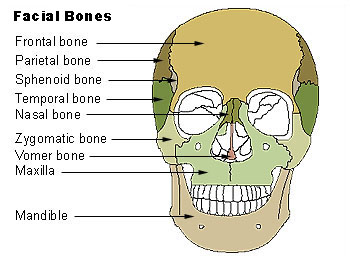

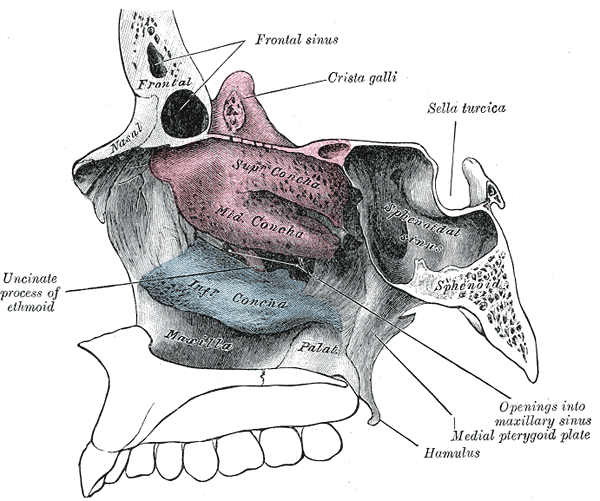
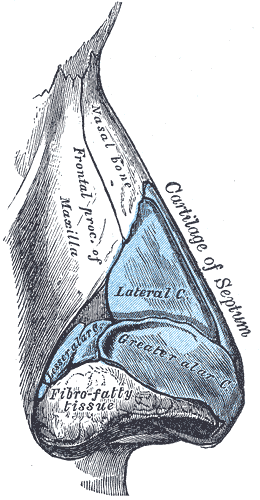

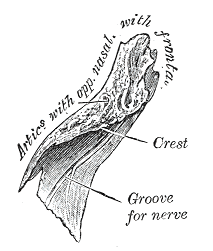
Structure and relationships
Each nasal bone is roughly rectangular and thinner than many cranial bones. Together they articulate with each other medially and form sutural contacts with adjacent facial bones. Their superior edge interacts with the frontal bone, and the lateral margins meet portions of the maxilla. The lower portion of the external nose is formed mostly by cartilage; the paired nasal bones provide the underlying bony scaffold for the upper nasal dorsum and the attachment of soft tissues.
Development
Nasal bones develop through intramembranous ossification during fetal life, like many facial bones. Their size and exact contours vary between individuals and population groups. Variation in thickness, length, and angle influences facial profile and is considered in fields such as craniofacial surgery and forensic anthropology.
Clinical relevance and uses
Nasal bones are a common site of facial injury; fractures of the nasal bones are among the most frequent facial fractures and may alter airway function or appearance. Diagnosis is by physical exam and imaging (X-ray or CT), and treatment ranges from conservative management to surgical reduction. Cosmetic and reconstructive procedures, including rhinoplasty, often involve reshaping or repositioning the nasal bones (osteotomy) to change the nasal silhouette.
Comparative and notable facts
- Variation: Shape and prominence vary with age, sex, and ancestry, affecting profile and nasal projection.
- Fragility: The bones are relatively thin and thus more susceptible to fracture than many cranial bones.
- Comparative anatomy: Paired nasal bones are present in many vertebrates where they form part of the snout; their form reflects functional and evolutionary differences.
Because they influence both function and facial appearance, nasal bones are important in trauma care, aesthetic surgery, forensic identification, and comparative anatomy studies.
Related articles
Author
AlegsaOnline.com Nasal bone Leandro Alegsa
URL: https://en.alegsaonline.com/art/68414