
Need: essentials for living—biological and psychological requirements
Overview of needs: essential biological necessities versus nonessential wants, types of human needs, historical and scientific perspectives, and why distinguishing needs from wants matters.
A need is typically defined as something required for a living organism to survive or to maintain healthy functioning. In everyday use the term contrasts with a want, which describes something desirable but not strictly necessary for life. For most multicellular organisms the clearest needs are physical: components or conditions whose absence leads to serious harm or death. For people, these include elements such as hydration, nutrition and protection from extreme environments, but the concept also extends into mental and social domains.
Image gallery
1 Image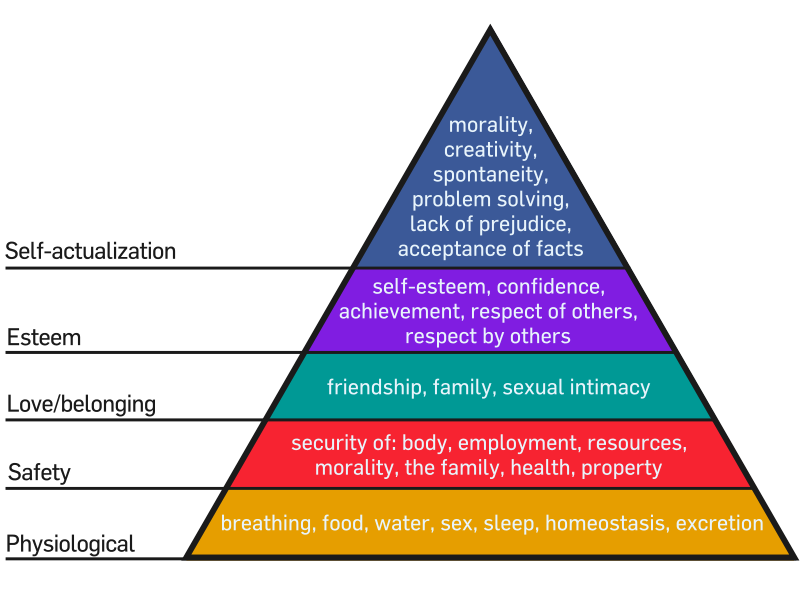
Types and characteristics of needs
Needs can be grouped by their role and urgency. Physiological needs are immediate requirements of the body—for example, water and food are foundational for biochemical processes, while clothing and clothing or shelter protect against environmental stress. Beyond these, there are psychological and social needs: many people report that love, family and friends contribute to well‑being, and healthy relationships can affect mental and physical health. Some frameworks place higher‑order needs—such as meaningful work or creative expression—after basic needs are met.
Models and scientific study
Scholars and practitioners have proposed ways to organize needs. One widely cited approach arranges needs in a hierarchy from basic body requirements to social and self‑fulfillment aims. This model highlights how unmet basic needs can dominate attention and behavior. The topic is studied from many angles: philosophers ask conceptual questions about what counts as a need, while scientists investigate biological mechanisms and outcomes. The study of mental and emotional needs draws on psychology, and the maintenance of bodily needs falls under fields such as medicine. Academic work and applied research both seek to clarify how needs interact and how societies can meet them.
Practical distinctions and examples
- Survival needs: essentials that, if absent, quickly threaten life—e.g., water (water) and adequate nutrition (food).
- Safety and shelter: protection from harm and extreme climates (shelter, clothing, healthcare).
- Social needs: bonds such as intimacy and membership in a community (love, family, friends).
- Psychological needs: autonomy, competence and a sense of meaning or purpose.
For an individual human (humans), immediate priorities vary by context: in hot environments dehydration is the most urgent threat; in cold climates, inadequate shelter or clothing rapidly becomes critical. Social and psychological deficits may not cause immediate death but can produce serious, long‑term harm to health and functioning. The line between a need and a want is sometimes ambiguous; a resource that is necessary for one person’s functioning may be a luxury for another.
Historically, questions about what humans truly need have been part of philosophy and moral thinking. Modern policy and public health translate these ideas into programs to secure food, water and housing and to support social welfare. Practical measures—such as assessing community needs, prioritizing scarce resources and designing interventions—rely on both empirical study and ethical judgment. The academic study of needs therefore spans disciplines, from conceptual debate to clinical practice, shaping how societies identify and respond to what people require to survive and thrive throughout life.
For further reading, introductory materials are available through educational and scientific outlets; practitioner guidance addresses how to assess and meet needs in healthcare, disaster response and social services. The distinction between needs and wants remains a practical and philosophical tool for thinking about priorities at individual and collective levels.
Related resources: want, body, human, water, food, clothing, shelter, love, family, friends, relationships, life, study, philosophy, questions, scientists, psychology, medicine.
Questions and answers
Q: What is the most important need for a human?
A: The need for water is the most important need for a human because without it, they will die very quickly.
Q: What are some of the needs of the mind?
A: Some of the needs of the mind include love, family, and friends. These are not necessarily essential to live but can make life better and happier.
Q: How do scientists study human and animal needs?
A: Scientists study human and animal needs by studying psychology (words about the mind) and medicine (the study of bodily needs).
Q: Is it possible to have a need that cannot be fulfilled?
A: Yes, it is possible to have a need that cannot be fulfilled which can lead to unhappiness.
Q: What are some basic needs for humans?
A: Humans have basic bodily needs such as water, food, clothing, and shelter in order to live.
Q: In what ways can good relationships improve life? A: Good relationships can make life very happy since having positive connections with others can bring joy into one's life.
Related articles
Author
AlegsaOnline.com Need: essentials for living—biological and psychological requirements Leandro Alegsa
URL: https://en.alegsaonline.com/art/68994