
Naruto (Tokushima) — coastal city on Shikoku known for whirlpools
Naruto is a coastal city in Tokushima Prefecture on Shikoku, Japan, noted for the Naruto whirlpools, its position on the Seto Inland Sea, important pilgrimage temples, and local tourism and sports facilities.
Naruto is a city on the eastern edge of Tokushima Prefecture on the island of Shikoku in Japan. It lies where the inland waterways between Shikoku and Awaji Island form a narrow strait. The municipality combines coastal scenery, transport links to neighboring islands, and cultural sites that attract domestic and international visitors. See local administrative details at city information, regional context at Tokushima Prefecture, and broader geographic notes at Shikoku.
Image gallery
7 Images

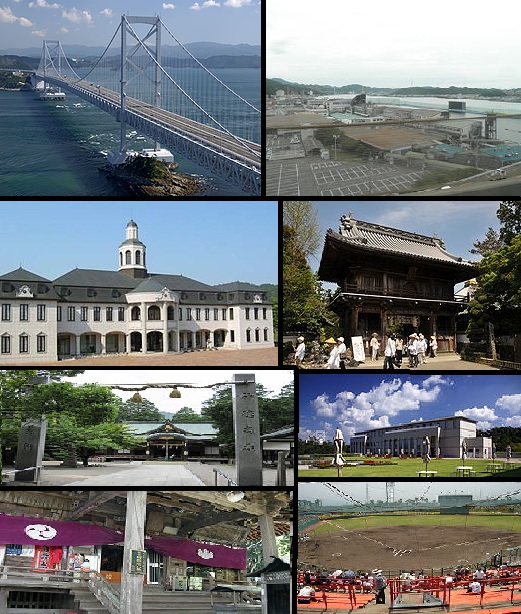


Geography and the Naruto whirlpools
The best-known natural phenomenon near Naruto is the series of powerful tidal whirlpools that form in the Naruto Strait between Naruto and Awaji Island. These currents occur where the Seto Inland Sea connects to the wider ocean, producing strong eddies and circular flows at times of large tidal exchange. Visitors commonly view the whirlpools from coastal observatories, an under-bridge promenade, or from sightseeing boats that operate when conditions permit. For more on the strait and marine environment see Naruto whirlpools and the wider Seto Inland Sea.
Infrastructure and access
Naruto is linked by major road and bridge infrastructure to Awaji Island and, via that island, to Honshu. A prominent crossing spans the strait and provides pedestrian and vehicle access along an expressway route; parts of the bridge structure include viewing walkways and facilities designed for visitors. The city's position on these transport corridors makes it a gateway for travelers moving between Shikoku and the Kansai region.
Culture, pilgrimage and sport
Naruto lies on the route of the Shikoku 88 Temple Pilgrimage and is home to Ryōzen-ji and Gokuraku-ji, the first two temples on this centuries-old religious circuit. These temples receive pilgrims and tourists alike and contribute to the area's religious and historical identity. The city also supports modern cultural life: it hosts the home stadium for the professional football club Tokushima Vortis, and local festivals and community events reflect both maritime and agricultural traditions.
Economy, tourism and visitor information
The local economy blends tourism, fisheries and light industry. Attractions that draw visitors include seaside parks, observation platforms for the whirlpools, temple precincts associated with the pilgrimage, and seasonal events. Practical visitor tips: the whirlpools are most dramatic around strong tidal flows, so organized viewing times are advised; boat excursions and bridge walkways provide different perspectives. Travelers can find more local resources through municipal and regional guides.
Notable sites and quick list
- Naruto whirlpools — natural tidal eddies in the strait (details).
- Ryōzen-ji and Gokuraku-ji — temples 1 and 2 on the Shikoku pilgrimage.
- Bridge viewways — elevated walkways and observatories across the strait.
- Sports facilities — stadium and events associated with Tokushima Vortis.
Naruto's blend of striking coastal scenery, marine phenomena, religious heritage and modern amenities makes it a distinctive city within Tokushima Prefecture and a frequent stop for visitors exploring Shikoku. For administrative, tourism and transport links consult local and regional sources: municipal, prefectural and island guides, and specialist pages on the whirlpools and Seto Inland Sea (sea, whirlpools).
Related articles
Author
AlegsaOnline.com Naruto (Tokushima) — coastal city on Shikoku known for whirlpools Leandro Alegsa
URL: https://en.alegsaonline.com/art/68405
Sources
- books.google.com : "Naruto Kaikyō"
- int.soccerway.com : "Tokushima Vortis"