
Shikoku — Japan’s smallest main island, geography, culture and pilgrimage
Shikoku is Japan’s smallest main island, with about 4 million people. Known for its mountains, citrus farming, the 88-temple pilgrimage, traditional festivals and a largely rural character.
Overview
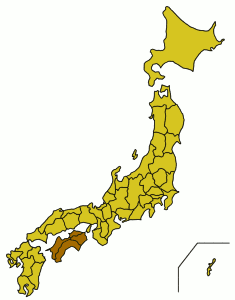
Shikoku is the smallest of Japan's four main islands and has a population of roughly four million people. Administratively it is divided into four prefectures — Kagawa, Tokushima, Ehime and Kōchi — each with distinct local traditions. As part of Japan, Shikoku combines a largely rural landscape with small coastal cities and a pace of life that many visitors describe as more relaxed than on the larger islands.
Image gallery
10 Images





Geography and transport
The island lies to the south of Honshū and is separated from it by the Seto Inland Sea; it faces various waterways toward Kyūshū and the Pacific Ocean. Much of Shikoku is mountainous, with narrow coastal plains where most settlements and industry are located. The island is linked to Honshū by several long bridges and road-rail connections, the most famous being the Great Seto Bridge system. Local transport is a mix of regional rail lines, highways and ports that connect communities and support both tourism and commerce. For a regional context see Kyūshū and other neighboring areas.
History and cultural roots
Shikoku has a layered history from ancient provincial identities through feudal domains to the modern prefectures. Its landscape and relative isolation helped preserve distinctive folk arts, cuisine and religious sites. The island is associated with the monk Kūkai (Kōbō Daishi), whose life and legacy shaped local Buddhism and devotional routes.
Economy and land use
Agriculture and forestry remain important to Shikoku's economy. The island is especially known for citrus fruits — mandarins and other citrus varieties are major products — along with rice, vegetables and timber from the upland forests. Fishing supports coastal towns, while light manufacturing and food processing are concentrated in the larger urban areas.
Religion, pilgrimage and cultural life
Shikoku is famous for the 88 Temple Pilgrimage, a circular route that links temples associated with Shingon Buddhism and the figure of Kūkai; the pilgrimage draws both religious practitioners and cultural tourists each year. The island also hosts lively festivals such as Tokushima's Awa Odori dance festival and is known for regional foods like Sanuki udon noodles in Kagawa.
Importance and distinctions
Although it is Japan's least populous main island, Shikoku plays a notable role in preserving rural traditions, scenic mountain and coastal environments, and pilgrimage culture. Its combination of natural attractions, historical temples and local cuisine makes it a distinctive part of Japan's geographic and cultural mosaic. For more on the pilgrimage and religious traditions see the 88-temple route at 88 Temple Pilgrimage and overviews of Shingon Buddhism.
Related articles
Author
AlegsaOnline.com Shikoku — Japan’s smallest main island, geography, culture and pilgrimage Leandro Alegsa
URL: https://en.alegsaonline.com/art/89776
Sources
- lcweb2.loc.gov : Library of Congress Country Studies, Japan
- lcweb2.loc.gov : "Geography"
- books.google.com : "Shikoku"
- lcweb2.loc.gov : "Shikoku"
- books.google.com : "Ehime"
- jetro.go.jp : Ehime Prefecture, Regional Information
- books.google.com : "Kagawa prefecture"
- jetro.go.jp : Kagawa Prefecture, Regional Information
- books.google.com : "Kōchi prefecture"
- jetro.go.jp : Kōchi Prefecture, Regional Information
- books.google.com : "Tokushima prefecture"
- jetro.go.jp : Tokushima Prefecture, Regional Information