
Whirlpool
A whirlpool is a rotating body of water created by interacting currents, tides, or obstacles; it ranges from small vortices to powerful maelstroms and has maritime, geological, and cultural significance.
A whirlpool is a rotating water mass in which water flows in a roughly circular motion around a central axis, often forming a surface depression or vortex. Whirlpools appear at many scales — from the harmless swirl that forms when draining a sink to the large, powerful features encountered in coastal waters and river narrows. They result from motion and shear in fluids and are a familiar phenomenon in both natural and engineered settings.
Image gallery
10 Images


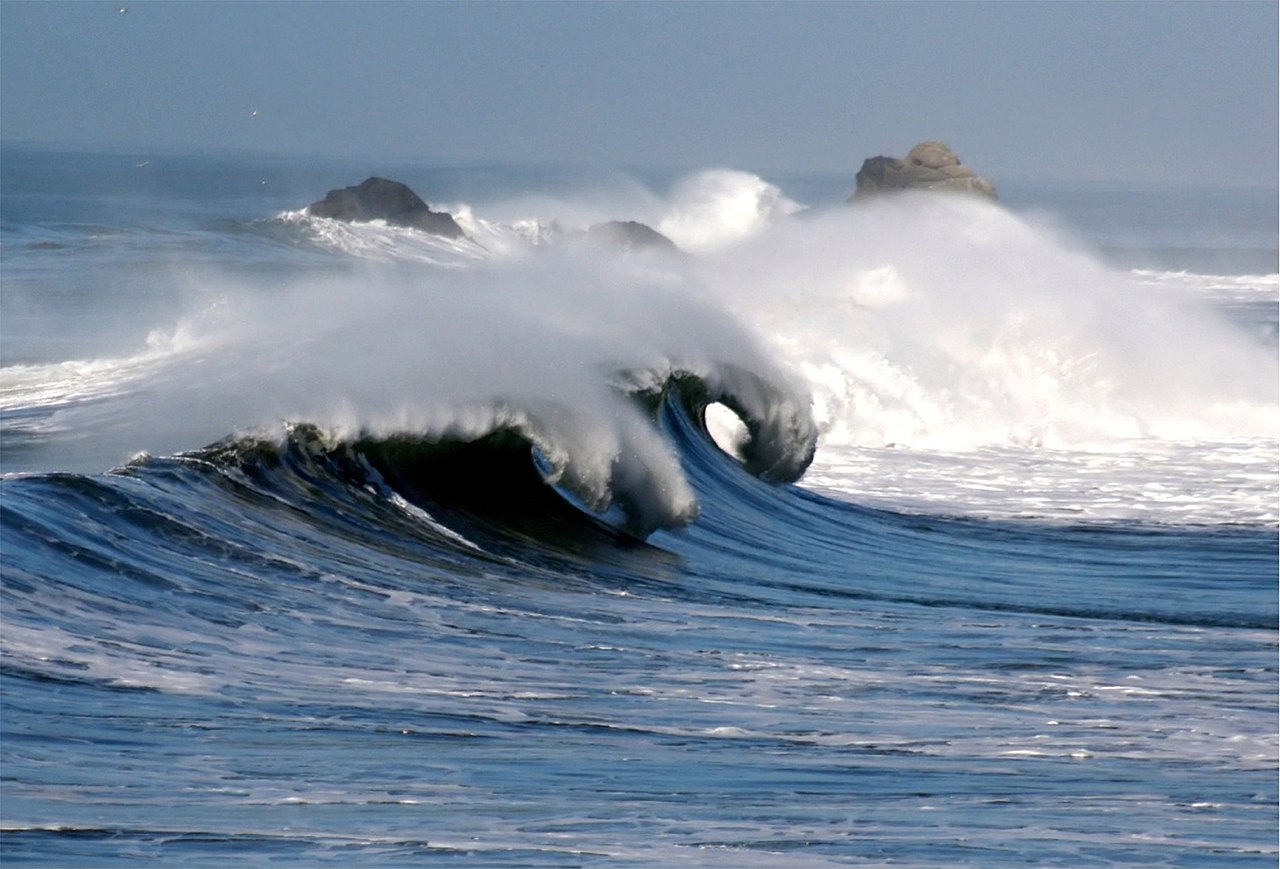

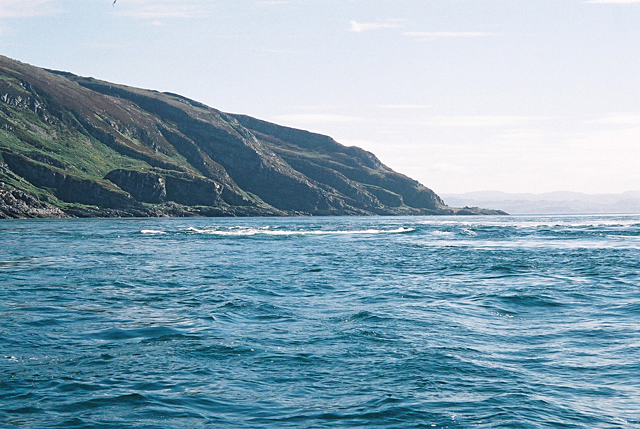
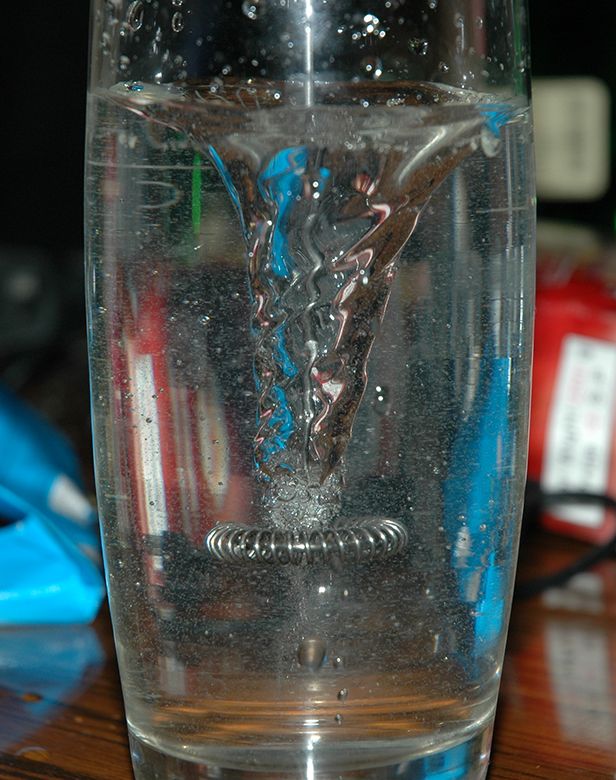
Formation and causes
Whirlpools most commonly arise where currents meet, bend, or pass over uneven seafloor features. Strong tidal currents interacting with constricted channels, opposing flows, or abrupt depth changes concentrate rotational motion. Local flow separation and eddies combine with conservation of angular momentum to spin water into a vortex. Human structures, such as bridge piers or harbour arrangements, can also induce smaller whirlpools.
Structure and mechanics
The rotating flow of a whirlpool typically features faster motion near its core and slower flow outward. Centrifugal forces cause the surface to dip and pressure to fall in the center, which can pull floating objects inward. Hydrodynamically, these phenomena are studied as vortices; they may be free-surface vortices or submerged vortices depending on whether a visible depression forms.
Notable coastal examples include well-known tidal whirlpools such as
- Saltstraumen and Moskstraumen in northern Norway,
- Corryvreckan off the west coast of Scotland,
- and various river whirlpools where currents and obstacles converge.
Whirlpools present navigation hazards, influence local mixing of nutrients and sediments, and interest researchers studying fluid dynamics. Larger, more destructive whirlpools are sometimes called maelstroms, a term that appears in literature and seafaring lore and evokes dramatic imagery of swirling seas.
For further reading on tidal dynamics and coastal flows see tidal currents and studies of underwater topography at bathymetry resources. Historical and cultural references to maelstroms appear in maritime stories and classic literature, where they symbolize nature's power.
Related articles
Author
AlegsaOnline.com Whirlpool Leandro Alegsa
URL: https://en.alegsaonline.com/art/107769