
Napoleonic Code (Code Napoléon)
The Napoleonic Code is the French civil code promulgated in 1804 that unified private law, asserted legal equality and property rights, and shaped civil-law systems across much of Europe and beyond.
Overview
The Napoleonic Code, officially the Code civil des Français, is the modernizing civil code promulgated in 1804 under Napoléon I. It produced a single, written body of law for civil matters in France, replacing a complex patchwork of regional customs and feudal legislation. The text is commonly called the civil code and aimed to make rules clear, public, and accessible.
Image gallery
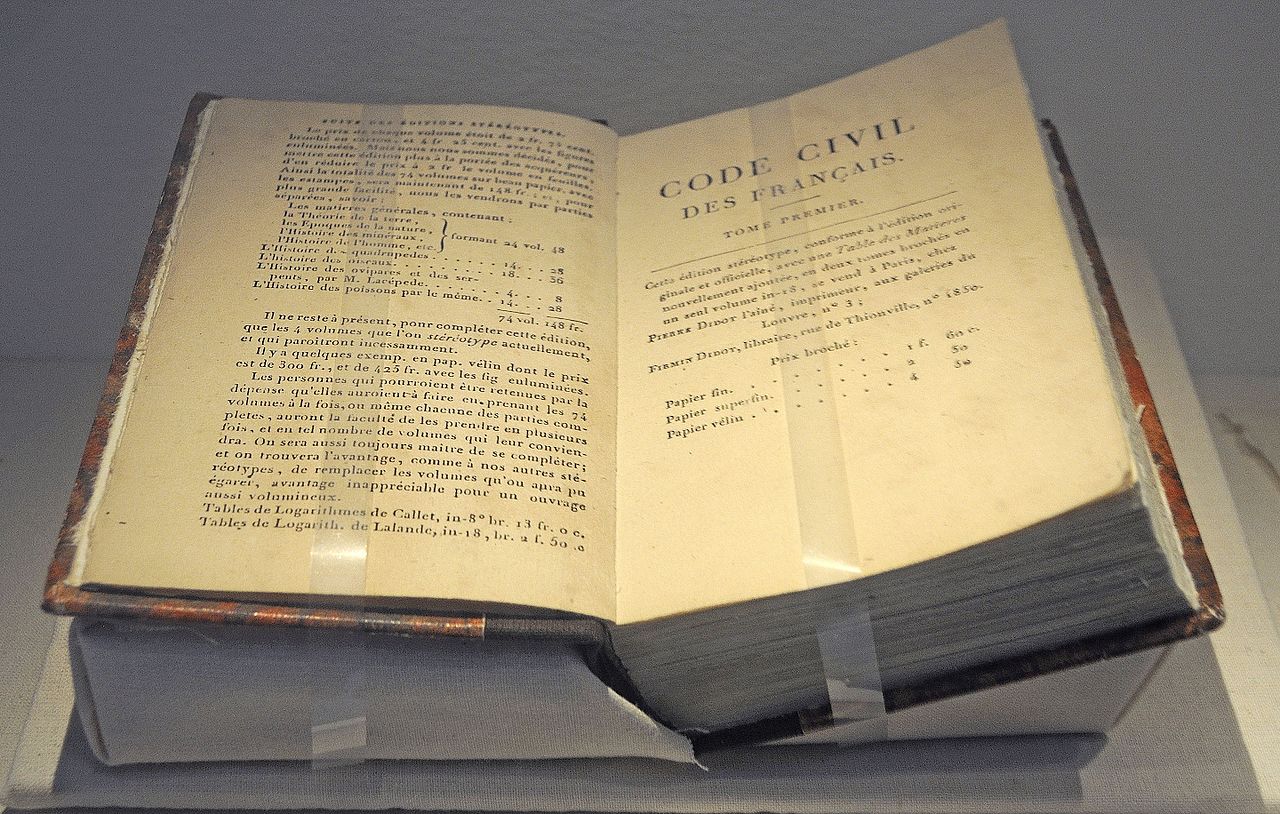
4 Images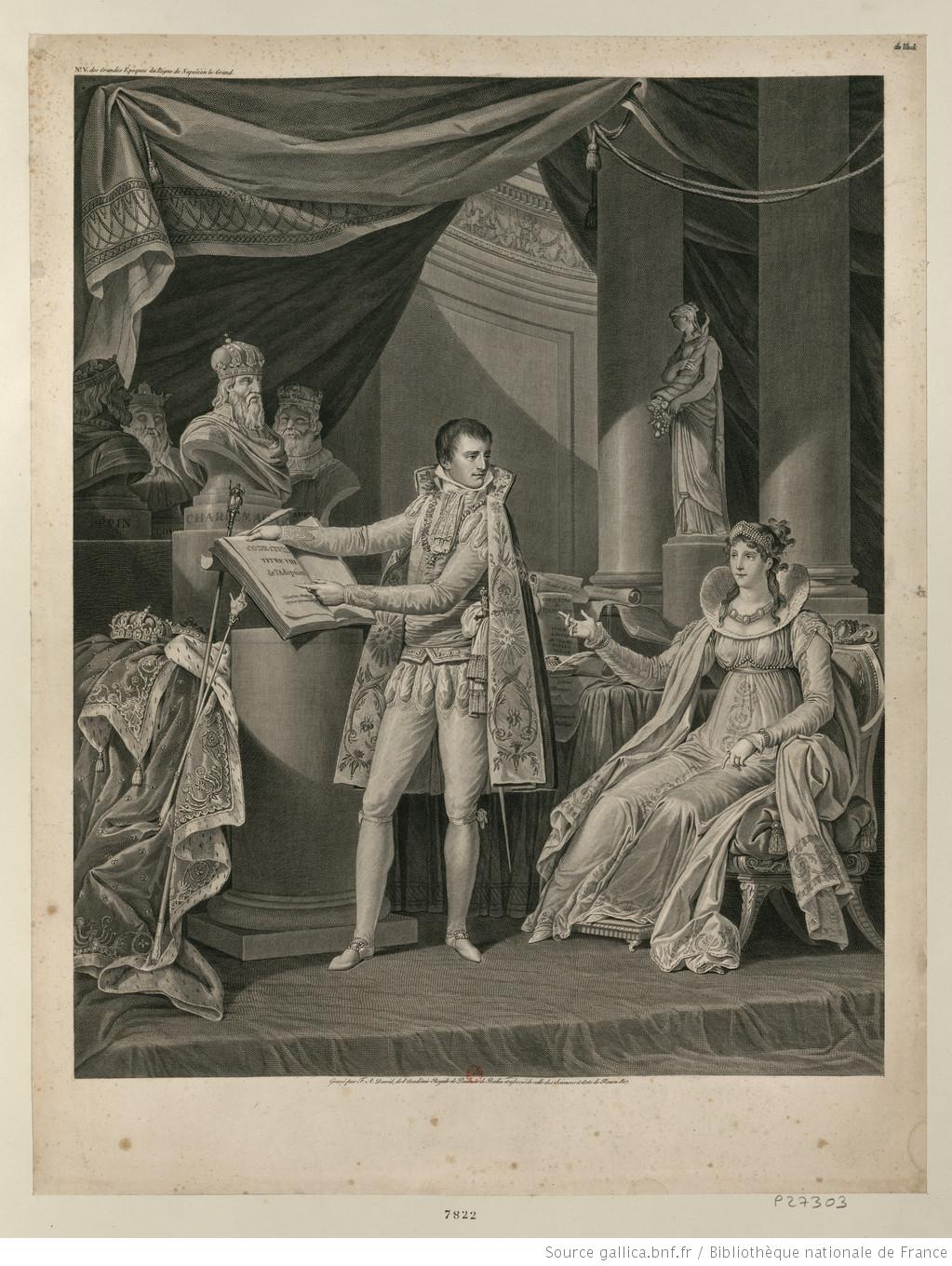


Key principles and contents
The Code organized private law into a systematic form and enshrined several guiding principles that reflected revolutionary and Enlightenment ideas. Notable elements included:
- Legal equality: it rejected privileges based on birth, such as the traditional nobility, and sought uniform treatment before the law.
- Property and contracts: strong protection for private property and contractual freedom were central to the text.
- Secular law: matters of civil status and family law were governed by civil rules rather than ecclesiastical courts; the Code allowed freedom of religion while treating civil affairs as secular.
- Meritocratic administration: it supported the idea of a professional civil service and that government jobs should be assigned on ability rather than birth.
Structure and development
The Code was drafted by a small commission of jurists and went through a focused process of consolidation and editing in the early 19th century. Its organization emphasized clear, general rules adaptable to many cases; original divisions treated persons, property, and methods of acquiring property in separate parts. The drafting drew on Roman law, customary local law, and revolutionary reforms, seeking to reconcile legal unity with practical administration.
Context and effects at home
At its core the Code sought to stabilize and standardize post-revolutionary society: it confirmed the abolition of feudal privileges and prioritized individual rights of ownership and contract. Critics and historians also note that it reinforced patriarchal family structures: married women and children remained under strong paternal or spousal authority, and some rights gained during the revolutionary decade were curtailed in the name of order and clarity.
International influence
The Napoleonic Code spread widely beyond France, both through conquest during the Napoleonic Wars and through voluntary adoption because of its clear codified form and modern principles. Its influence can be seen across legal systems worldwide, including large parts of Europe and specific national codes in Italy, Spain, and Portugal. It shaped civil law in many Latin American countries and left an imprint in North America in places such as Quebec and Louisiana, as well as influencing legal thought in the United States. More generally, the Code served as a model for numerous legal systems among former French colonies and other nations seeking a coherent civil law framework.
Legacy and distinctions
More than a historical text, the Napoleonic Code popularized the idea that private law should be written, intelligible, and uniformly applied. Its mixed legacy includes both the promotion of individual rights and property security, and the reinforcement of social hierarchies within the family. Today it remains a landmark in the history of codification and a key reference point for civil-law traditions around the world.
Related articles
Author
AlegsaOnline.com Napoleonic Code (Code Napoléon) Leandro Alegsa
URL: https://en.alegsaonline.com/art/68341