
Astrobiology: the scientific study of life beyond Earth
Astrobiology investigates the origins, distribution and future of life in the universe, studying conditions, environments and methods used to detect life on other worlds.
Overview
Astrobiology is the interdisciplinary science that explores life in the universe, including its origins, evolution, distribution and potential future. Researchers in this field examine both Earth-based life and the possibility of organisms beyond our planet, studying biological, chemical and planetary processes together. The discipline ranges from laboratory experiments and theoretical models to robotic exploration and remote sensing in outer space.
Image gallery
10 Images





Key conditions and characteristics
Astrobiologists look for environmental factors that make habitats viable. Commonly discussed requirements include access to liquid solvents such as liquid water, energy gradients, and a suitable temperature range where biochemical reactions can occur. The presence of certain molecules, for example oxidants like oxygen or alternatives that can accept electrons, is also important because it affects metabolic possibilities. Some research considers life with different chemistry, where solvents or molecular backbones differ from those on Earth.
Targets within the Solar System
Candidates for extraterrestrial habitats are chosen where conditions might allow stable liquid phases or chemical energy. Well-known targets include the icy moons of the giant planets. For example, Europa is thought to have a subsurface ocean beneath an ice shell; Enceladus ejects plumes of water-rich material from a subsurface reservoir; and Titan has thick organic-rich atmospheres and surface lakes of hydrocarbons. Ganymede and other moons are also of interest because of their internal oceans or complex surface chemistry.
Methods and tools
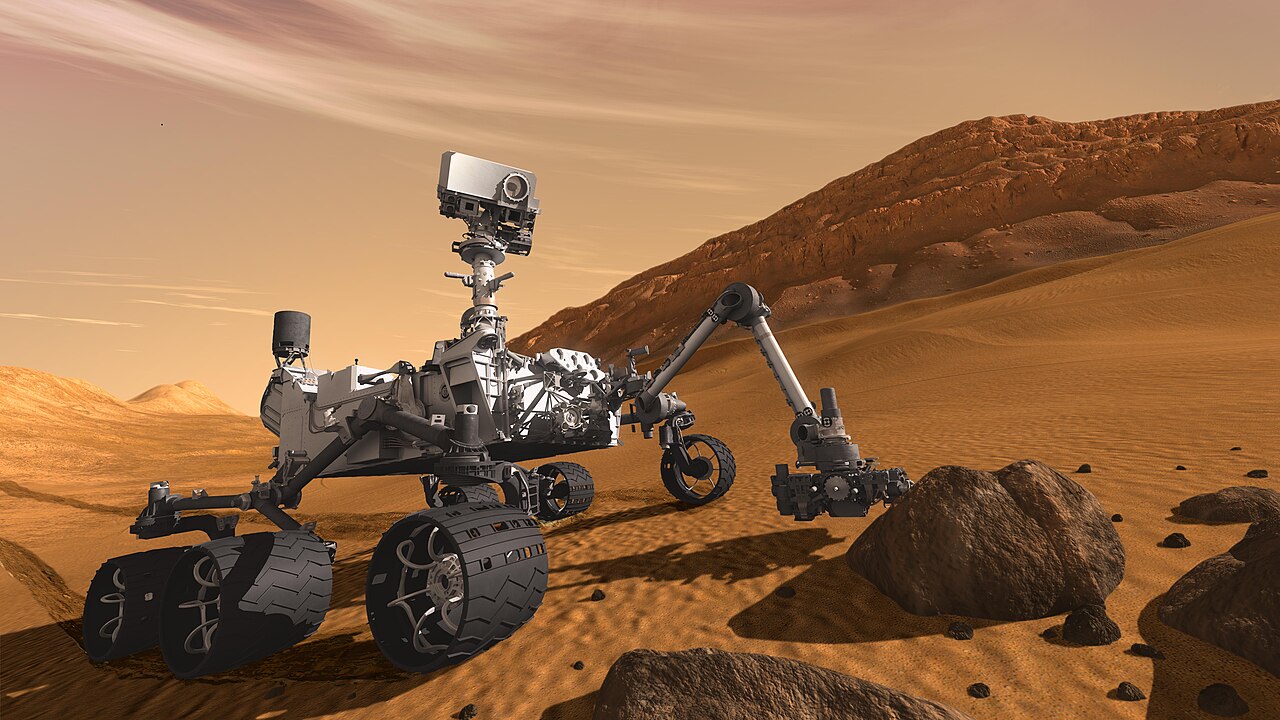
Astrobiology combines field studies, laboratory chemistry and biology, and space missions. Instruments analyze atmospheric composition, surface minerals and potential biosignatures; spacecraft sample plumes and perform remote spectroscopy; laboratory simulations reproduce extreme environments to test the limits of life. The field also uses modeling to predict where habitable conditions might persist and to design experiments that can distinguish biological signals from abiotic chemistry.
History and development
The modern field emerged from contributions across astronomy, geology, chemistry and biology in the 20th century, accelerated by planetary missions and the discovery of extremophiles on Earth—organisms that thrive in hot, acidic, salty or radiation-intense settings. These discoveries broadened the range of environments considered potentially habitable and motivated targeted missions to explore promising worlds.
Importance, examples and notable distinctions
Astrobiology informs our understanding of life's resilience and diversity, guides exploration priorities, and frames philosophical and ethical questions about life’s uniqueness. Practical outcomes include improved instrumentation for life detection and new perspectives on planetary protection. Distinctions within the field separate searches for past life from searches for extant organisms, and searches for Earth-like biochemistry from searches that allow alternative chemistries. For more detailed introductions or research updates, consult general resources on life, mission summaries at space science portals, and topical reviews of water, temperature limits, and oxidants such as oxygen.
- Popular mission targets: Europa, Ganymede, Titan, Enceladus
- Chemical environments of interest: hydrocarbons and aqueous systems
- Approaches: remote sensing, in situ sampling, laboratory simulation
Astrobiology remains an evolving science that balances empirical investigation with cautious interpretation: detecting a promising chemical signature is not the same as confirming biology, and each potential discovery requires rigorous follow-up. The field continues to refine what we mean by habitability and to expand the search for life’s possibilities across the cosmos.
Related articles
Author
AlegsaOnline.com Astrobiology: the scientific study of life beyond Earth Leandro Alegsa
URL: https://en.alegsaonline.com/art/6826
Sources
- express.co.uk : "'There may be ALIENS on Europa' Scientists say Jupiter's moon has key ingredients for LIFE"
- astronomy.nmsu.edu : "Cassini: Making Sense of the News"