
Nanda Devi: Peak, sanctuary and cultural landmark in Uttarakhand
Nanda Devi (7,816 m) is the highest mountain located entirely within India. A natural and cultural landmark in Uttarakhand, it anchors a protected sanctuary and is sacred in Hindu tradition.
Overview
Nanda Devi rises to 7,816 metres in the Garhwal Himalaya and is the highest mountain located entirely within India. The name means "Goddess Nanda" and the peak is widely revered in local and pan‑Indian religious practice; it is considered sacred in Hindu tradition. Administratively the massif lies in the Chamoli district of Uttarakhand.
Image gallery
10 Images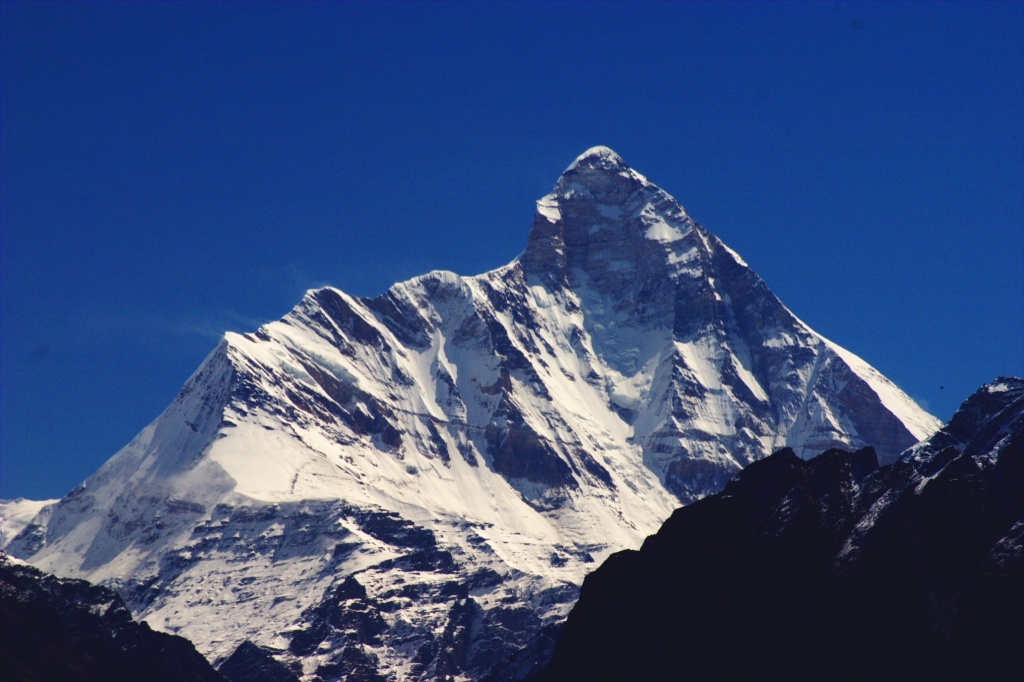


Geography and ecology
The mountain sits within a high, glaciated enclosure known as the Nanda Devi Sanctuary, ringed by a horseshoe of ridges. Glaciers and streams draining from the sanctuary feed tributaries of the Ganges river system and contribute to its headwaters; the region is therefore important to the broader Ganges watershed. The surrounding park protects alpine meadows, rare high‑altitude flora and fauna including species such as the snow leopard and Himalayan musk deer.
Climbing history
Nanda Devi was first climbed in 1936 by a British–American expedition led by Bill Tilman and Noel Odell. Because of its remote sanctuary setting and technical difficulty, major expeditions were historically few and carefully organised. Later in the 20th century concerns about environmental impact and safety led to stricter controls on mountaineering in the core zone.
Conservation and cultural significance
In recognition of its natural values the mountain and adjacent Valley of Flowers were inscribed as a UNESCO World Heritage site. Access to the inner sanctuary is tightly regulated to protect fragile ecosystems and cultural sites. The peak also figures prominently in local pilgrimage and folklore as a manifestation of the goddess Nanda.
Notable facts
- The Nanda Devi massif includes an East peak; the inner sanctuary is encircled by high ridges.
- Since the late 20th century, much of the area has been closed to climbers to preserve biodiversity and cultural heritage.
- The mountain and its sanctuary have been the subject of scientific study, environmental debates and well‑known historical episodes from the Cold War era.
Related articles
Author
AlegsaOnline.com Nanda Devi: Peak, sanctuary and cultural landmark in Uttarakhand Leandro Alegsa
URL: https://en.alegsaonline.com/art/68239