
Nokia N-Gage: hybrid mobile phone and handheld game console
The Nokia N-Gage was a 2003 attempt to combine a GSM mobile phone with a handheld gaming system. It ran Symbian Series 60, used removable game cards and early online services such as N‑Gage Arena.
Overview
The Nokia N‑Gage was introduced as a hybrid device combining voice telephony and portable gaming. First sold on October 7, 2003, it ran the Symbian Series 60 platform and presented itself as both a smartphone-class handset and a dedicated game handheld. The product sought to bring more console‑like games to a mobile form factor while also supporting third‑party applications and online features.
Image gallery
7 Images



Design and hardware
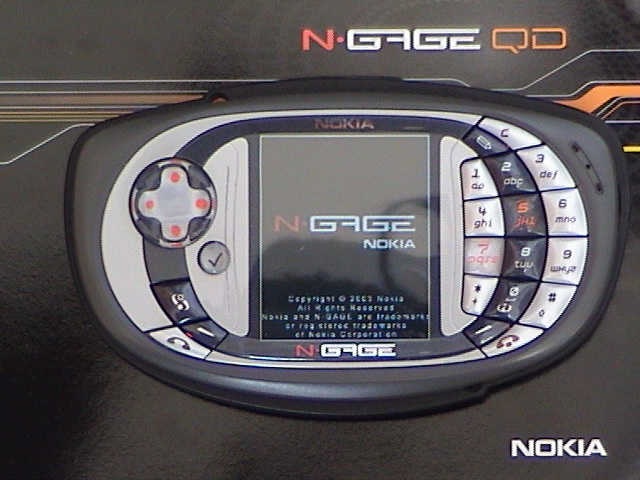
Hardware combined elements of contemporary mobile phones with gaming controls: a numeric keypad, a directional pad, shoulder buttons and a color display. Games were delivered on removable game cards and through digital downloads. Early models received criticism for ergonomics—users and reviewers noted awkward hand and ear placement when making calls, an issue addressed in later variants. For detailed technical summaries see the hardware overview: specifications and layout.
Software, games and services
Running Symbian Series 60 allowed third‑party software and a library of both ports and original titles from major publishers. The platform supported local multiplayer and online connectivity through Nokia’s gaming services. Nokia offered community and matchmaking features via the N‑Gage online initiative (N‑Gage Arena and related services) and experimented with downloadable content and competitive play.
Revisions and lifecycle
Nokia released a revised model in 2004 that addressed several ergonomic complaints and simplified some functions; this variant is often referred to in coverage as the N‑Gage QD. Despite the revision, the line struggled to achieve sustained commercial success and was discontinued as a dedicated handheld offering within a few years. Nokia later reused the N‑Gage name for software and service efforts to support gaming on Symbian devices.
Reception and legacy
The N‑Gage is remembered as an ambitious convergence experiment. While it did not meet sales expectations, it demonstrated early approaches to mobile distribution, online match‑making and integrating gaming inputs with cellular hardware. The project influenced design conversations about trade‑offs when combining phone and game functions and foreshadowed the importance of smartphones as mainstream gaming platforms.
Further reading
- Manufacturer and product information: Nokia product page.
- Contemporary reviews and retrospective analyses: see general hardware and historical overviews at hardware overview and archives of the online service at N‑Gage Arena.
- Release details and timelines: initial launch information.
Related articles
Author
AlegsaOnline.com Nokia N-Gage: hybrid mobile phone and handheld game console Leandro Alegsa
URL: https://en.alegsaonline.com/art/68025