
Mortar and pestle: function, forms, history and uses
Hand tools for grinding and mixing: design, materials, historical development, culinary and pharmaceutical uses, care, and key distinctions.
The mortar and pestle is a simple pair of hand tools used to crush, grind and combine materials by manual force. The set has been adopted worldwide for tasks that require reducing solids to powders or pastes. A general introduction to the device and its practical role is provided here; for a concise definition see mortar and pestle.
Image gallery
10 Images

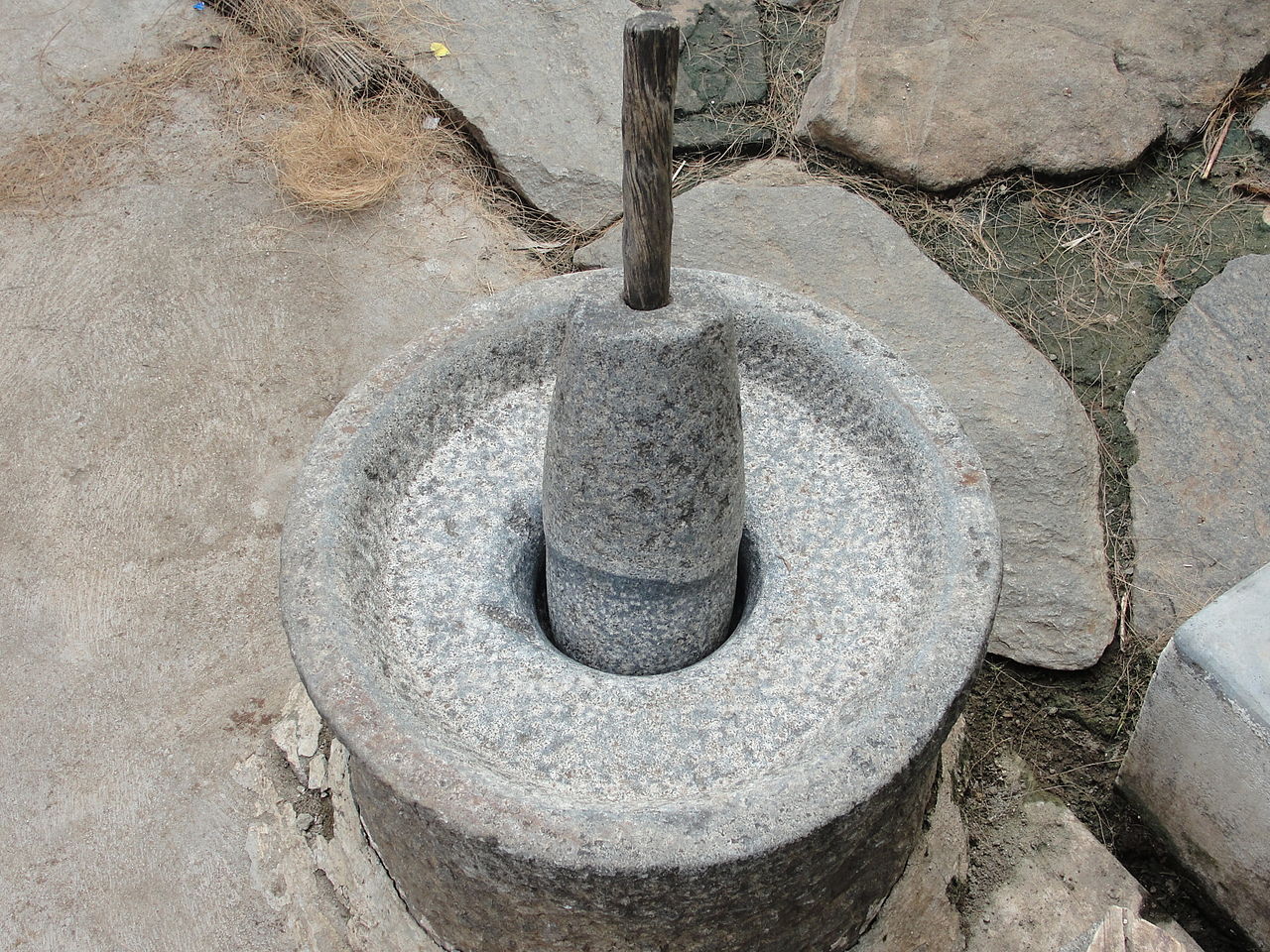


Form and how it works
The mortar is typically a bowl-shaped vessel and the pestle is a club- or rod-shaped implement used to press and rub against the inside surface. The process—sometimes called milling or mixing—relies on friction and impact: materials are placed in the mortar and the pestle is moved to break down particles and combine ingredients. The bowl often has a rounded bottom and a wide mouth to keep contents contained; many descriptions call the mortar a bowl-shaped receptacle for this reason.
Materials and varieties
Mortars and pestles are made from a range of materials chosen for hardness, porosity and chemical inertness. Common materials include stone (granite, marble), ceramic, hardwood, and metal. Nonporous, heavy materials resist absorption and provide a stable grinding surface; porous or wooden versions can impart flavors or absorb oils and require different care. Specialized laboratory versions are often glass or agate to avoid contamination.
History and cultural use
Simple forms of the mortar and pestle date back to prehistoric times and appear across many ancient cultures because their function is fundamental to food preparation, medicine, and craft. They have long been a central tool in domestic kitchens and in pharmacies or apothecaries for preparing medicinal preparations. Over centuries regional shapes and materials evolved to match local ingredients and techniques.
Applications and examples
In cooking, mortar and pestle sets are used to grind spices, crush seeds, and make pastes such as pesto or curry pastes; many cooks prefer them to electric grinders for control of texture and for retaining volatile aromas, especially when working with cooking herbs and spices or with fresh herbs. In pharmacies and chemistry they allow small-scale compounding and preparation of powders and suspensions. Artisanal cosmetics and traditional craft practices also use them to blend pigments and other materials.
Care, limitations and notable distinctions
Proper care depends on material: stone and metal mortars are typically rinsed and air-dried, whereas porous or wooden sets may need seasoning and careful cleaning to avoid trapping flavors or microbes. Mortars are best for small-batch, manual processing; they are not a replacement for industrial mills when very large volumes or uniform particle sizes are required. A mortar-and-pestle’s advantages include tactile control, preservation of aromas, and suitability for delicate or heat-sensitive preparations.
- Typical parts: bowl (mortar) and club (pestle).
- Common uses: culinary grinding, pharmaceutical compounding, laboratory sample prep.
- Choosing a set: match material to purpose—hard nonporous stone for seeds and spices; ceramic for softer tasks.
Related articles
Author
AlegsaOnline.com Mortar and pestle: function, forms, history and uses Leandro Alegsa
URL: https://en.alegsaonline.com/art/66788