
Asiatic cheetah (Acinonyx jubatus venaticus)
Critically endangered subspecies of cheetah native to Asia, now surviving only in Iran; historically ranged across the Middle East and South Asia. Threats include habitat loss, prey decline, poaching and small population size.
Overview
The Asiatic cheetah (Acinonyx jubatus venaticus) is a critically endangered subspecies of the cheetah. Historically distributed across parts of the Middle East, Central and South Asia, the remaining wild population is now confined to Iran. It is commonly referred to as the Iranian cheetah in conservation literature. The animal is recognized as a distinct subspecies within the broader cheetah complex and is part of the larger fauna of Asia.
Image gallery
10 Images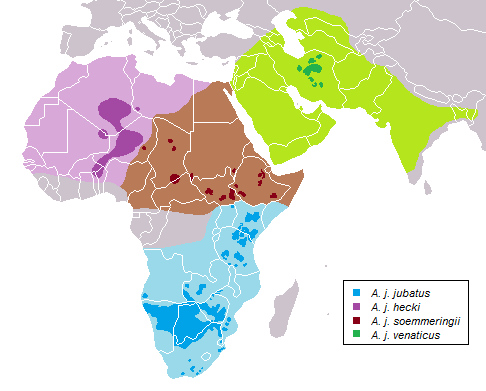



Physical characteristics and behaviour
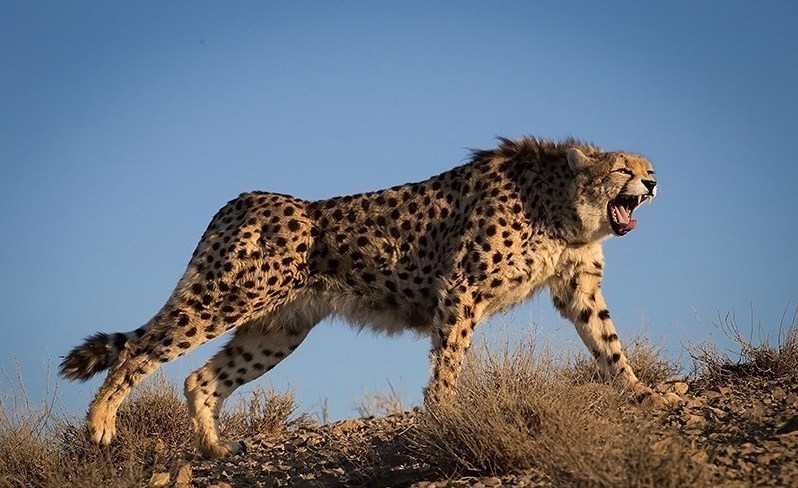
Morphologically similar to African cheetahs, Asiatic cheetahs are built for speed: a slender body, long legs and a spotted coat. Observers note slight regional variation in coat tone and spot pattern, but basic hunting strategy—diurnal pursuit of medium-sized ungulates using sight and rapid acceleration—is shared with other cheetah populations. They typically avoid dense forest and favor open, arid or semi-arid terrain where visibility and sprinting space are available.
Range, history and cultural role
Once present from the Arabian Peninsula through Iran into India and Central Asia, the subspecies has been extirpated from most of that range. It became locally extinct in India during the 20th century. In parts of South Asia the species was historically kept by royalty and used for coursing prey, giving rise to the historic name “hunting leopard”; accounts of this practice survive from British colonial times and earlier. The cheetah figures in regional culture and historical records across its former range.
Threats
Factors contributing to the decline of the Asiatic cheetah are typical for wide-ranging carnivores: loss and fragmentation of habitat, reduction of natural prey (for example local wild antelope species), direct persecution, collisions or accidental killings, and the genetic consequences of small, isolated populations. These threats interact and make recovery more difficult.
Conservation measures and outlook
Conservation efforts focus on securing and managing protected areas, anti-poaching patrols, monitoring and scientific research, maintaining prey populations, and community engagement to reduce conflict. Iran has been the center of most in situ work because the last known wild individuals live there, which is why many sources use the name Iranian cheetah. Proposals such as captive-breeding or translocations have been discussed but raise biological and ethical challenges, and any reintroduction would require long-term habitat protection, sufficient prey and regional cooperation. Continued research into taxonomy, population status and threats is supported by international conservation groups and specialists (taxonomy, species accounts).
Significance
The Asiatic cheetah exemplifies the vulnerability of large, wide-ranging mammals to human-driven change. Its decline illustrates the need for landscape-scale conservation planning that spans political boundaries, integrates local communities and maintains ecological processes essential for both predators and prey.
Author
AlegsaOnline.com Asiatic cheetah (Acinonyx jubatus venaticus) Leandro Alegsa
URL: https://en.alegsaonline.com/art/6624
Sources
- bucknell.edu : Mammal Species of the World: a taxonomic and geographic reference
- worldcat.org : 62265494
- iucnredlist.org : "Acinonyx jubatus ssp. ventaticus"