
Mokosh — East Slavic goddess of moisture, fate and protector of women
Mokosh is an East Slavic deity linked with moisture, fertility, spinning and the protection of women and childbirth. Her name appears in medieval chronicles and survives in folklore and modern reconstructions.
Overview
Mokosh (Old East Slavic: Мóкошь) is a figure from East Slavic pre-Christian belief traditionally associated with moisture, fertility, domestic crafts and the protection of women, especially in childbirth. She appears in medieval sources and in later folk tradition; modern scholarship reconstructs her role from linguistic evidence, chronicles, material culture and popular customs.
Image gallery
10 Images


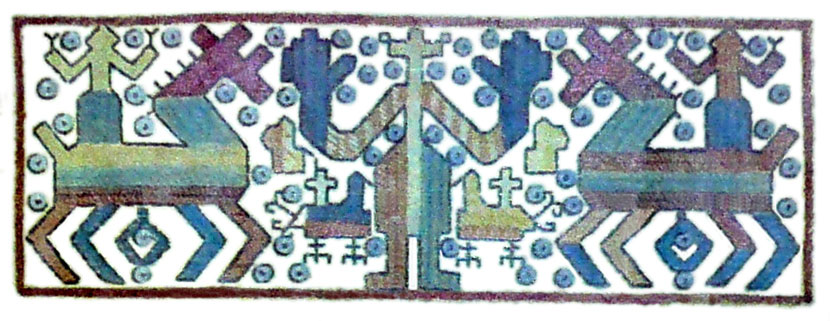


Name and etymology
The name is commonly connected to the Slavic root mok- meaning "wet" or "moisture," which links the deity to water, damp earth and the life-giving qualities of humidity for crops and people. Regional forms and folk variants differ, and the precise original meanings are debated, so descriptions remain cautious and often conditional.
Functions and symbols
Mokosh is often portrayed as a protector of female life stages and household wellbeing. Traditional associations include:
- Guarding women in childbirth and watching over mothers and infants;
- Patronage of spinning, weaving and other textile work, commonly symbolized by a spindle or distaff;
- Connections to moisture, springs, wells and soil fertility that support agriculture and domestic prosperity;
- A role in fate and family continuity, reflected in rituals around marriage, birth and death.
Historical attestations
Mokosh is explicitly named in early East Slavic chronicles that list the gods venerated in the Kievan Rus' era. Later Christian authors and recorders of custom treated many pre-Christian elements as folkloric survivals, so direct ritual texts are scarce. Archaeological finds of female figurines and domestic ritual objects have been interpreted in light of such deities, but firm identifications remain cautious.
Folk survivals and modern revival
After Christianization attributes of Mokosh persisted in popular belief and practices, sometimes transferred to or syncretized with female saints, household rituals and amulets for safe childbirth. Folklore collectors recorded customs tied to spinning, protective charms and offerings at springs. In the 20th and 21st centuries Mokosh has been adopted by Slavic neopagan (Rodnover) communities as a prominent mother and earth figure.
Comparative notes
Comparisons with other Indo-European traditions note a recurring pattern of female deities associated with spinning and fate, but Slavic expressions of Mokosh combine natural, domestic and social roles in ways that reflect local culture and agrarian life. Scholars continue to weigh linguistic, ethnographic and material evidence to refine understanding of her place in the pre-Christian Slavic religious landscape.
Further contexts
Mokosh appears in vernacular song, ritual speech and rural practice across different regions, and her memory endures in place names and popular tales. Because surviving documentation is fragmentary, reconstructions emphasize probable functions and long-term cultural continuity rather than fixed iconography or a single, uniform cult.
Related articles
Author
AlegsaOnline.com Mokosh — East Slavic goddess of moisture, fate and protector of women Leandro Alegsa
URL: https://en.alegsaonline.com/art/65828