
Momotarō (Peach Boy): Japanese folktale, variations, symbolism and cultural impact
Momotarō, the “Peach Boy,” is a central figure of Japanese folklore. This article summarizes the tale’s versions, characters, symbolic meanings, and its role in literature, education and popular culture.
Overview
Momotarō, often translated as "Peach Boy," is one of Japan’s best-known folk heroes. The basic narrative describes an unusual birth and a youthful champion who departs to confront malevolent island-dwelling creatures called oni. The story exists in multiple versions and has been adapted repeatedly in books, theater, film and school materials. It functions both as an entertaining adventure tale for children and as a vehicle for cultural values such as filial piety, courage and cooperation.
Image gallery
6 Images



Major versions and motifs
Two widely circulated versions differ in tone and some plot details. In the most familiar Edo-period form the protagonist arrives whole from a giant peach found floating on a river by an elderly, childless woman; the couple adopt the boy and name him Momotarō. In an older strand preserved in early texts, the peach has rejuvenating properties: an old woman and then her husband eat parts of the fruit, regain youth, and conceive a son in the ordinary way. That older telling links the peach to fertility and renewal. Over time, schoolbooks and popular retellings favored the child-in-peach motif because it is less explicit and more readily framed as a miraculous origin story.
Characters and plot elements
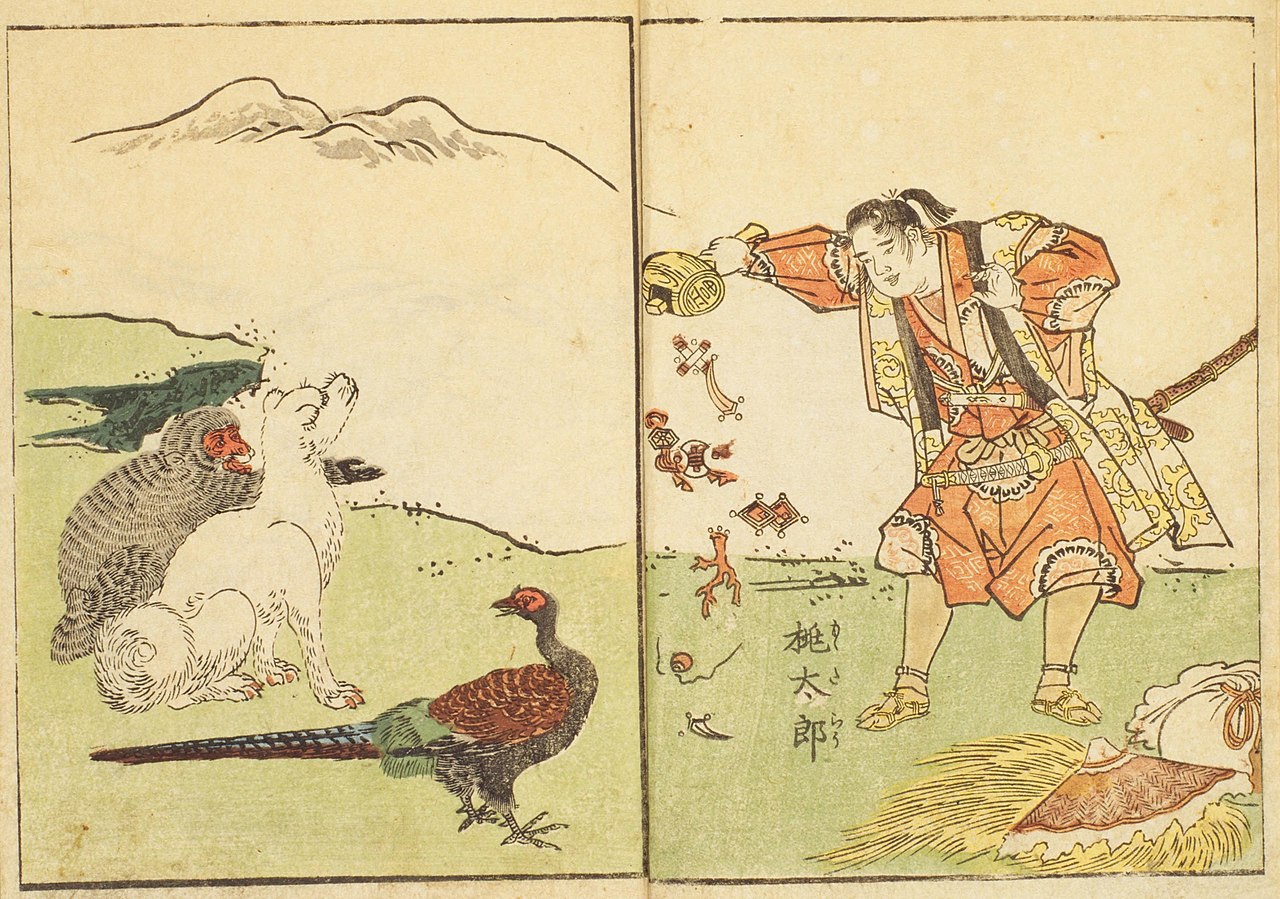
The tale’s core cast is compact and emblematic. Momotarō, the hero, is brave and filial. His adoptive parents embody rural virtues. On his quest to the oni island (commonly called Onigashima), Momotarō recruits animal companions — typically a dog, a monkey and a pheasant — who assist him in battle. The oni, often portrayed as ogres or demons, occupy the role of external threat: they hoard treasures, terrorize nearby settlements, or simply represent disorder to be overcome. The cooperative defeat of the oni reinforces themes of teamwork and moral order.
Symbolism and interpretations
The peach itself carries layered symbolism. In Japanese cultural history the fruit can signify longevity, protection and fertility; its rounded form and mythic properties invite readings that range from life-affirming to erotic in older narratives. The animal helpers illustrate a common folktale motif of human–animal alliances and speak to the idea that virtue attracts loyal allies. Some scholars read Momotarō as a rite-of-passage narrative in which a youth gains community standing through a heroic deed, while others emphasize the tale’s function as a moral exemplar for children.
Cultural influence and adaptations
Momotarō has been adapted into countless media: illustrated picture books, stage pieces, animated and live-action films, radio dramas, and modern merchandise. In the 20th century the story was used for different purposes, including wartime propaganda and patriotic education in various contexts; it has also been reclaimed in postwar and contemporary works that highlight its folkloric roots. Festivals, local mascots, and tourist attractions often reference Momotarō in regions that claim connections to the story’s settings.
Notable distinctions and comparative notes
Momotarō belongs to a broader international category of "found-child" and "heroic quest" tales: miraculous births, helpers of animal form, and journeys to distant islands or fortresses recur in world folklore. Distinguishing features of the Japanese tale include the peach-born origin in popular versions, the specific trio of animal companions, and the recurrent naming convention in which "Tarō" signals a first son. Variants and parodies continue to appear, demonstrating the tale’s adaptability to changing social contexts.
Further resources
- Overview of Momotarō in folklore studies
- General resources on Japanese folklore
- Etymology and naming conventions
- Cultural meanings of the peach
- Translations and standard English titles
- Religious and cosmological background
- Older textual variants and fertility motifs
- Sanitization in modern education
- Meiji-era textbook treatments
- Symbolism studies about fruit imagery
- Geography of Onigashima and variant island names
- Oni as a category in Japanese myth
- Translations of 'oni' as ogre or demon
- Animal companions in Japanese tales
- Comparative folklore: animal helpers worldwide
- Modern adaptations and media
Readers interested in primary sources or visual adaptations can consult anthologies of Japanese folktales and collections of children’s literature, where multiple versions of Momotarō appear. The tale’s long presence in oral and print culture makes it a useful entry point for exploring how folklore shapes and reflects social values across generations.
Questions and answers
Q: What is the name of the hero from Japanese folklore?
A: The hero from Japanese folklore is named Momotarō, which literally translates to Peach Tarō.
Q: How did Momotarō come to earth in the most common version of his story?
A: In the most common version of his story, Momotarō came to earth inside a giant peach that was found floating down a river by an old woman without children who was washing clothes there.
Q: What does "Tarō" mean in Japanese?
A: In Japanese, Tarō means oldest son in the family.
Q: What happened when the old woman ate a piece of the giant peach?
A: When the old woman ate a piece of the giant peach, she became young and beautiful again. Her husband also ate a piece and became young again as well.
Q: Who agreed to help Momotarō on his mission?
A: On his way to Onigashima island, Momotarō met and became friends with a talking dog, monkey, and pheasant who agreed to help him in his mission.
Q: What did Momotarō do at Onigashima island?
A: At Onigashima island, Momotarō and his animal friends entered the demons' fort and beat their leader Ura and his army.
Q: How did Momotaro's family live after he returned home from Onigashima island?
A: After returning home from Onigashima island with his new friends, Momotaro's family lived happily ever after.
Related articles
Author
AlegsaOnline.com Momotarō (Peach Boy): Japanese folktale, variations, symbolism and cultural impact Leandro Alegsa
URL: https://en.alegsaonline.com/art/65922