
Mordred — figure of Arthurian legend
Mordred is a central figure in Arthurian tradition, variously depicted as son, nephew, traitor or tragic rival whose actions culminate in the Battle of Camlann and King Arthur's downfall.
Overview
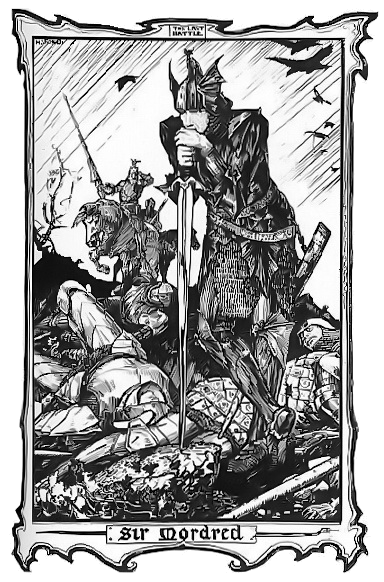
Mordred (also Medraut, Modred and other forms) is a prominent character in the corpus of Arthurian legend. In many medieval and later narratives he is the relative—often described as a son or nephew—whose betrayal leads to the final battle between the forces of King Arthur and those who oppose him. Accounts differ on his parentage, motives and ultimate fate, but his name is closely associated with the disaster at Camlann and the end of Arthur's reign. Mordred functions in the tradition as both a foil to Arthur and a symbol of civil strife within a once-united realm.
Image gallery
6 Images


Names, origins and textual sources
The figure appears under several names in early sources: Medraut in Welsh tradition and Medred or Mordred in later Latin and French narratives. The origin and precise meaning of the name are uncertain; it derives from Old Welsh forms attested in medieval manuscripts. Major sources that develop the character include early Welsh records, Geoffrey of Monmouth's chronicle, the medieval French romances of the Vulgate Cycle, and Sir Thomas Malory's Le Morte d'Arthur. Annales Cambriae contains an early brief notice of the Battle of Camlann, traditionally linked to Mordred's betrayal.
Role in the legends
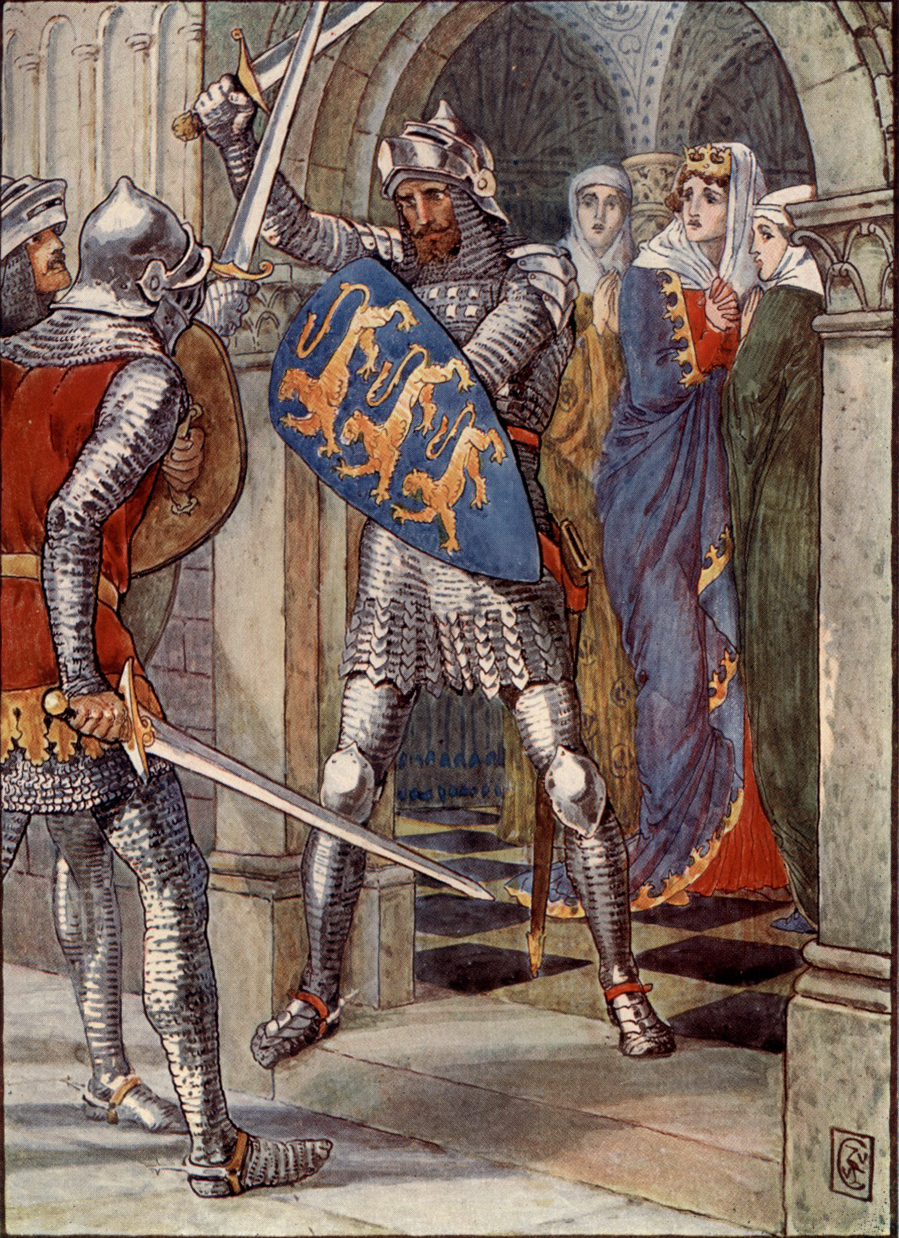
Details vary between versions, but several consistent elements recur: Mordred claims or seizes authority while Arthur is absent or weakened; this usurpation precipitates armed conflict; the confrontation culminates in a battle—commonly called Camlann—where Arthur and Mordred wound each other, and the kingdom suffers catastrophic losses. In some retellings Mordred is explicitly Arthur's son by one of Arthur's sisters, an incestuous origin that intensifies the tragedy. In other accounts he is a nephew or the son of rival rulers and acts as a political opponent rather than an offspring.
Major narrative variants
- Welsh tradition: Mordred (Medraut) appears in early native material where his role is compact and often ambiguous.
- Geoffrey of Monmouth: presents Medraut as a kinsman whose treachery helps bring down Arthur's realm.
- French romances and Malory: expand the plot, giving Mordred a dramatic usurpation and a climactic battle; these tellings supply many familiar details of the betrayal and aftermath.
Clarent, Excalibur and symbolic objects
Medieval and post-medieval writers attach symbolic objects to the final conflict. Excalibur and its scabbard are central to Arthuric symbolism; some later romances also name Clarent as a ceremonial "sword of peace" that is said, in certain versions, to have been stolen or used by Mordred to wound Arthur. These objects serve as literary devices: Excalibur often represents kingly authority and martial legitimacy, while Clarent, when invoked, underscores themes of broken trust and the perversion of peaceful covenants.
Character interpretations and legacy
Scholars and storytellers have treated Mordred variously as a simple villain, a traitor motivated by ambition, or a more complex tragic figure whose betrayal reflects deeper social or familial conflict. In some modern retellings he is humanized or recast as a pawn of other characters. The name Mordred endures in literature, stage, film and television as shorthand for treachery and dynastic collapse. For readers seeking related figures, see entries on King Arthur and the sorceress Morgan le Fay, both of whom are closely associated with Mordred in many traditions.
Notable facts: Mordred is not uniformly presented as a member of Arthur's Round Table across sources; his ancestry differs by author; and while the Battle of Camlann is the canonical end-point in many accounts, details about weapons, wounds and burial vary widely from one tradition to another. These variations have allowed successive generations of writers to reshape Mordred's role according to changing ideas about kingship, kinship and legitimacy.
Related articles
Author
AlegsaOnline.com Mordred — figure of Arthurian legend Leandro Alegsa
URL: https://en.alegsaonline.com/art/66636